I rather like this entrepreneurial response to the Reserve Bank's loan-to-value-ratio regulations.
Recall that the Bank required that banks issue no more than a small proportion of home loans to lenders with less than 20% equity.
I expected that this would have folks finding alternative sources of finance to help get to that 20% mark. Some will have family that can help, but not everyone.
And here's a market response.
YouOwn will put up some of the initial equity and take a part ownership stake, with the house buyer paying an equity charge to YouOwn. When the owner builds up enough equity to start considering buying out YouOwn's stake, they send it to a valuer so YouOwn gets its share of any gain.
It's a bit surprising that it's taken so long for this kind of thing to come through, but there was a fair bit of uncertainty about how long the LVR rules would stick around too.
HT: Reader mailbag. Thanks Pierre!
Friday, 24 January 2020


Thursday, 23 January 2020
Good advice, if they'll take it
Treasury gets this absolutely right. You don't need feebate schemes for electric cars or emission standards for CO2, you just need carbon prices.
If you don't think that that makes them adjust 'enough', think again and think harder.
If whatever response comes of that change in carbon prices isn't sufficient to get aggregate emissions in line with NZ's commitments, then there's something not working in the ETS and the first-order problem is fixing the ETS because it'll be more than just transport that's messed up.
If the cap is binding and in line with our commitments, then you should weaken your priors about how much adjustment is 'enough' in any particular sector. You don't know and I don't know. That's the point of using prices to coordinate this - it lets adjustment happen where it's least costly for adjustment to happen. And if there isn't much adjustment in any particular sector despite rising carbon costs under a binding cap, then you should be considering that adjustment in that sector might be more expensive than you'd previously thought.
MoT employees worked hard to convince Treasury that there was a rationale for extensive intervention in the light vehicle market through the use of a feebate scheme and the imposition of an emissions standard, which almost every other country has. Treasury officials repeatedly argued that such policies could be costly and would have a limited impact on emissions.If the carbon price doubles, the carbon component of petrol prices will go up from about 7 cents per litre to about 14 cents per litre. People will adjust their purchases of durables like cars in line with their expectations about the ongoing cost of running them.
Instead of market intervention, Treasury pointed to the Emissions Trading Scheme as the only necessary component for reducing light vehicle emissions to meet New Zealand's international obligations. In response to a request for comment, a Treasury spokesperson said, "The Treasury regularly provides economic advice on a range of topics, and government agencies regularly canvas a range of perspectives on their work".
Feebate's effect doubted
Treasury raised numerous concerns about the efficacy of the feebate scheme and ultimately recommended against introducing it, although they supported the vehicle emissions standard.
"We are not convinced by the need to intervene in the transport sector in the immediate term in the absence of a strong, predictable and durable carbon price. Measures such as those proposed run the risk of counteracting the price, particularly given their narrow focus," Treasury wrote in a draft comment on a Cabinet paper.
"The Treasury considers that a just transition is best achieved through a credible and predictable carbon price delivered by an effective ETS, supported by policies that remove barriers to cost-effective mitigation options. However, we consider the evidence pointing to barriers in cost-effective mitigation through the light vehicle fleet is mixed," another draft comment stated.
If you don't think that that makes them adjust 'enough', think again and think harder.
If whatever response comes of that change in carbon prices isn't sufficient to get aggregate emissions in line with NZ's commitments, then there's something not working in the ETS and the first-order problem is fixing the ETS because it'll be more than just transport that's messed up.
If the cap is binding and in line with our commitments, then you should weaken your priors about how much adjustment is 'enough' in any particular sector. You don't know and I don't know. That's the point of using prices to coordinate this - it lets adjustment happen where it's least costly for adjustment to happen. And if there isn't much adjustment in any particular sector despite rising carbon costs under a binding cap, then you should be considering that adjustment in that sector might be more expensive than you'd previously thought.
Treasury worried that "the cost of a feebate and higher ETS prices creates a 'double burden' for those who need to purchase larger vehicles (e.g., rural industries) while creating a 'double benefit' for those who are able to purchase smaller and electric vehicles (e.g., urban dwellers)".It is so good to see Treasury giving down-the-line sound economic advice. Climate change is too important to leave to half-baked schemes. Doing the most good we can requires hard thinking about cost-effectiveness.
Wednesday, 22 January 2020
The tender years
I go into a bit more depth, over at Newsroom ($), on our tendering system for the household chores. I wonder whether it will catch on among econ-minded parents. A snippet:
Back in 1968, economist Friedrich Hayek wrote that competition is a discovery procedure. Some information about the world simply would not exist without the process of market competition that discovers it.I'll link to the ungated version on our site when it's up. [Update - it's ungated at their site now.]
Parenting is a discovery procedure too – some information about it is difficult to acquire without going through the process. Applying a few economic insights can make some bits of parenting just a little less painful – like sorting out the household chores.
Every household has some chores that the kids are just expected to do as part of the general terms and conditions of family membership. But other chores are more onerous, both for the kids and for the parent, and love and empathy within the family can only get you so far. Managing some tasks can too easily be more painful than just doing them yourself.
If cleaning the cats’ litter box is a particularly objectionable task, which kid gets the job? If they take it in turn, whose turn is it this time? Is dealing with the cat box really worse than sweeping the floors? How much worse? And what happens if one of the chores doesn’t get done?
...
But back to the tendering system. As parents, we really didn’t know what allocation of chores would result in the least amount of grief. We needed information that the kids could not really credibly deliver to us. They might not even know it themselves without being put to the choice. We needed a procedure to elicit that information. And, at least as importantly, we needed a procedure that reduced the hassle in getting the allocated chores done.
And sealed bid tenders seemed just the thing.
Tuesday, 21 January 2020
Public health, risk communication, and vaping
The editorial in the January 2020 issue of Drug and Alcohol Review worries that poor communication around illness caused by vaping illicit THC-based products in the US has risks:
The US investigation is still ongoing and the health authorities investigating the outbreak have not definitively identified the exact chemical that has caused the lung damage, which may be a chemical formed from vitamin E acetate. However, over the past 6 months, the evidence has strengthened considerably that nicotine vaping products are not the cause of EVALI. This has been reflected in the updated official communications from both FDA and CDC which have strengthened their warnings to avoid THC vaping products, particularly those purchased from informal sources. However, accurate, timely and complete reporting of these developments by the media has sometimes been lacking. The potential consequences of this misreporting include public misunderstanding, mistrust and potentially cases that could have been avoided if the correct information was widely communicated.They worry about the risk of people continuing to use illicit THC products when much of the the media coverage was around nicotine-based vaping as potential cause.
Misreporting of the US epidemic continued after the CDC concluded that the outbreak was attributable to vaping contaminated illicit cannabis products. In Australia, the ABC television show 7:30 aired a misleading story on vaping (5 November 2019) that heavily featured nicotine vaping in Australia after a lead on the US outbreak of lung injuries 28. There was no mention that the CDC and FDA had linked the outbreak to the use of contaminated illicit THC products.Things weren't better here, and I've been particularly disappointed in Radio New Zealand's coverage.
Nor did 7.30 mention the absence of cases in the UK, where nicotine vaping is widespread among smokers, but the vaping of cannabis oils is not. Dr Chris Zappala, from the Australian Medical Association claimed, ‘We've seen a significant increase in recent months of vaping‐related illnesses. Patients who, unfortunately, are becoming so unwell that they're ending up in intensive care and as I'm sure people are aware, there have been some deaths related to vaping’. Neither he nor the reporter clarified that no EVALI cases have occurred in Australia. By omitting the role of THC vaping products, 7.30 withheld critical information from the public on how to avoid these injuries.
Australian standards of press reporting include the principles of accuracy, balance, clarity and avoidance of harm 29. These principles are important given that the media is frequently cited by the public as a source of health information and influence health behaviour, however they are often found lacking 30-32. The failures of the Australian and international media to accurately convey the facts about this outbreak put public trust in the media, and the health authorities in these reports, at risk and may encourage the public to ignore future warnings in the midst of serious health emergencies. Many of the responses to the outbreak proposed in these stories, such as banning flavoured vaping products or preventing access to nicotine vaping products, do not address the cause of the outbreak identified by US authorities, namely, the vaping of illicit cannabis products cut with vitamin E acetate.
One fun one: on 12 November, the Science Media Centre rounded up commentary from local scientists about what was going on in the US and the results of more tests on lung tissue samples.
Their round-up included (my paraphrases):
- Auckland University's Prof Chris Bullen, who noted that it was 'widely known' that the mess was associated with contaminated black-market THC cartridges a month earlier;
- Dr Kelly Burrowes at the Auckland Bioengineering Institute at the University of Auckland, who noted that Vitamin E in THC cartridges could be the problem but that with more than 15,000 flavours out there in e-cigarettes, it is just too hard to tell what is to blame;
- Dr George Laking at End Smoking New Zealand who said that everyone had known for two months that the problem was Vitamin E acetate, that the CDC was too slow to catch up, and that the reports should not raise concern for NZ nicotine vapers;
- Dr Murray Laugesen, Adjunct at U Canterbury and long-time tobacco harm reduction advocate, who pointed to Vitamin E acetate and the need to get the regulatory framework around vaping set quickly;
- Prof Julian Crane, Otago Uni at Wellington, who pointed to Vitamin E acetate, noted that it was a possibility since the beginning of the problem, and that there's no worry for NZ nicotine vapers.
All up, 4/5 said that nicotine vaping has nothing to do with the US problem.
Guess who RNZ picked to talk to about it? Go on. You don't even have to click the link, do you?
I just don't have a good model of why RNZ has been like this.
Monday, 20 January 2020
Healthy living through alcohol
The government's otherwise-banal guide to wellbeing had some rather misleading advice around alcohol.
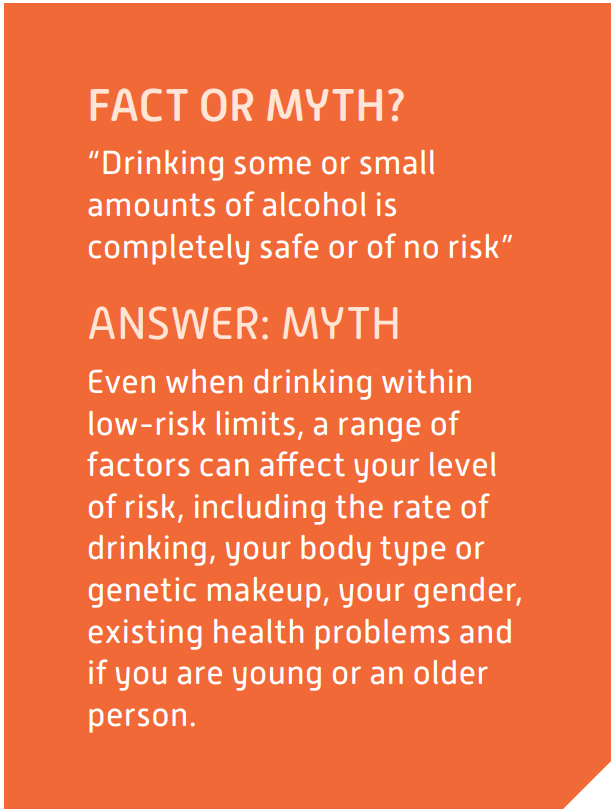
I've covered the J-curve pretty extensively here. Long story short, moderate alcohol consumption reduces your risk of all-source mortality, even after adjusting for all of the objections that the temperance folks like to throw at things.
So the better answer is that moderate drinking comes with negative risk.
The latest from the British Medical Journal provides further evidence. The table below shows healthy life expectancy at age 50 under a variety of different conditions, including a healthy eating index, smoking, physical activity, alcohol use, and BMI. The effect isn't big compared to other things in there, but moderate alcohol consumption comes with higher life expectancy at age 50.
And so, throughout the rest of the piece, when the authors tally up an index of healthy behaviours, folks in the study are considered to engage in low-risk drinking not if they teetotal, but rather if they consume moderately: 5 to 15 grams per day for women, or 5 to 30 grams per day for men.

So if you want to maximise life expectancy, eat a healthy diet, don't smoke, get at least 3.5 hours of physical activity per week (I recommend brisk walking while searching for Pokemon), drink moderately, and keep your BMI between 18.5 and 24.9. The combined effects can give you about an additional decade.

Friday, 17 January 2020
Mileage may vary
I wouldn't have expected this. And I couldn't make any sense of it until I saw the line "investments in complements to production" and thought about it for a second. And then it made sense.
The World Bank's released a policy working paper on the effects of cash and in-kind food transfers in Mexico on student learning. Here's the abstract:
The World Bank's released a policy working paper on the effects of cash and in-kind food transfers in Mexico on student learning. Here's the abstract:
This paper studies the medium-term impact of early-life welfare transfers on children’s learning. It studies children who were exposed to the randomized controlled trial of the Mexico’s Food Support Program (the Programa de Apoyo Alimentario, PAL), in which households were assigned to receive cash, in-kind food transfers, or nothing (a control). The children are matched with administrative data on primary school standardized tests, which were taken four to 10 years after the experiment began. The findings show that in-kind transfers did not impact test scores, while cash transfers led to a significant and meaningful decrease in test scores. An analysis of the mechanisms driving these results reveals that both transfers led to an increase in child labor, which is likely detrimental to learning. In-kind food transfers, however, induced a greater consumption of several key micronutrients that are vital for brain development, which likely attenuated the negative impacts of child labor on learning.How could a cash transfer to families increase child labour? If the cash enables a rural family to buy more livestock that then requires more on-farm labour from the kids, which reduces the kids hours of schooling and increases their likelihood of attending a lower quality school.
Thursday, 16 January 2020
A healthy puzzle - PHARMAC and health insurance
Here are a collection of stylised facts about health insurance in New Zealand. At least I think they're stylised facts. Call them Eric's perhaps-incorrect understanding of the world.
Together, I wonder if they make sense.
Together, I wonder if they make sense.
- The public health system covers a lot of stuff, and PHARMAC subsidises the most cost-effective drugs;
- There are lots of newer drugs that PHARMAC doesn't subsidise. It can take a while for drugs to be registered with MedSafe for use in New Zealand, it can take a while for a registered drug to be sent to PHARMAC for consideration, it can take a while to run the CBA on drugs once an application is made, and it might take a while for any particular drug to hit the priority list. Note that this is not at all a critique of PHARMAC.
- The CBA that PHARMAC runs will have a variable threshold because different drugs will come in different years; they get the most cost-effective combination of drugs given their budget for the year, which can mean that the dollars-per-QALY (quality-adjusted life years) cutoff varies. Again, that isn't a PHARMAC critique, it's something that just happens when you've got a fixed budget every year and you can't shift funds across years.
- Leaving aside that dollars-per-QALY can vary considerably across sectors of regulation, the amount that's chosen will reflect some social preference, and individuals may have personal willingness to pay for QALYs that are higher than that, or they may be more risk averse.
- Given 1-4, you would expect that people with a higher willingness to pay for QALYs or other health outcomes would be purchasing health insurance with fairly extensive coverage of pharmaceuticals that aren't on PHARMAC's list. For example, suppose that your opportunity costs of time are much higher than average and a funded treatment requires a lot more time in-hospital while an unfunded one has more opportunities for self-management. You might be more willing than most to pay extra to not have to show up at hospital all the time - and to buy insurance on that basis.
- About a third of Kiwis have private health insurance. Health insurance providers do not seem to compete extensively on coverage of non-subsidised drugs - or at least I've not seen the ads for it. Except when it comes to cancer. But there are lots of conditions out there that are not cancer. The main thing that folks seem to look for in private health insurance is getting access to a nicer hospital room and access to specialists to avoid waiting lists in the public system - and presumably coverage of a greater range of cancer medications. Southern Cross does offer a policy providing a lump-sum payment of up to $300k in a critical illness event (cancer, cardiac, organ transplant, loss of independent living, functional loss or stroke), but there may be other areas where access to unfunded medications might be of value.
- Direct-to-consumer advertising of pharmaceuticals is legal in New Zealand.
I could be wrong about any of those points.
If the points are correct, I start wondering about calls to increase the PHARMAC budget.
PHARMAC as single-buyer is able to get deals that would be difficult for anyone else to get. But the things that it does cover should reflect willingness to pay for health - it just does it on our behalf because it can negotiate those better deals. At some point it's better to buy things other than healthcare; the cut-line should reflect some underlying measure of preferences.
If there were real effective demand for unfunded medications, beyond those covered by PHARMAC, wouldn't we see evidence of it in folks asking their insurers for coverage of a broader range of unfunded medications?
If they don't, it could be because they just don't know about those medicines. But insurers could advertise on the basis of their coverage of a more extensive list. And we don't see that, or at least I haven't seen it. And I've done enough google searches on health insurance when writing this that I should be getting targeted ads for it by now.
Maybe you think that the health insurance market is too concentrated so there isn't sufficient competition among them. But there's the alternative route: direct-to-consumer advertising is legal in New Zealand. The supplier of some new drug can go over the top, advertise it directly to consumers, and suggest that they not only ask their GP about it but also ask their insurer to add it to their list in case they ever get that condition. Doctors seem to hate that advertising - they keep wanting it to be banned. But it isn't currently banned, and I've not noticed many of those ads.* And if they show up in places I haven't noticed, they haven't led to insurers competing on coverage of unfunded pharmaceuticals.
So the remaining possibility is that there just isn't that much effective demand for those drugs. And if that is the case, even among those who can afford private health insurance, then it substantially weakens the case for large expansions in what PHARMAC covers, except potentially in the interval where the drug would be worth it under the deals that PHARMAC could make, but not under the deals that a private insurer might get. And it just doesn't seem plausible that everything that isn't cancer winds up in that interval, does it? It seems more plausible that actual willingness to pay for that stuff in a country that's rather poorer than the ones that set the pace of medical innovation. But it would also then seem really really weird that there aren't people too poor to self-insure for the the expensive unfunded pharmaceuticals, but unable to afford to buy insurance for it. Why wouldn't we see even half of those going for private health insurance going for plans including far more extensive coverage of unfunded drugs?
Another potential explanation is that an insurer would take just as long to evaluate a drug as PHARMAC and come to the same decision, so it's pointless. But I understand that ACC can and does cover non-PHARMAC subsidised drugs that are registered either here or abroad - and the classes of cases that ACC can cover is far more limited than could be covered under private insurance. Basically - if it's a drug that treats something that was due to an accident, ACC can consider it. It can also consider weird cases where a delay in a cancer diagnosis gets considered to be an accident (which starts seeming like a stretch of ACC, or something inviting delays in diagnosis).
There are potentially other explanations. Is the market for health really about health? Maybe you could go to a more sociological explanation and say that people just expect that the government's covering the stuff that's really worthwhile, and there's no point in bothering with the other stuff; private health insurance buys the feeling of having done the right thing and the obvious benefits of shorter waiting times, but folks are overly confident that whatever the government's bought on their behalf is good enough - and so over-discount any advertising they might see. In that case maybe some true preference for health isn't being expressed because of mistaken beliefs about whether public funding might match the preferences of those willing to spend more per QALY. But again, you still need advertising to be ineffective right?
So I still don't have a great explanation about why we don't see insurers competing on coverage of pharmaceuticals not covered by PHARMAC; my expectation is that there's little effective demand, but I'm not confident in that explanation. Are any of my quasi-facts less truthy than I'd thought? Or have you a better explanation for them?
For what it's worth, we have private health insurance coverage that we started when the kids came along. The policy has a very very high excess and so it is very cheap - it's basically catastrophic coverage. I see zero point in insuring against things you can cover within your credit card limit. But the policy had and has less coverage of unfunded drugs than I might have hoped for - and especially for a catastrophic-care kind of policy. And I've not seen policy options since that had more extensive coverage.
For what it's worth, we have private health insurance coverage that we started when the kids came along. The policy has a very very high excess and so it is very cheap - it's basically catastrophic coverage. I see zero point in insuring against things you can cover within your credit card limit. But the policy had and has less coverage of unfunded drugs than I might have hoped for - and especially for a catastrophic-care kind of policy. And I've not seen policy options since that had more extensive coverage.
* I think I learned about the chicken pox vaccine because of an ad. It might have been from friends in the States who'd gotten the vaccine for their kids though. Either way, it sure wasn't from our GP. She was a very nice GP, but I was colossally disappointed on this margin. We rocked up and asked about the chicken pox vaccine (as soon as we heard about it) and whether it was yet available in NZ. She said that it surely was, "but you know you'd have to pay for it out of pocket". I was utterly aghast. A week out of work for a kid with the chicken pox is way more expensive than the vaccine, even leaving aside the potential for later-life shingles and pain and suffering for the kid. Of course we'd have wanted to have paid for it had we only known about it! I guess she'd had too many patients just uninterested in things they had to pay for. But we immediately asked what other vaccines she hadn't bothered telling us about. She noted one that prevented some kind of gastro disorder, so we got that vaccine too. They both wound up being funded a few years later. I would have been furious if the kids had wound up with preventable chicken pox just because the GP didn't think it worth bothering to mention the existence of things that you had to pay for. The chicken pox vaccine is cheap and you definitely want it for your kids regardless of whether the government pays for it. Other conditions - the relevant drugs will only be needed if you get the condition, and it could well be worth getting insurance that covers the drugs relevant to the condition, but you need to find out about their existence somehow, so you know to make sure your insurance covers it (or to know that your insurance should cover a broad range of unsubsidised medicines).
Anyway, all of that is to say that you just can't trust your GP to come out and tell you things that you should know about but advertising might help fill the gaps.
Subscribe to:
Posts (Atom)