Tuesday, 3 October 2023

A late pitch for supermarket competition

Labour says they want more competition in grocery retail. I worry about the cursed monkey paw version of it.

“We know that it’s tough right now for many people, and the high cost of food isn’t helping,” Commerce and Consumer Affairs spokesperson Duncan Webb said.

“The inquiry we ordered into competition in the grocery business showed the two big companies who control the grocery industry in New Zealand were making excess profits of around $1 million a day.

“We need to go further than we have to date to force the type of competition shoppers overseas experience.

“If we’re returned to Government, Labour will back credible companies wanting to get into or expand into the New Zealand grocery business.

“This could include finance, making sure land is available, regulatory changes, incubating innovation and accelerating competition.

First, backing companies is a mistake. The government shouldn't be picking who the next grocery retailer might be. 

Next, subsidising entrants would also be a mistake. If you have everything else set right, the potential entrant's decision about whether to enter tells you something really important about viability. But if a subsidy's needed to get them over the line, it's a lot harder to tell whether that entry really made sense in the first place. And you're setting the stage for future subsidy-seeking. 

I don't know what incubating innovation means and I'm not sure they do either. It feels like something that Rhonda from Australian TV series Utopia might have thrown into the mix because it sounded good. 

But making sure land is available and that regulation isn't in the way strikes at the root of the current problem. 

When we'd looked at it during the Commerce Commission market studies process, it seemed that it was de facto illegal for a new entrant to come into the market at scale. Too few sites zoned for large footprint retail; long and variable lags in consenting that introduce huge risk; uncertainty about whether police and medical officers of health would block liquor permits late in the game; hurdles through the Overseas Investment Office for any sensitive sites. 

And Labour added an additional problem when it set the new grocery regulation regime. Five years after Aldi, or anyone else, started up as a grocery business in New Zealand, the Minister could designate them if the Minister figured it was a good idea. A designated grocer is compelled to supply its competitors at government-regulated prices. 

So if Aldi, or Lidl, or Tesco, or anyone else came here, they might worry that:

  1. Councils often seem owned by corrupt cartels of downtown landowners who block new competitors entry. Look at what Ashburton did
  2. Even a council acting properly could take years to decide on consents. Your capital is tied up during that process and your logistics turn into a mess. The Natural and Built Environment Act prohibits consideration of competition, even the benefits of competition, in deciding this stuff. It's insane. We pointed out the problem at Select Committee and it wasn't fixed. And you might be stuck opening with chains across your liquor section if the police and medicos decide to cause problems, and they're likely to object. They like objecting. 
  3. After an entrant has sunk massive amounts of money into establishing a presence here, that entrant could be forced to provide existing NZ supermarkets with everything from their hard-built global supply chains at prices set by the government. 
Fixing that mess would make sure land is available, would progress needed regulatory changes, and would accelerate competition. It would be super. 

But decent odds they're instead just thinking about subsidising Supie

We put up a release on it yesterday; I had an early morning chat with Newstalk ZB, TV3's AM Show, and Sean Plunkett at The Platform about it. 

Thursday, 28 September 2023

We need a weighted Big Mac Index

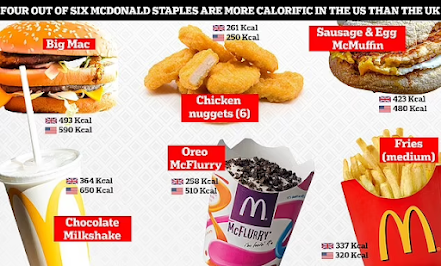
The Economist's Big Mac Index has been a fun way of comparing currencies' purchasing power relative to one standard ubiquitous good: the Big Mac.

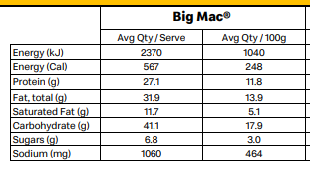
Turns out standard isn't as standard as I'd have expected.


It looks like the NZ Big Mac gives you a bit more than the UK version, but a bit less than the US. 


Kiwis get 96.1% of a proper Big Mac, and Brits get only 83.6%. 


Wednesday, 27 September 2023

Damned if you do...

Imagine that investigative journalists found that car manufacturers were earning really high margins on EVs and low-emission vehicles. 

The headlines write themselves. Car manufacturers gouging customers who want to help the environment. Surely the gallows would be too good for them!

Fun counterfactual.

Now imagine instead that car makers earned hardly anything on their EVs while competing for market share and instead were gouging the bad people who drive bad cars that use bad fuels. 

They'd be praised for it right?

Right?

Car companies are spending almost four times more advertising large, gas-guzzling vehicles than small cars, despite publicly pledging to combat climate change.

...

Tim Welch, a senior lecturer in urban planning at the University of Auckland, said part of the push towards SUVs and utes was the profit margin, which was much higher when compared to a typical sedan, or an electric vehicle.

The car manufacturers are going to be damned by Radio New Zealand no matter what they do. 

If they earned high margins on EVs, they'd be damned for gouging. 

If they instead earned higher margins on utes, they'd be damned for advertising those models instead of praised for having far lower margins on EVs. If Welch is right about the margins anyway.

Tuesday, 26 September 2023

Afternoon roundup

The tabs. There are too many.

The price of meth

ACT has proposed lifting the de-facto ban on the only cold medicine that seems to work - pseudoephedrine.

It's about freaking time.

National and Labour both expressed openness to the idea of rescheduling it. So that's good. 

This week's column over in Newsroom ($ today, ungates tomorrow if you pull the /pro from the URL) goes through a bit of the history on this one. 

It's a weird one. When Key's National-led government set the ban, they put evaluation frameworks around it. It was part of a meth action plan. They had indicators on purity, price, availability. The set of policies was meant to reduce use and availability. Use did ultimately decline, but not because of anything obvious on the supply side. The ban on cold medicine had only a minor effect on availability, price and purity - the supply indicators. And you kinda have to squint to even see those. Over the longer term, price dropped and availability increased. 

And rather than ditch the restrictions, the government shifted from six-monthly progress reports on its action plan to an annual report, to no reports. 

The supply side policy had failed. The ban on cold medicine worked only until suppliers figured out how to get methamphetamine into the country properly. Meth suppliers had been importing cold tablets, in bulk, before pseudoephedrine was made prescription-only. They continued to import cold tablets after the policy change. But finished methamphetamine was being imported at levels never before seen – or at least was being seized in unprecedented quantities. Rather than abandon the policy, the government abandoned the reports. The October 2015 annual report was the final report in the series.

Things didn’t improve after those reports ended. Other reports continued. By 2017/18, the national median price of methamphetamine had dropped to $500 per gram, with record low prices in Auckland, Waikato, and Wellington. Prices increased with total border closures to control Covid, but normalised soon after. One News reported in June that meth cost $400 a gram.

On average, the price of everything is 38 percent higher than it was in 2009. But the price of methamphetamine has dropped by more than 40 percent, despite none of us having reasonable access to cold medicines. If meth were in the CPI, the Reserve Bank’s job would be easier.

The official reports rather clearly establish that the ban on effective access to cold medicine had at most a small temporary effect on the supply of meth. It was obvious, rather quickly, that the ban was not helping. But the ban remained in place.

That is a terrible failure, albeit on a smallish margin. The government had set all of the evaluation frameworks needed for justifying a change in course, should one prove warranted. But it did not see fit to do so when the data came in. It stuck with the bad policy.

I like the idea of meth being in the CPI. 

But I even more like the idea of regular reviews of regulation to wipe out ones that impose cost while having no discernable benefit. 

Oh - FWIW - there are some conflicting sources on the price of meth in 2020. A Parliamentary snapshot had it having doubled to over $1000/gram; the regular survey had it fall. Perhaps there was a limited-time period in which price went through the roof? I covered my bases by saying prices increased with border closures and normalised soon after. 

But just look at this. Despite inflation over the period, meth dropped from over $700/gram to about $400/gram. 


I suppose a prohibitionist might claim that the price would be even lower if it were easier to access home cooking supplies, but really? It's imported at scale as finished product. It seems a bit like worrying that legalising the sale of car parts will lead to people building their own utes to get around the tax on utes. 

Update: the official reports, when they were tracking things, were here. There was one (1) annual report produced after the shift to annual reporting. 


Thursday, 21 September 2023

The aristocracy of pull, so long as you're the aristocrat

I hate election campaigns.

I can never tell whether some bit of idiocy is actual proposed policy, or whether a candidate was just reaching into a bag full of words in hope of getting through the next couple minutes of an interview.

I hope it's the latter in this case. Because my gawd.

Pressed on how National would incentivise businesses to ditch fossil fuels, [National Party Climate Spokesperson Simon] Watts said: “On our watch, under a National government, there would be a pretty clear conversation between government and industry. If you’re significantly profitable, then you have a social obligation in order to do what is required in terms of helping this country achieve our emissions [goals].”

On behalf of the country, the government needed to apply “the appropriate pressure to these organisations”. Watts expected businesses putting profit margins ahead of this obligation “to change their view pretty rapidly”. He didn’t specify how he’d apply this pressure as Climate Minister.

We have an Emissions Trading Scheme. It puts a price on carbon. He's talking about the covered sector, because the conversation here is around what a National-led government would do instead of dumb GIDI corporate welfare. 

Within the covered sector, the carbon price encourages companies to make decarbonisation investments that meet the bottom line, and to avoid those that are not cost-effective. That is the point of using a carbon price rather than command-and-control regulation. Businesses are better placed than governments to know which investments make most sense for them, weighing carbon cost alongside a thousand otherwise unknowable considerations. 

And Simon Watts believes that it is right and proper for government to apply 'appropriate pressure' to companies, as part of "a pretty clear conversation between government and industry." If an industry is profitable, it can and should be leaned on by Government to achieve the Government's objectives. 

Isn't it wonderful! Corporatism I mean. Government and Business, in partnership, of a sort. Where Government can apply pressure through numerous discretionary regulatory decisions that could hurt or bankrupt a company if the 'conversation' didn't go the way the government might have wanted. 

All kinds of other desirable objectives could be part of these kinds of conversations. 

Companies could be 'encouraged' to reformulate consumer goods to meet Shane Reti's views on what people should be eating and drinking.

They could be 'nudged' toward fulfilling Simon O'Connor's social views, if he were the relevant minister in an area. Or perhaps Chris Bishop's after a cabinet reshuffle. The 'conversations' would be very different! And businesses would always have to be guessing at just what an incoming Minister might consider to be the appropriate social obligation, if they dared to be profitable. 

All of it will be simply wonderful for productivity. Because the predictability of the rule of law is overrated, relative to having pretty clear conversations about one's social obligations. 

Wednesday, 20 September 2023

Learning from others' discoveries

Others' idiocy can be a public boon, if the example serves as sufficient cautionary tale. 

In a world of wishful thinking, if one country's government moves first to try the really dumb thing and reap the obvious consequences, it's harder for others to delude themselves into thinking the dumb thing will have no consequence. 

Canada does the world a public service. So long as the rest of us don't ignore the lessons. 

A lot of people in a lot of places convinced themselves that, somehow, platforms were stealing from newsmedia companies by linking to them. A tax on platforms to fund news sounded obviously wonderful. Who could object? Certainly not politicians who value the favour of the media companies who'd believe they'd benefit from such payments. 

And then Meta stopped linking to news in Canada, to much complaint from the media companies who had previously asserted that links were theft.

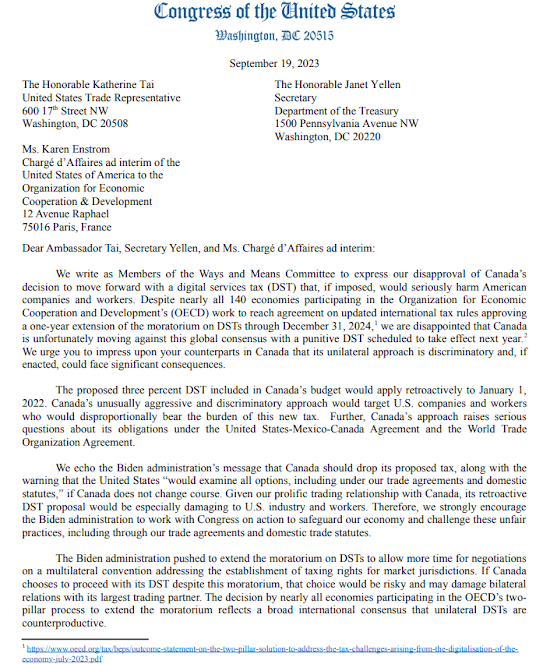
And now Canada's looking at a unilateral move on a digital services tax rather than working through the OECD multilateral process. This is not a problem that is best handled unilaterally. It needs to be handled through cross-country agreement. But idiots in all kinds of places, NZ included, figure it's a wonderful idea. Sock it to those fat-cat multinationals. That'll show them. There'll be no adverse consequence, just free money and free votes for standing up to the Big Evil Companies. 

Indeed.


NZ had legislation that's passed first reading, suggesting NZ ought to go it alone, like Canada - albeit with a bit of delay. Hopefully the Bill is left to die quietly after the election and NZ sticks with multilateral processes.