Showing posts with label Ministry of Health. Show all posts

Friday, 29 November 2024

Misuse of land use planning

If you thought McDonald's was some kind of public health hazard, using processes under the Resource Management Act to try to block one from opening in Wanaka would be among the stupidest possible ways of dealing with it. 

The country already has food safety regulations. If you thought that (in fact delicious and fine) McDonald's food were actually toxic waste, food safety regs would address the problem across all existing 170+ outlets across the country. 

Objecting to a single restaurant would just be dumb. 

The land use planning system doesn't even work this way. The consent in Wanaka was to operate a restaurant type activity. 

If some other restaurant got a consent to open there, a McDonald's could buy the site and flip it to being a McDonald's without much land use consenting hassle unless they needed different transport links for a drive-through. 

If you wanted to handle this kind of thing through the land use planning system, every time a restaurant turned over it would have to go through a new consenting processes checking that the characteristics of the restaurant were substantially equivalent. 

It would be insane. 

So even if the National Public Health Service's submission against a McDonald's consent application in Wanaka hadn't been a steaming pile of anti-corporate buzzwords fresh out of a 1990s anti-globalisation rally (I mean, just look at the darned thing), it still would have been a terrible idea. 

The submission really was mad though. Here are a couple of snippets.


...there is no evidence supporting the fact that transnational (TNC) or multinational (MTC) create a prosperous, resilient, and equitable economy in the District"

...We are not aware that a holistic assessment of the value that this proposed new corporate business will add to the social, economic, and cultural wellbeing and physical health of the people and the community of Wānaka has been undertaken.

...To summarise, NPHS Te Waipounamu:

  • strongly encourages further meaningful engagement with the community.
  • reminds council of its Te Tiriti obligations to Kāi Tahu as mana whenua.
  • is concerned about the impacts of MNC and TNC, such as McDonalds, on planetary health and the health of current and future generations.
  • recommends a comprehensive HIA (including cultural impact assessment to analyse the cultural impact for Kāi Tahu). We would like to see such an assessment demonstrating that the outcomes for the individuals and the community of Wānaka would mostly be positive before granting consent for this proposed fast-food restaurant.

NPHS Te Waipounamu wishes to be heard with respect to this submission.

[Note that the changing acronyms MTC vs MNC are in the original.]

They didn't just put in a written insane submission. They also headed on out to the hearing to be heard about it.  

It reflects an NPHS that has lost sight of what it is meant to be doing and is off pursuing other objectives, in a time of tightly constrained resources. They were even intervening in the nutritional aspects of food carts in Invercargill. 

I'd covered it in my column in Thursday's New Zealand Herald, ungated here

A snippet:

The submission urges further measures that seem aimed at increasing McDonald’s legal costs – like demanding a comprehensive health impact assessment and a cultural impact assessment. The NPHS also weighs in on other matters about which it has no competence – like the visual amenity of the proposed restaurant.

And it provides a remarkable chart asserting that “GDP as a measure of economic growth” contributes to ill-health and health inequalities.

This is not a one-off. This is how the NPHS sees its role. This is its baked-in ideology.  

Mr Barry had previously inserted himself into discussions of whether Invercargill’s food trucks’ offerings have sufficient nutritional merit.

The letter from Health in All Policies Advisor Monica Theriault, which concludes the submission, notes, “We are eager to enhance how the concepts of health promotion can be effectively applied within the RMA framework.”

They want to do more of this.

The NPHS has revealed what it considers a priority in a time of restraint.

I draw a few conclusions.

First, the government’s coming reforms to the land use planning system must prevent the weaponisation of consenting processes.

Second, the Commerce Commission needs to pay a lot more attention to the anticompetitive effects of the land use planning system.

Finally, Minister Reti has not gone far enough with proposed budget cuts. He might consider razing the NPHS to the ground and starting over with an agency sharply focused on infectious disease. It is hard to see what else could fix it.

I also chatted with Sean Plunkett about it yesterday morning

Today, Minister Reti published a serve back to Health New Zealand, reminding them to focus on their core business

A snippet of that:

Minister of Health Dr Shane Reti says the National Public Health Service should concentrate its focus on prioritising serious public health issues facing New Zealanders.

“Earlier this week I was informed about an 8-page submission by the southern arm of the NPHS regarding a proposed fast food outlet in Wanaka,” Dr Reti says.

“I have raised my ongoing concerns about the content of submissions like these with the Chief Executive of Health New Zealand.

“Content within the submission, including observations about planetary health, landscape values, traffic and Te Tiriti do not match my over-arching view of what the NPHS should be spending its time on.

“Whooping cough, measles and raising immunisation rates are among the most pressing issues facing health today.

The serve was needed. And is welcome. 

I think Bob Edlin over at Point of Order missed the point here

A public health service focused far from main business, and using exceptionally stupid methods for achieving ends outside of their main business, has to be steered back, and hard. It will be hard for it to get anything else right without that direction, or without my alternative (and still preferred) solution of razing it and starting over. 

As David Farrar pointed out over at Kiwiblog:

Around half the public health staff (those who deal with infectious diseases) do amazing work, but around half seem to be taxpayer funded lobbyists who lobby the Government that employs them, or local governments.

I have an OIA in with Health NZ asking for the resourcing that went into that submission process, and for the decision-making process around it. And one in with the Ministry of Health just ruling out that they'd ever given Health NZ advice about this kind of thing. Will be interested to see what I hear back, eventually. 

And really, a better land use planning system ought to take this NPHS submission as a benchmark for "This is the kind of vexatious submission that should not only be dismissed summarily, but also result in a fine assessed against the submitter."

Friday, 1 July 2022

Test to Exit

My column in this week's Insights newsletter notes the deficiencies in the Ministry of Health's recommendations around RAT results and ending self-isolation. 

A NUMERACY QUIZ FOR THE MINISTRY OF HEALTH

Dr Eric Crampton insights Newsletter 1 July, 2022

Suppose your middle-schooler came home with a math assignment.

She was told to measure everyone in the house and report on heights. But checking over the assignment, something seemed odd. Your 190cm partner wasn’t included.

“Oh, our teacher explained that most people are between 150 cm and 180cm. If we got a measurement outside that range, there was no guarantee that they were really that tall, so we should just ignore it.”

You’d worry about the state of numeracy among teachers, right?

Sure, the average person will be within that range. Some random person isn’t likely to be 190 cm tall. If the assignment had asked, “Is it likely that the next person you meet is 190 cm tall?”, the answer should be no – unless you happen to live with a very tall person.

But conditional on having been measured at 190cm, it’s more likely that you’re a tall person than that it’s just measurement error. If the ruler said three metres, you’d probably want to triple-check the figures. But 190cm isn’t that uncommon.

Why do I bring this up?

Back in May, I asked the Ministry of Health why they’ve been telling people to ignore positive RAT results after seven days of isolation. The Ministry replied this week. They told me that because seven days is beyond the average period of infectiousness, the current health guidelines do not require a negative test to leave isolation.

It wasn’t a cost-benefit assessment. It was a failure in basic numeracy similar to our imaginary teacher’s error – but far more consequential.

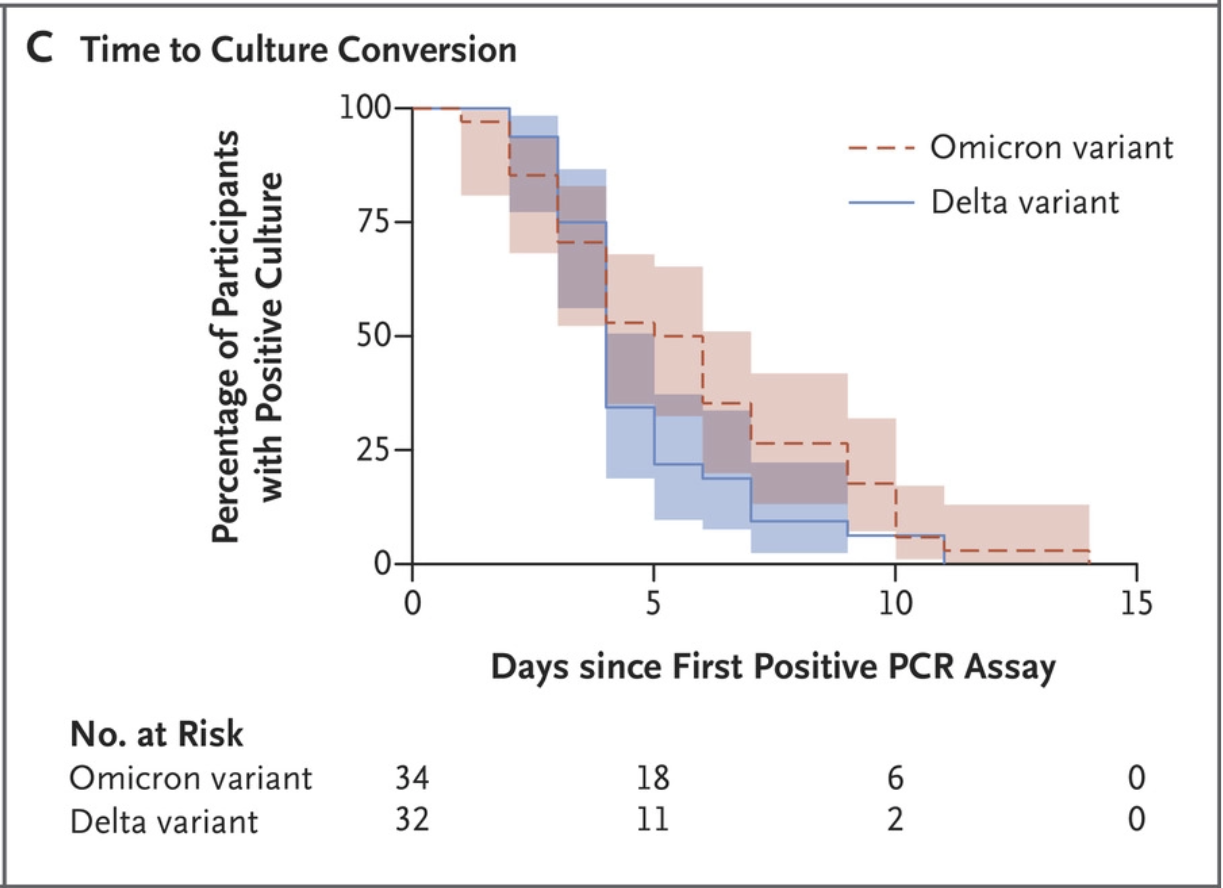
Work published in JAMA Internal Medicine in April suggested at least 60% of people with a positive RAT result six days in are still infectious.

The Ministry doesn’t seem to have checked any of that. They instead looked at the average period of infectiousness and decided positive results after that period could be ignored.

So people will be heading out, after isolation, on official advice, and sharing their Covid gift with others.

Yale Covid testing expert Dr Anne Wyllie had described the Ministry’s advice as ‘dangerous misinformation’.

I don’t know whether the Ministry’s answer reflects general incompetence, declining numeracy more broadly, or a dangerous mutant strain combining the two.

Let’s hope the revised NCEA numeracy guidelines filter their way up into the Ministry of Health before more dangerous variants arrive.

I had been in touch with the Ministry prior to this seeking, by OIA, what evidence they might have had in support of their view that a positive RAT after 7 days could be ignored if you had been asymptomatic for a day. 

Their reply came through last week:


It sounded like they'd just decided that, because the average period of infectiousness is less than 7 days, positive results after that interval could be ignored. So I followed up with a query. 

From: Eric Crampton 
Sent: Monday, 27 June 2022 4:41 pm
To: OIA Requests <oiagr@health.govt.nz>
Subject: RE: Response to your request for official information ref: H202206643

Thank you for this.

I would like to check my interpretation of one part here.

You note that “Current research indicates that it is possible for individuals to test positive from RAT tests beyond the average infectious period. Therefore, the current health guidelines do not require a negative test… to leave isolation.”

There are of course two potential reasons why someone might test positive after the average period of infectiousness has passed.

It could be that their infectiousness has passed, and the RAT is providing a positive result despite a lack of infectiousness. This seems to be the scenario your advice considers the more likely. 

But it could also be that the person with a positive RAT is one of those whose period of infectiousness is longer than average. An average will include some people whose periods of infectiousness is very short, some with middling duration, and some very long. Relatively small proportions of people would clear infection far faster than average, and relatively small proportions of people would take far longer than average. 

I do not know how you established the window for average infectiousness. Let us suppose that it reflects the period after which 95% of people are no longer infectious – for sake of illustration. If a person returns a positive result after that window has passed, the conditional probability of that person being among the 5% with a longer infectiousness period has to be relatively high unless false positive rates are very high. I had understood RATs to have relatively low sensitivity but fairly high specificity – false positives are less likely than false negatives. 

Work published recently in JAMA found, six days after illness onset, 61% of participants returned a positive antigen test while 36% produced samples that could produce viable cultures – a not unreasonable measure of continued infectiousness. If the 36% with viable cultures were all within the 61% producing a positive RAT result, then the odds of being infectious, conditional on having a positive RAT six days after illness onset, seem to be on the order of 60% - better than even. And the likelihood of not being infectious, conditional on having a positive test, would be about 40%. 

It sounds like your current advice around testing to leave isolation is based only on an assessment of the average period of infectiousness, not on the probability of being infectious conditional on a positive RAT at the end of the isolation period. 

Could you please tell me if I am wrong, and point me to the specific studies you’d rely on if so? You’ve provided a bundle of links to lengthy MoH documents spanning a wide variety of issues around the state of play in the pandemic. I cannot tell which studies you’re relying on in determining that a positive result can be ignored at the end of an isolation period, or that a negative result is not required.

I note that I am very likely to write a column on this specific issue if I do not get clearer guidance putting my mind at ease about the current guidelines by the end of the week.
I didn't hear back quickly, so I followed up:
Hi MoH,

I have drafted the following as column to be published on Friday, but I really would like confirmation that this is indeed what you have done here. If there was some more detailed risk assessment floating around in the background on the “No need for a test to leave isolation” recommendation, I would really want to know about it so I can correct or bin the column.

The draft text is appended below.

Thanks!
Eric Crampton


A numeracy quiz for the Ministry of Health

Suppose your middle-schooler came home with a math assignment. 

She was told to measure everyone in the house and report on heights. But checking over the assignment, something seemed odd. Your 190cm partner wasn’t included.

“Oh, our teacher explained that most people are between 150 cm and 180cm. So if we got a measurement outside that range, there was no guarantee that they were really that tall, so we should just ignore it.”

You’d worry about the state of numeracy among teachers, right? 

Sure, the average person will be within that range. Some random person isn’t likely to be 190 cm tall. If the assignment had asked, “Is it likely that the next person you meet is 190 cm tall?”, the answer should be no – unless you happen to live with a very tall person. 

But conditional on having been measured at 190cm, it’s more likely that you’re a tall person than that it’s just measurement error. If the ruler said three metres, you’d probably want to triple-check the figures. But 190cm isn’t that uncommon. 

Why do I bring this up?

Back in May, I asked the Ministry of Health why they’ve been telling people to ignore positive RAT results after seven days of isolation. The Ministry replied this week. They told me that because seven days is beyond the average period of infectiousness, the current health guidelines do not require a negative test to leave isolation.

It wasn’t a cost-benefit assessment. It was a failure in basic numeracy similar to the error that the imaginary teacher might have made – but far more consequential. 

Work published in JAMA Internal Medicine in April suggested at least 60% of people with a positive RAT result six days in are still infectious. 

The Ministry doesn’t seem to have checked any of that. It instead seems like they looked at the average period of infectiousness and decided positive results after that period could be ignored.

So people will be heading out, after isolation, on official advice, and sharing their Covid gift with others. 

Yale Covid testing expert Dr Anne Wyllie had described the Ministry’s advice as ‘dangerous misinformation’. 

I don’t know whether the Ministry’s answer reflects general incompetence, declining numeracy more broadly, or a dangerous mutant strain combining the two. 

Let’s hope the revised NCEA numeracy guidelines filter their way up into the Ministry of Health before more dangerous variants arrive. 
The Ministry provided a statement that could be attributed to a spokesperson - I couldn't include it in the Insights column, but I let them know I'd include it here. They write:

Since the start of the COVID-19 pandemic, New Zealand has been in the fortunate position of being able to monitor developments overseas and this has informed our pandemic response. The Ministry’s assessment is that other countries make decisions on isolation periods depending on the stage of the pandemic and the level of infection in their communities. In New Zealand, at our stage in the pandemic and to support our approach to limit the impact of the spread of COVID on the health sector, the seven days isolation for cases of COVID helps appropriately manage that risk.

We know that isolation for cases is critically important to limit spread and seven days is supported by evidence and experience of other countries. In the United States, for instance, the Centers for Disease Control and Prevention, recommended in December shortening the isolation period to five days. The change was motivated by science demonstrating that the majority of SARS-CoV-2 transmission occurs early in the course of illness, generally in the 1-2 days prior to onset of symptoms and the 2-3 days after. You can read the CDC media statement: CDC Updates and Shortens Recommended Isolation and Quarantine Period for General Population | CDC Online Newsroom | CDC

Rapid antigen tests (RATs) are useful tools by which individuals can test to see if they are COVID-19 positive. But in terms of accuracy, RATs are not without their limitations and we have been aware of this from the beginning. Our guidance to people who have had COVID-19 and who continue to have symptoms and feel unwell upon completion of their seven days of isolation is to remain at home for 24 hours after their symptoms resolve.

Our advice to the Government on the current seven day isolation period was based on evidence that there is a decline in infectiousness of the Omicron variant over time, and that in most cases, transmission occurs within seven days. The Ministry also recognises the need to achieve a balance between effectively managing the pandemic and the flow-on effect that an extended period of isolation would have on the wider economy and the health workforce.

I entirely sympathise with the notion that there has to be a balancing: you wouldn't stick someone in isolation forever. That would be crazy. And, in the absence of a full-blown CBA, a rule-of-thumb could well suffice. If someone poses risk that's comparable to the level of risk of a random-draw member of the public, continued isolation can't be warranted. 

But that requires having a gauge of what that risk is. And a person who tests positive will not have the cohort average level of risk. That person will have the average level of riskiness of people who test positive. Which will be higher. 

There are lots more studies coming out showing increased duration of shedding of culturable virus. Like this one showing that somewhere between a fifth and a quarter of people are still shedding culturable virus at 10 days. If you send someone who's infectious back to work at 7 days, rather than keeping that person home until a negative RAT, those extra couple days' work have a decent likelihood of sending someone else into isolation for 7 days. 


Now you're not going to find a study that perfectly matches what NZ has in place. The rules here say "Isolate for seven days (but vague about whether that starts on noticing symptoms or on a positive RAT), then, if symptom-free for at least a day, you're out". 

So what you really need is the infectiousness of people who have provided a positive RAT after having been 1-day symptom free 7 days from the start of symptoms (and 7 days from the first positive RAT). 

And it wouldn't be all that hard to find out either. We have thousands of people who turn up positive every day. Get a thousand of them to agree to take a RAT every day and to have a sample taken every day. Among the set of people providing a positive RAT at day seven, and who'd been symptom free, what proportion of samples can be used to culture the virus? It feels like the kind of thing where you should be able to have results in three weeks, and could have been started back in May.

And it really feels like the Ministry just doesn't grok conditional probabilities. 

Thursday, 26 May 2022

Morning roundup

Another closing of the browser tabs, including a couple from Auckland University's Prof Robert MacCulloch, who's caught a few things I'd missed.


Monday, 23 May 2022

Negative RATs and infectiousness

The Ministry of Health's recommendation that one can end isolation despite providing a positive Rapid Antigen Test flummoxed me.

I had understood that, while a positive nasopharyngeal PCR test could be expected after infectiousness had passed, because of dead viral fragments' RNA still being picked up, that wasn't true for a RAT. RATs trigger on antigens, and if they're still around at levels high enough to generate a positive test, you're probably still infectious.

But what do I know? I haven't taken biology since 1993. I had a minor refresher when the kids were into Cells At Work, but that's it. Well, that and paying minor amounts of attention to all of this over the past couple of years.

So I asked Anne Wyllie at Yale. She helped us out last year when we were, again, arguing with the Ministry of Health about appropriate testing protocols.


She knows this stuff. She got an award at Yale for it last week. Yale outranks any of the universities New Zealand has to offer. 

This is what she said about it, with minor edits from me to add the article details that go with the links:

Below and attached, some evidence showing that if you're still positive by antigen test, you're most likely still contagious. There are likely still more out there.

You'll see a couple are more about Ct values from PCR - it is generally accepted that on a broad range of assays a Ct value of 30 or below also means you're likely still infectious, hence why I've included them as they show dynamics at the back end of infection and that this can last 10-12 days.

Radio New Zealand had an interview with the Prime Minister this morning. She's preparing for a trip to the United States. She tested positive on 14 May, 9 days ago. She's back at work today. Discussing a potential meeting with the President, she said:

Ardern: It's a little more complex than that. It's all around Covid clearance and so on. The rules are generally built around picking up infections rather than dealing with existing ones.

Dann: Do you just need to have a test clearance or something like that?

Ardern: That's part of it but not the only part of it.

I would hope that the President would at least be requiring a couple of negative tests, a day apart, before meeting someone who is less than two weeks in from a Covid infection. 

Dann could have asked whether she actually has had a negative test yet, or whether she's just going by the inadequate MoH guidelines that say to ignore a positive RAT. 

The US requires a negative test to travel, or documentation of having recovered from COVID-19 in the past 90 days including a letter from a licensed healthcare provider or public health official stating that the passenger has been cleared for travel.

That latter bit is fun because the PM is the boss of the boss of all the public health officials. If Ashley Bloomfield says she's cleared for travel, based on his Ministry's advice to ignore positive tests, should the US government trust that?

Wednesday, 20 April 2022

Morning roundup

The morning's worthies. 

R0 on tabs is high. 

Monday, 23 August 2021

Lockdown accountability

Newsroom provides an excellent we-told-you-so this morning. 

Here's Jo Moir:

While the source of the Delta outbreak that plummeted New Zealand into a Level 4 lockdown is all but confirmed, how it got into the community is a work in progress.

Investigations are now homing in on a public walkway that shares the same airspace as the exercise area at the Crowne Plaza managed isolation facility.

In July Newsroom raised the issue of the public thoroughfare, which is the only access to a busy office block in downtown Auckland and requires passing directly beside the exercise yard via an un-roofed walkway.


The photo shows the obvious problem. The 'outdoor' area is anything but. It's enclosed on so many sides that you'd probably not be able to run it as an outdoor smoking area if you were a pub: there's a roof and walls on two sides, and the open side at the end is awfully small.  

The Ministry of Health recently consulted on its definition of an 'open area' for outdoor smoking areas for bars and pubs. Smoking is banned indoors but not outdoors. What counts as outdoors though? Does an awning make something indoors? How about an awning and a wall? This caused a lot of problems when different liquor enforcement officers would come to different views. 

The Ministry of Health's preferred option, in that consultation, was Option B. Any outdoor seating area that met this description would be prohibited from allowing smoking, because of the risks to passers by. 

Option b: Define it as an area that is completely or partially enclosed with a roof or overhead structure of any kind, whether permanent or temporary. This means that if an area has any roof or overhead structure, regardless of how much the roof or overhead structure encloses the area, it will meet the definition of an internal area.

I bolded the relevant bit. If you had a roof over the smokers, and then a minor bit of unroofed area, Option B would prohibit its use as an outdoor smoking area. 

The photograph obviously shows that the MIQ 'outdoor' recreation area has at least some kind of roof or overhead structure. Passers-by had to be right next to them, though there was a minor barrier. 

It looks like the Ministry of Health's preferred protection measures to guard against outdoor second hand smoke at pubs are stricter than the Ministry of Health's preferred protection measures to guard against Covid. 

And this is absolutely par for both courses for this player.

And we have wound up in a spot where a couple of guys out on jetboats on the weekend will wind up charged for breaking Level 4 restrictions, when the only harm they imposed was a potential one to rescue crews if they wound up in trouble, but none of the officials who decided it was a great idea to put this recreation area up next to a walkway will be up on charges, despite this now being the most likely candidate for how we wound up in lockdown and despite its having been an obviously recklessly stupid idea and despite their having been warned about it back in July. 

Wednesday, 14 July 2021

Morning roundup

The morning's browser tabs:

  • Newsroom picks up on BusinessDesk's prior reporting on MIQ ghost rooms. Much credit goes to Cameron Conradie's constant reporting on the numbers. BusinessDesk pointed out that the MIQ system is constantly overwriting its own data so that it is impossible to get, from them, the prior track. I wonder what the Archivist would make of this because it sounds like deliberate destruction of Official Information which may have to have been backed up by a Disposal Authority. Anyway we're losing skilled migrants who rightly view there as being no chance that the government will fix the system, because the government starts by hating migrants and viewing allowing any of their families in as actually being a bad thing. While it is still good to live in NZ as a permanent resident, I could not recommend that anyone try moving here, unless their utility enters negatively into my utility function - and I don't have that kind of utility function. 
  • The government is going to run into real problems in maintaining nursing staffing. If I've understood the state of play correctly, nursing salaries in NZ are similar to salaries in the UK but Australia has some of the highest pay rates going for nurses. Training nurses here in a common labour market with Australia can result in outflow. NZ has made up the gap by importing nurses - some from the Philippines, some from the UK. But while there's provision for entry through MIQ for nursing staff, it's still a big constraint. Australia is far richer than NZ and can afford to pay more. It's entirely plausible that the government here is behaving as monopsonist in keeping nursing wages down, but even if that weren't the case there would still be a problem. 
  • NZ is importing and burning a lot of coal currently. In one sense, this is not a problem at all: the Emissions Trading Scheme sets a binding cap, the current ETS price roughly doubles the cost of using coal, so any coal that's used is very likely in spots where it would be real expensive to substitute away from. But there are still two more substantial problems. First, some of the coal burning is because Megan Woods banned gas exploration in Taranaki, reducing capacity in those fields. So we're being forced to use a worse alternative because the government set very bad policy. Second, optics. While all that coal is accounted in the ETS, nobody understands the ETS, and seeing coal imports makes people think the ETS isn't working. And that builds pressure for even worse interventions. I wish that National would aim for less political point scoring here and instead be looking to underlying causes. 
  • The government is going to be having an inquiry into crypto. I kinda knew what was going on in crypto 3 years ago; that tech is moving crazy fast and keeping up with it would be a full time job. I hope Auckland's Alex Sims helps them out a bit, and I also hope they seek some of the expertise over RMIT. Parliament's Select Committee couldn't figure out how the Uber app works a few years ago. This won't end well unless they get some serious help. 
  • NovaVax also looks pretty good. Seems futile to hope it will get evaluated and considered for roll-out here, where dose availability is a binding constraint. We are sitting ducks here if Delta gets out. 
  • Environment Minister Parker is holding off on nitrate limits on waterways - for now. I still think cap and trade solutions can get that job done. Report on that will be out soon. 
  • The government's reluctance to have effective vaccine mandates for border workers - it's just incomprehensible. There can be practical difficulties that need to be overcome; sending nurses out to worksites over a few shifts could make a lot more sense than trying to get all those workers separately to make long commutes out to places where they can be vaccinated. If compulsion is warranted anywhere in public health, it's in vaccination. There are very real and substantial negative externalities from not being vaccinated - and especially among workers who are at risk of contact. We wind up with a health system happy to ban soda in the hospital cafeteria but that can't manage to get workers vaccinated. It's nuts. 
  • Another for the "is government actually evil?" file: The Ministry of Ed refuses to fund a teacher's aide for a special needs student (limited budgets; understandable) but also refuses to allow the parents to privately fund the aide
  • Industrial policy as casino economics. Do you feel lucky?
  • Cuba's health policy successes are wildly exaggerated and based on bad data. Here's hoping that the new revolution brings down the communist dictatorship. 
  • Remote work won't work for everything. Face-to-face still matters. Planet Money interviews Enrico Moretti
  • Not crazy to worry about inflation. But if you have strong opinions about it and you think you're right, well, here's the data series on nominal bonds and here's the series for inflation-protected bonds. If you think inflation is going to go through the roof, make the appropriate play. If you think that everyone else is just way too worried about inflation, take the opposite appropriate play. 

Thursday, 27 May 2021

Privacy, IT, and Waikato

Waikato District Health Board's computers have been down for over a week due to a cyberattack that also seems to have led to private patient and/or staff details being taken from the system by the attackers.

Radio New Zealand reported yesterday on a Health IT Stocktake warning of significant IT risks last year.

The Privacy Act's new provisions allowing the Privacy Commissioner to issue Compliance Orders came into effect 1 December last year. Rule 5 of the Health Information Privacy Code 2020 also requires that private health information be held securely.

So I was curious whether the Privacy Commissioner had had any chats with the Ministry, DHBs, and Minister about these compliance issues last year, and whether any Compliance Orders had been contemplated before the hackers took down the Waikato hospital system's general ability to function. 

On a quick look online, I could find a morning interview with the Privacy Commissioner about the hack, but I could see nothing about it on the Privacy Commission's website, on its official Twitter feed, or on the Commissioner's Twitter feed.

So I sent through the following OIA request at 1pm.

I am curious what measures, if any, the Privacy Commissioner has taken to ensure the security of individuals’ health data held by the public health system.

Last year’s IT Stocktake for the Ministry of Health, as reported by Radio New Zealand, demonstrated substantial risks. Failure to address those risks plausibly led to this month’s substantial data breach at Waikato DHB. 

Radio New Zealand’s report on the stocktake is here. 

The updated Act provides opportunity for the Privacy Commissioner to issue Compliance Orders in cases where substantial privacy risks warrant it. The Stocktake report predated the ability to issue Compliance Orders, but orders presumably could have been issued on the Act’s coming into force if they were warranted, if the Ministry and DHBs had not been demonstrably moving to solve the identified problems.

In terms of the Official Information Act, I would like to know whether the Privacy Commissioner had been aware of last year’s IT Stocktake at the Ministry of Health demonstrating substantial risks. 

Please also provide:

  1. Any internal correspondence, briefing notes, minutes of meetings, or recollections of relevant officials about the results of the Ministry of Health’s IT Stocktake and what action, if any, the Privacy Commissioner should take. I am particularly interested in knowing why a compliance order was not issued, if no compliance order was issued.
  2. Any correspondence from the Privacy Commissioner to the Ministry of Health, and any correspondence from the Privacy Commissioner to the District Health Boards, about their obligations under the Privacy Act, their obligations under Rule 5 of the Health Information Privacy Code, and about the IT Stocktake;
  3. Any correspondence from the Privacy Commissioner to the Minister of Health about the Ministry of Health and DHB’s obligations under the Privacy Act, and about the IT Stocktake;
  4. Any correspondence with the Minister of Health about IT security in general, and about the Waikato DHB breach in particular. Please include all memos, briefing notes, aide memoires, and summaries of any meetings;
  5. A listing of any measures taken by the Privacy Commissioner to ensure DHB and MoH compliance with Rule 5 of the Health Information Privacy Code 2020, along with any evidence held by the Privacy Commissioner establishing DHB and MoH compliance with Rule 5 of the Health Information Privacy Code
  6. A listing of Compliance Orders issued thus far, along with any details on the recipient of each Order and what the Commissioner has Ordered. If identifying details of the recipients need to be suppressed, please provide detail on the sector and industry of the recipient of the Order, and whether the recipient is private or public sector.

I hadn't seen anything about the Waikato leak on the Privacy Commissioner's website when I'd sent in the request.  

At 4.25 pm the Privacy Commissioner tweeted a link to a press release dated 9am, noting that the Commissioner could yet issue Compliance Orders. 

I hadn't seen it on the Commissioner's website at 1pm; I must have missed it, or perhaps their CMS takes a while to refresh. 

Will post what information I receive. 

Wednesday, 28 April 2021

Pandemic priorities

Prior to Covid, successive governments' approaches to public health meant that we had central government ready and able to command District Health Boards to stop the sale of soda at hospital cafeterias, but unable to tell whether hospital staff were vaccinated during a measles outbreak caused by failure to make sure everyone was getting their measles shots.

I worry that a new Public Health Agency will find itself tempted to shift back to those kinds of priorities once Covid is eventually in our rearview mirrors - and potentially even before then. 

This week's column at Newsroom argues that the proposed Public Health Agency should be split into two parts, with one party focused on contagious disease.

A snippet:

The problem was not a fragmented DHB system. Rather the problem was that public health efforts from the Ministry of Health and granting agencies focused on non-communicable disease at the expense of communicable disease.

And it is all too easy to see how that problem emerges.

Governments have a harder time dealing with things that impose longer term risk than with things imposing present costs. Hospitals must deal, all the time, with the costs associated with diabetes, with smoking, and with harmful alcohol use. While smokers pay a lot more in tobacco excise than they cost the government, the health system still bears the burden. And health professionals who deal daily with those suffering the longer-term consequences of poor diet, heavy drinking, and smoking can be powerful advocates for focusing on those problems.

So, it is always tempting, when resources are scarce, to shift focus away from workstreams dealing with longer term risks towards ones dealing with current problems. For a public health system, contagious disease is a bit like sewage network maintenance for a city council. There is always something that is a more pressing concern until suddenly there is not.

That is one reason that a dedicated agency, like Taiwan’s, can provide impressive results. Having only one job means less chance of being diverted into other tasks.

And our Ministry of Health, pre-Covid, was frequently diverted.

Wednesday, 11 November 2020

Afternoon roundup

 The afternoon's worthies on the closing of the browser tabs for a system update:

  • This mess has been a long time coming. There are piles of small rural water schemes that largely supply stock water. The government has been trying to figure out how to apply water quality standards to that sector where the number of people on those water supplies is tiny, where treating huge volumes of water intended for stock is just stupid, but where government and councils worry that cost-effective solutions could leave them legally liable if anything goes wrong. You'd think there'd be some way of letting households on those schemes install their own UV filtration on a caveat emptor basis. Three cheers for the Local Democracy Reporting fund that helps this kind of journalism. 

  • Getting a tenant who terrorises the neighbours evicted apparently takes long enough that the neighbours have all gotten security cameras installed, there have been multiple police calls, and finally the tenant breaking into the neighbour's house at night. It's great that the Tenancy Tribunal granted the immediate eviction, but you've got to wonder about a process that takes all that to get there. I wonder what things would look like if landlords, including state housing providers, could evict a problem tenant on having letters requesting it from a supermajority of neighbours. 

  • The Ministry of Health does not like to comply with the Official Information Act. Just read through this mess. Some journalists wanted to be able to map out vaccination rates by neighbourhood. The data exists. It wouldn't have been hard for the Ministry to aggregate it up from meshblock to neighbourhood if it wanted to confidentialise, but nothing really enforces the Official Information Act. 

  • I am still angry about an old Circa Theatre play that cast developers as moustachioed villains, and NIMBYs as heroes. Continuing to try to get housing built in a housing crisis, despite the best efforts of the politically powerful, is heroic. So three cheers to Ian Cassels, and brickbats for everyone else trying to stop Shelly Bay.

  • The RBNZ is again talking about LVRs. House prices are terrible, and RBNZ policy is exacerbating things because of the existing supply constraints. But Michael Reddell's critiques the last time through remain pertinent. Is there really a plausible financial stability / prudential regulation basis for the rules? They never made much sense to me on that basis, or at least the case for them hadn't seemed to have been made. I could kinda see how they might make sense if the Bank were targeting not just CPI but also wanting to pull the peaks down on asset price inflation. 

  • Jack Vowles starts parsing the numbers on party switching in the NZ election. For every voter National lost to ACT, it lost about 2 to Labour. And Labour pulled in a pile of votes from people who hadn't voted in the prior election. One bit relevant to some speculation:
    There has been speculation that many of those switching from National to Labour did so to keep the Green Party out of a coalition and thus prevent any possibility of a wealth tax being introduced. When asked the reason for their vote, five people who switched from National to Labour did mention the wealth tax and the need to keep the Green Party out of government. For only three of these was this the major reason for their vote shift; and these people form a small minority of the 500 National to Labour switchers in the sample. In their responses to another question in the survey, two thirds of those 500 switchers indicated they were actually in favour of a wealth tax. 

Monday, 12 November 2018

Sugar tax advice

Ministry of Health Chief Science Advisor John Potter's advice to the Prime Minister about sugar taxes, a two-page set of unreferenced bullet points, ignored the comprehensive review commissioned by the Ministry and released only a few days before Potter's advice. NZIER's report was released 31 January 2018; Potter's memo was dated 16 February.

I was curious whether Prof Potter had seen the NZIER work prior to writing his bullet points. So I asked the Ministry.

Potter was provided a copy of the report on 15 August, 2017, in an email from the Ministry's Chief Economist.

The Ministry holds no records showing feedback from Potter, so he might have missed it. But the report did draw a fair bit of media attention - and not just from me here on the blog.

The Herald covered it on 2 February.

Newsroom had it on 7 February.

It even made the Toronto Globe & Mail on 12 February. 

And it surely would have come up in discussions within the Ministry between August and February.

What's particularly interesting in Croxson's email is the suggestion that it be put on the Ministry website after getting it to the Minister and presenting it to ELT. The email is dated 15 August. It did not make it onto any Ministry website. Instead, it showed up on NZIER's website, rather a while after I made OIA request that it be released, and more than five months after the Ministry received it. 

Thursday, 11 October 2018

A pretty lame OIA response

Back in September, the Ministry of Health's Chief Science Adviser produced some rather shoddy advice on the effects of sugar taxes.

Asked by the Prime Minister to provide advice on the effects of sugar taxes, Dr John Potter provided two pages of unreferenced bullet points, none of which mentioned the comprehensive literature review commissioned by the Ministry and released by the Ministry only a few days before Potter's list of bullet points.

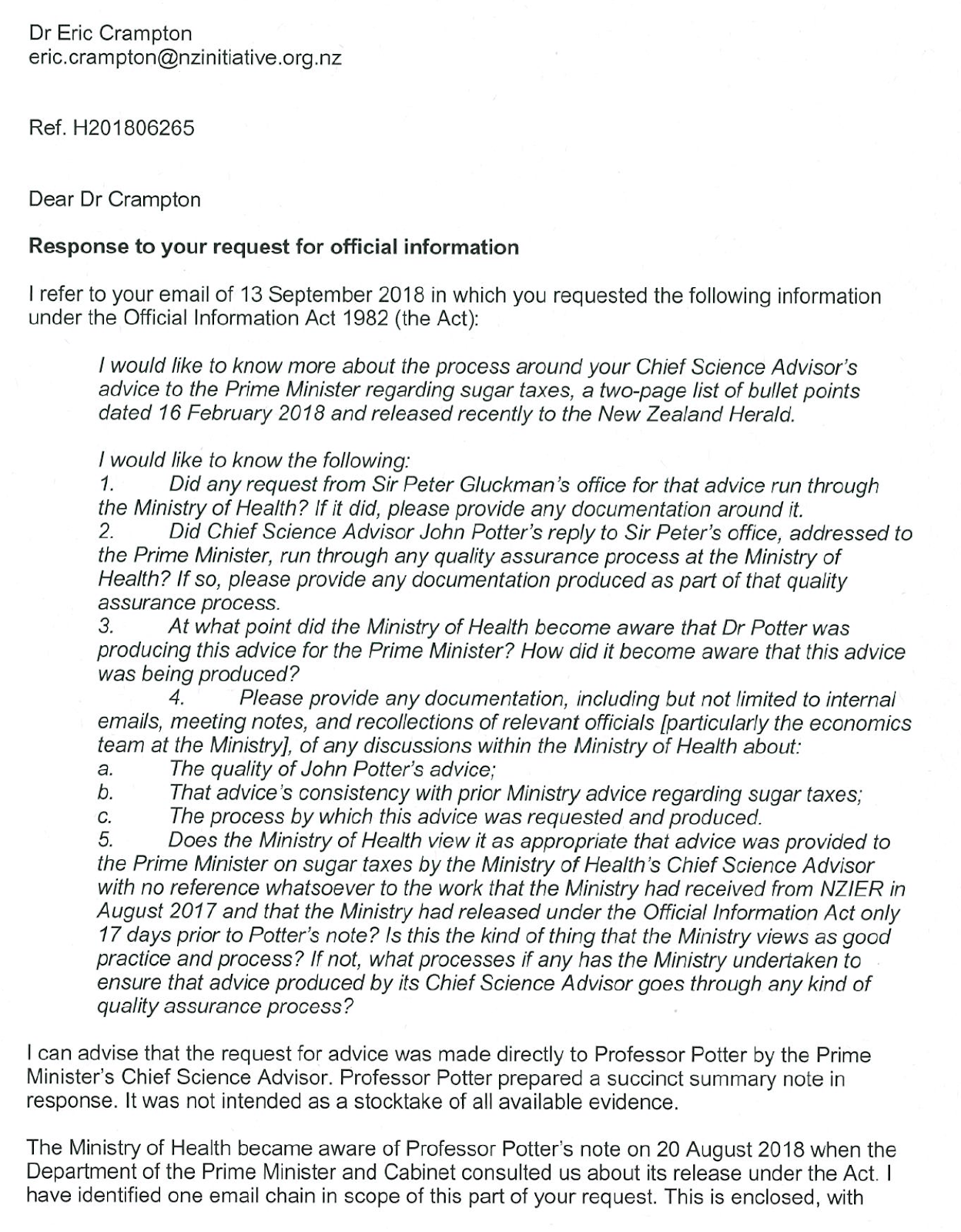
So I OIAed the Ministry to find out what was up with that. Here's what I asked them.
Dear Ministry of Health,

I would like to know more about the process around your Chief Science Advisor’s advice to the Prime Minister regarding sugar taxes, a two-page list of bullet points dated 16 February 2018 and released recently to the New Zealand Herald.

I would like to know the following:
  1. Did any request from Sir Peter Gluckman’s office for that advice run through the Ministry of Health? If it did, please provide any documentation around it.
  2. Did Chief Science Advisor John Potter’s reply to Sir Peter’s office, addressed to the Prime Minister, run through any quality assurance process at the Ministry of Health? If so, please provide any documentation produced as part of that quality assurance process. 
  3. At what point did the Ministry of Health become aware that Dr Potter was producing this advice for the Prime Minister? How did it become aware that this advice was being produced?
  4. Please provide any documentation, including but not limited to internal emails, meeting notes, and recollections of relevant officials [particularly the economics team at the Ministry], of any discussions within the Ministry of Health about: 
    1. The quality of John Potter’s advice;
    2. That advice’s consistency with prior Ministry advice regarding sugar taxes;
    3. The process by which this advice was requested and produced.
  5. Does the Ministry of Health view it as appropriate that advice was provided to the Prime Minister on sugar taxes by the Ministry of Health’s Chief Science Advisor with no reference whatsoever to the work that the Ministry had received from NZIER in August 2017 and that the Ministry had released under the Official Information Act only 17 days prior to Potter’s note? Is this the kind of thing that the Ministry views as good practice and process? If not, what processes if any has the Ministry undertaken to ensure that advice produced by its Chief Science Advisor goes through any kind of quality assurance process?
The Ministry waited until today, the deadline for the request, to release the following. I will transcribe it below and then copy the image of it. It is absurdly lame.
I can advise that the request for advice was made directly to Professor Potter by the Prime Minister's Chief Science Advisor. Professor Potter prepared a succinct summary note in response. It was not intended as a stocktake of all available evidence.

The Ministry of Health became aware of Professor Potter's note on 20 August 2018 when the Department of the Prime Minister and Cabinet consulted us about its release under the Act. I have identified one email chain in scope of this part of your request. This is enclosed, with some material redacted under section 9(2)(a) of the Act to protect the privacy of natural persons.

At the time, officials recall that Professor Potter's note drew different conclusions about the benefits of taxing sugar-sweetened beverages from the study undertaken by NZIER. This is not unexpected as taxing sugar-sweetened beverages is a contested area. The Ministry welcomes debate on these types of complex health issues, including the interpretation of evidence and best practice.

The role of the Chief Science Advisor is to provide independent comment and advice on matters related to the health and disability sector. The Ministry supports Professor Potter providing information and advice to a range of stakeholders in keeping with his role as Chief Science Advisor.

You have the right (etc Ombudsman boilerplate)....
So.

The first the Ministry knew about Potter's note was when it was being released under OIA. MoH noticed that it varied from the advice the Ministry commissioned. But if the Chief Science Advisor chooses to ignore that report and produce a one-sided, distorted view of things for the Prime Minister's consumption, they seem cool with that.

How completely lame. Not sure why it took until the OIA deadline to produce this, but at least I got it.

The other attachment was an email trail of 15 August from DPMC to MOH noting the OIA request of Mr Nick Jones for "Copies of any report or advice received by the Office of the Prime Minister's Chief Science Advisor, or the advisor them self, on a tax on sugar or sugary beverages." DPMC ran it by MoH to check if anything further should be withheld, and then by Prof Potter on 20 August. There's no point in copying it here as it adds nothing, but I'm happy to forward it on if anybody wants it.

I'm pretty sure that Potter would have seen the NZIER report before producing his bullet points, but I have another OIA request in now to confirm that.


Monday, 28 May 2018

Northland DHB missed the memo

Earlier this month, the Ministry of Health clarified that sale of nicotine-containing e-liquids is legal. The Smoke-Free Environment Act's prohibition on the sale of tobacco products for oral use does not apply to heat-not-burn products, or to vaping products.

Northland DHB seems to have missed the memo. We'll come back to that. Because it looks like the memo has changed.

The Internet Archive does not have a record of the Ministry of Health's original version of the page. But I definitely remember that it said nothing about snus. The lack of clarification around snus has been a matter of some interest and discussion.

But the website now has this, which I'll screenshot:
The relevant bit: 
“In Philip Morris v Ministry of Health [2018] NZDC 4478 (the decision), the District Court found that all tobacco products (except types that are absorbed through the oral mucosa eg. snus and chewing tobacco) may be lawfully imported, sold and distributed under the Smoke-free Environments Act 1990 (SFEA).”
But that isn't what the District Court said. The District Court, at Paragraph 30, said this:
The Ejusdem Generis Rule[30] This rule provides that where particular words describing a genus of things are followed by general words, the general words will be confined to things of the same class as the particular words. Thus, where the words “any tobacco product labelled or otherwise described as suitable for chewing” are followed by “or for any other oral use”, the other oral use means a tobacco product used for chewing or an activity similar to chewing.
If the Ministry is now defining absorption through the oral mucosa as being an activity similar to chewing, that's up to them - and potentially contestable in court. But it isn't the Court's definition. The Court didn't even use the term mucosa anywhere in the decision. 

The Court also noted that the ban on sale of less harmful products like heat-not-burn was inconsistent with the purposes of the Act. Snus is far less harmful than smoked tobacco. Jenesa Jeram's report on tobacco harm reduction covers snus in section 4.1.

I wonder about a few things:
  1. When the change to the Ministry's webpage was made;
  2. Why the editing was not noted;
  3. Whether the Ministry has taken any recent advice on the risks associated with snus use;
  4. What that advice might have been;
  5. Whether the Ministry views a ban on snus as being consistent with the aims of the Act, and the evidential basis for that view;
  6. The basis on which the Ministry decided that "an activity similar to chewing" implied a ban on anything involving absorption through oral mucosa. 
But back to where we started. The sale of e-cigarettes is totally not banned. The Ministry's clarification does very clearly say that the sale of vaping kit is fine. And yet we see this today from @WellingtonVaper
I guess Northland DHB didn't get the memo. Some of the memo seems to have changed, but not that part. The restrictions on display and advertising would apply, though, if the DHB could show that the nicotine in the products were derived from tobacco rather than synthesised. That's silly and still in need of fixing in the rules, but it's my understanding of the rules as they now are.

Previously [and as update]: Regulatory Catch-22

Friday, 25 May 2018

Regulatory Catch-22?

Last month's court decision, and subsequent MoH position statement, mean that heat-not-burn tobacco products are legal to sell in New Zealand. 

But the MoH position statement said that other tobacco control regulations will apply to reduced-risk tobacco and tobacco-derived products, barring the ban on indoor use in workplaces.
Therefore, the same SFEA regulatory controls apply to smoked tobacco, heated tobacco and vaping products that are manufactured from tobacco. This includes the ban on sales to minors and restrictions on advertising.

The ban on smoking in indoor workplaces, early childhood centres and schools only applies to smoking. It does not apply to vaping or products that are not smoked, such as heated tobacco products. Individual employers and business owners decide whether or not to include vaping in their smokefree policies.
This could be reasonably read as meaning that MoH intends also that the plain packaging regulations intended for cigarettes would also apply to a pile of reduced-harm products. It might apply to vaping products sold by companies that are upfront that the nicotine is derived from tobacco, and also heat-not-burn products that heat tobacco sticks.

The plain packaging regulations require display of graphic warnings about the dangers of smoking. Pictures of diseased lungs, gangrenous limbs and the like. They all say things like "Smoking causes lung cancer".

But standard commercial packaging regulations prohibits misleading claims on packages.

So it could be the case that providers of tobacco-derived reduced harm products would be simultaneously required to put on graphic warnings that might lead consumers to believe that the warnings apply to the product within the package, and banned from putting those warnings on the packages because the warnings would be misleading when applied to reduced-harm products.

It would be nice if MoH could provide a bit more clarity around this stuff. Would a company get in more trouble for complying with the plain packaging rules when selling tobacco-derived vaping product, or for not complying with the plain packaging rules? Ideally, plain packaging shouldn't apply where there isn't combustion.

Friday, 2 March 2018

Sweet release

For the past several years, public health lobbyists have pretended that all opposition to sugar taxes is ideologically motivated or dishonest. They have argued that the only thing stopping the government from implementing their beneficent proposals has been the actions of nefarious interest groups.

And so it is interesting to read what the Ministry of Health's officials actually thought about sugar taxes.

I requested the Ministry's advice under OIA. They provided it. And it shows that the Ministry's officials raised the same concerns that we did, and that NZIER did, about sugar taxes. The Ministry's advice to Minister Coleman was consistent also with Treasury's warnings about sugar taxes - warnings that the public health people tried to discourage Health officials from considering (see document #34).

Overall, the Ministry worried that measured effects of sugar taxes on consumption were unreliable (but likely small) and that there was no evidence of health benefits from sugar taxes. I summarise the 37 released documents at the link above, and link through to each one. Draw your own conclusions.

Boyd Swinburn's oped in the Herald last week had a lot of problems. But the most insulting of them was his insistence that those opposing sugar taxes are "merchants of doubt". He didn't name any names, possibly because he knows about defamation law. But I was the one who OIAed the NZIER document that he's mad about, and I was the one who made sure that it received the attention it deserved.

And it turns out that my read of the evidence matched how folks in the Ministry of Health were reading things.

There were folks in the Ministry whose views were closer to Swinburn's, and it's awfully fun reading through the OIA to see the ones who are literate in economics trying to get ever more simplified versions of John Gibson's work in hopes that those without an economics background might understand what's going on.

I have no doubt that Swinburn, and his friends, are sincere in their beliefs. I do not believe that they are only pitching their theories because they are troughers wanting ever-greater public health grants. They are just honestly and sincerely wrong.

It could be fair for them to argue that NZIER, the Ministry of Health, Treasury and the Initiative are all wrong on sugar taxes. But when a diverse group reaches the same kind of conclusion on something, it is kinda stupid to argue that it's because of nefarious interests. It's sadly effective, but still pretty disappointing behaviour.

Please keep this episode in mind the next time that the public health crowd runs the ad hominem play when they disagree with me.

Friday, 2 February 2018

Sugar taxes - NZIER's advice

Sugar taxes just are not effective in improving health outcomes. When we surveyed the evidence for our report, The Health of the State, we found no compelling reason to think the things would work.

NZIER's report for the Ministry of Health reaches the same conclusion.

First, some backstory and grousing about document release under OIA. 

Back in October, I requested that the Ministry of Health provide me a copy of the report it had commissioned reviewing the effects of sugar taxes.

The Ministry of Health delayed my request under section 9(2)(f)(iv) “to maintain the constitutional conventions for the time being which protect the confidentiality of advice tendered by Ministers of the Crown and officials”, and under 18(d) as the report would soon be publicly available. But they never said how long 'soon' was.

I interpreted that combination as meaning they needed time to brief the Minister. I advised the Ministry that as I expected that it would take a fortnight to brief the Minister on the report, I'd be following up with the Ombudsman at that point.

The Ombudsman's Office provided a helpful hurry-along, reminding MoH of its preference that 'soon' have a definite date around it.

I received a copy of the report on Wednesday by courier, 50 working days after the initial request for a report that was just sitting on the desk at MoH. It's also now up on NZIER's website, which is fortunate as the only digital copy MoH was willing to provide would have been unusable: image files in a PDF rather than searchable text.

But enough complaining about the OIA.

It looks like NZIER found the same thing that we did. They reviewed forty-seven peer-reviewed studies and working papers published over the last five years.
In our review of the literature, we find that:
  • Taxes do generally appear to be passed through to prices and some reduced demand is likely

  • Estimates of reduced intake are often overstated due to methodological flaws and incomplete measurement

  • Price elasticities from early studies with fundamental methodological flaws have later been used in a number of other studies to assess the impact of sugar taxes, resulting in significantly overestimated reductions in demand

  • There is insufficient evidence to judge whether consumers are substituting other sources of sugar or calories in the face of taxes on sugar in drinks 

  • Studies using sound methods report reductions in intake that are likely too small to generate health benefits and could easily be cancelled out by substitution of other sources of sugar or calories

  • No study based on actual experience with sugar taxes has identified an impact on health outcomes

  • Studies that report health improvements are modelling studies that have assumed a meaningful change in sugar intake with no compensatory substitution, rather than being based on observations of real behaviour.
The evidence that sugar taxes improve health is weak.
The NZIER report notes that the Ministry was particularly interested in the evidence around taxes on sugar-sweetened beverages.

The report emphasises that sugar taxes only improve health outcomes through a chain that must hold at every link. Imposing the tax must increase prices; increasing prices must reduce consumption; reducing consumption must reduce energy intake; reduced energy intake must reduce physiological risk factors.

When NZIER evaluated the literature, they found substantial reason to worry about the chain that leads from taxes to potential health benefits. They find causality hard to determine; problems in estimates of consumption elasticities; difficulty in finding links between taxes and health outcomes; and little work on optimal tax design.

They conclude:
As we noted in the section on frameworks, there are multiple steps in the chain of intervention logic from the well-established principle that an increase in the price of a good leads to a reduction in consumption of that good and, all else equal, to an improvement in health outcomes.

There have been several recent examples of governments imposing taxes on sugar with the intention of improving health outcomes and, thus an extensive literature examining the effects of those taxes.

Our conclusion is that the evidence base gets weaker further along the chain of intervention logic.

If taxes did not have economic costs, through deadweight losses and implementation costs, then even a slight causal link between a tax and an improvement in health outcomes might be justified. That, however, is not the case.

We have yet to see any clear evidence that imposing a sugar tax would meet a comprehensive cost-benefit
Anti-sugar campaigners have framed opposition to sugar taxes as reflecting the pecuniary interests or ideology of those opposing those taxes. The evidence instead suggests that those taxes would have little discernible effect on health outcomes and would be unlikely to pass any cost-benefit assessment.

Monday, 20 November 2017

More drinking stats

The Press reports that the new NZ Health Survey data is up. Smoking rates are down; obesity's up. Here's how they describe the drinking stats:
Meanwhile, 748,000 people, or 19.5 per cent of the adult population are considered "hazardous drinkers", according to a World Health Organisation definition, which takes into account a combination of factors including binge drinking, dependency, and the impact alcohol has on people's lives.

Another indicator headed in the wrong direction is one which measures mental health. This survey found that 7.6 per cent of people suffered from "psychological distress", and a high or very high probability of anxiety or a depressive disorder.
You could be forgiven for thinking that meant the drinking stats were worsening. Here's what the data says instead for adults aged 15+:

  • There are more abstainers. Past-year drinking has dropped by just under a percentage point, with drops for both men and women, and across almost all age groups. None of the single-year changes are significant, but the drop since 2006/7 is significant overall, for both genders, and for almost all age cohorts. 
  • Hazardous drinking is down from last year, from 20.8% to 19.5% overall, with a percentage point drop for women and a point and a half drop for men. The drops are across just about every age cohort. Youth hazardous drinking (15-17 year olds) is down from 7.9% to 7.6%. Hazardous drinking among 18-24 year olds is down from 37.1% to 32.9%. Note on this measure though that we only have data from last year and this year because they changed the definition. 

Thursday, 4 May 2017

Good points on pay equity

Today's reader mailbag brings a few excellent points on the government's pay equity deal for homecare workers.
I think your discussion of pay equity (at least the bit you quote in the blog) does not clearly distinguish between two very different questions: (i) is there an equity issue (ie evidence of discrimination against women)? (ii) is government intervention likely to create more distortions than it solves. One of the reasons I think Hayek is very powerful (cf the "Constitution of Liberty" on anti-trust legislation) by being happy to allow there will be many distortions where real world markets do not deliver efficient outcomes. The force of his argument is that the justification for government intervention has to show how the intervention improves on than outcomes after intervention.

In this context, there is nothing inherent to the way markets operate that will deliver equity and if consumer (or government funding) preferences are racist and sexist, so will the outcomes be. You can demonstrate (as Becker did in the late 1950s) that people make themselves materially worse off by acting in this way, but this is just one of many examples of people trading material welfare to maximise utility (the other obvious ones are giving to charity, voting to pay higher taxes and paying to reduce risk).

But that is not enough to justify government intervention. To justify intervention, it needs to be shown that the outcomes are "better" after the intervention. For instance, if the care industry responds to additional funding by investing in human and physical capital that means many people currently employed in the industry lose their jobs, the outcome may be fairer in the sense of having removed gender inequity for those who are qualified, but have done so by punishing those unable to get qualifications and/or younger people. In fact, you will find in health and social care that occupational licensing has tended to do precisely this, but with a twist that many of the people on lower pay are simply reclassified. So nurses used to do a wide of range tasks. It is no longer worth employing a fully trained nurse to do the lower skilled tasks so "trainees" do some of them and others are done by people explicitly labelled for those lower skilled tasks (e.g. "cleaners").

Therefore my prediction of the impact of the legislation is this:
  • After the initial redistribution there will be a joint effort by health unions and employers to increase the training barriers to be eligible for the higher pay;
  • This will include an extended training period when younger people will be paid at a lower rate because they are "training". Much of the on-the-job component of training will be doing many of the lower skilled tasks previously done by everyone;
  • There will be a plethora of new job titles created, where all will have lower certification requirements than "fully qualified" carers and therefore have lower pay.
  • Most of the people in the lower qualified jobs will be women, earning slightly less than they would previously have earned. They will be disproportionately from poor backgrounds, more likely to be Maori and PI, and will find most practical means of promotion blocked because of the new licensing requirements...
I am not sure that counts as equitable...?
I agree with my correspondent that Becker models under-emphasise that the path to equilibrium can be slow. Taste-based discrimination only really holds up where the customers have a preference for discrimination (unlikely in the homecare case) or where there's a severe lack of competition - and that's the dominant funder problem that MBIE's RIS talked about.  

I fear that my correspondent is right about what comes next. I hope that what comes next is the DHBs shifting to allow more people to hire their carers through MyCare. It's better for the homecare clients and better for the workers and cheaper for the health system. But I'm a bit pessimistic there too - it would require back-end changes that DHBs seem to like throwing into a too-hard basket. 

Monday, 2 December 2013

Social Bonds

I hadn't heard of this one before Rebecca Stephenson called asking for comment. New Zealand is looking to pilot a "social bonds" project. The full documentation is here; the redacted cabinet papers are here.

In short, NGOs and private providers interested in delivering projects they think will achieve objectives sought by the government, whether initiatives to reduce criminals' recidivism rates or to help drug addicts get clean, can pursue funding for their initiatives through a bond issue. If they beat the programme's target expectations, the investors get a nice return scaling with the project's success. If they don't the investors lose out.

The project certainly looks worth trialing.

KPMG provided a case study based on alcohol intervention programmes. I rather like the idea: projects then are targeted at truly harmful use rather than broader interventions. Unfortunately, they illustrated some of the potential savings from such initiatives by pulling in social cost figures from the BERL report. However, they do provide a nice caveat in Appendix 3:
The Berl analysis has been independently critiqued and it is likely the social costs have been overestimated.22 The analysis is referred to in this business case to illustrate the social cost, not provide evidence of the social cost. The scale of total costs and the comparative proportions of the cost components should not be relied on for the Social Bonds pilot, however the work does provide an illustration of the different types of social costs that should be considered for alcohol and drugs. 
They do correctly note that there are large potential benefits in reductions in costs to the health and justice sectors from targeted interventions for harmful drug and alcohol use, even if these are overestimated in the Berl report.

I told Rebecca:
Social bonds let investors bet on the interventions they think will work in reducing social problems. This provides rather a few advantages, not the least of which is forcing the use of measurable and achievable performance indicators. While I hope the business cases for particular bond issues will be a bit more robust than the case study provided by KPMG, and that Treasury will be keeping an eye on things to ensure realistic estimates of potential social benefits, the initiative seems well worthwhile.