Showing posts with label manitoba. Show all posts

Friday, 15 June 2018

Australia really sucked in the 70s

Frances Woolley points to Barbara Spencer's Address to the Canadian Women Economist's Network lunch at the 2002 Canadian Economic Association meetings. I hadn't read it before.

Some less-than-fun features of Oz through the early 1970s to which Spencer points:
  • Until 1966, any woman in the public service who married had to resign, unless she were a secretary and could join the typing pool;
  • Women in the public service, until 1969, were required to be on lower pay;
  • It took until 1972 for regulations restricting women's advancement in the public service to be removed;
  • Scholarships for teachers at ANU were very generous, but bonded: graduates had to go and teach in remote places for five years after graduation, unless they got married. Unsurprisingly, almost all of them got married just after completing their degrees. 
  • CSIRO, the Commonwealth Scientific Research Organisation, blocked female appointments because their scientists had to go out on field expeditions, and they didn't have toileting facilities in the field that CSIRO considered adequate for women. So while they didn't ban female appointments, all appointees had to be able to go out on field expeditions, and women were not allowed on field expeditions. This was apparently endemic through the mid-70s in sciences. 
    "A friend, who is currently a professor at the ANU in Social Welfare, was told in about 1974 by the career guidance councillor at her high school in Canberra not to do science because of the lack of appropriate bathroom facilities."
But there are also some excellent fun observations about Winnipeg and the University of Manitoba.
I knew very little about Canada except that it was rumoured to be cold and that it produced lots of logs and beavers. Arriving at Winnipeg just before Christmas in 1969 was a shock. It was so cold and desolate looking that I thought I had arrived on the moon by mistake. I had no boots, only sandals, and my feet nearly got frostbite as I got off the plane at 30 below zero on the open tarmac.

However, it may surprise you that over my years in Winnipeg, I gradually grew to appreciate the stark beauty in flatness and endless white. I remember going out into the country side and realizing that the white snowy ground stretches, basically unchanged, for hundreds of miles. I never grew to appreciate the cold.
I was an undergraduate at Manitoba, doing a double-honours in Economics and Politics, 1994-1998. The economics faculty baffled me. But there's a long history there - and one that a farm kid going to the local university would never know.

Here's how Spencer found it in the 70s.
I arrived at Manitoba with a job as a part time lecturer in the Economics Department, starting January 1970. For my first course, I took over Principles of Economics from Cy Gonick, a well known Marxist or New Left economist, as he called himself, who had recently been elected to the Legislature as part of the NDP sweep into power. Taking over from Cy Gonick was a memorable experience. His version of microeconomic theory had mostly been a diatribe against the role of U.S. multinational corporations in suppressing Canadian independence. Most of the students were taking the course solely because Cy Gonick was teaching it, including a group of about 10 Maoists, who were there to heckle him. Cy neglected to tell the students that he would not be teaching in the second term and, in addition, he promised that there would be no final examination, something that was contrary to the rules of the University. Not surprisingly, the students were quite upset and angry when they learned that I would be teaching the macroeconomics part of the course and that I would make heavy use of algebra, which would be tested on the exam. Despite being given a half eaten apple as a present by a student and no doubt receiving dreadful teaching evaluations, somehow I survived and was actually rehired by the then Chair, Clarence Barber, to teach Mathematical Economics and Intermediate Microeconomics the next year.
I remember a John Loxley seminar on the Multilateral Agreement on Investment that was very much in the Gonick tradition. 
I returned to Manitoba in January 1979 to find it in turmoil, with Cy Gonick, the leader of the left wing faction, newly appointed as Head and many of the faculty attempting to move the location of their offices to Colleges on campus, as far from the main department as possible. I did manage to get promoted to Associate Professor that year, but it was obvious that I had to leave. 
Departments that get themselves into this kind of mess do such a terrible disservice to their students. Maybe you can do that at a small teaching university somewhere, where everyone applying to the place is applying to go there because they want to see Maoists fighting Marxists and want to be right at the heart of debates within a fringe part of the discipline. But pulling this crap in the economics department at the province's flagship university - it isn't right.

Wednesday, 30 August 2017

We don't know how lucky we are in New Zealand: craft beer edition

Today's installment of The Outside of the Asylum covers some of the things in Manitoba that might have driven you to drink, and the barriers there to getting a decent drink.
Americans could get beer from other parts of Canada more easily than Manitobans.

Other regulations made it near impossible for craft breweries to emerge. Half Pints led the charge for craft brewing in Manitoba. When they wanted to expand their home-based brewery to a more commercial size, they phoned the provincial regulator, who just laughed and hung up.

Manitoba has been liberalising its rules since 2013, but the rules are still archaic and complicated by New Zealand standards. The rules are such a mess that the Manitoba government has had to consider subsidising small brewers to get the industry going. Ronald Reagan’s quip about government sums up Manitoba rather well: “If it moves, tax it. If it keeps moving, regulate it. And if it stops moving, subsidise it.”

New Zealand’s regime, by comparison, is pretty sane. But keeping it that way requires vigilance.
A lot of the piece is on how great it is that it's easy to go from home brewing - or even home distillation (legal here) - into commercial distribution. Because it's easy, there's a great craft beer scene, with new brewers and distillers turning up faster than I can keep track.

It was a bit funny then that, over on The Spinoff's Facebook comments, somebody reckoned I was giving a Lion Breweries line.

The standard bootleggers and baptists model says that the big guys should want systems that lock up the whole market for a couple of big players and make it impossible for new entrants, while making it look like the regulation is done for reasons other than turning the industry into a cozy cartel.

New Zealand's system keeps all the players on their toes. It is worryingly easy to imagine an alternative where the big players strike an implicit deal with the Sellman-types to put strong restrictions on where things can be sold (knowing that it won't do much to sales) and restrictions on distribution and production that lock up a (slightly) smaller market for two big players.

I love that I live in a country where businesses learned in the 80s that the only winning move in that kind of game is not to play.

Here's Bruce Yandle explaining Bootleggers & Baptists.

Monday, 30 November 2015

Manitoba envy

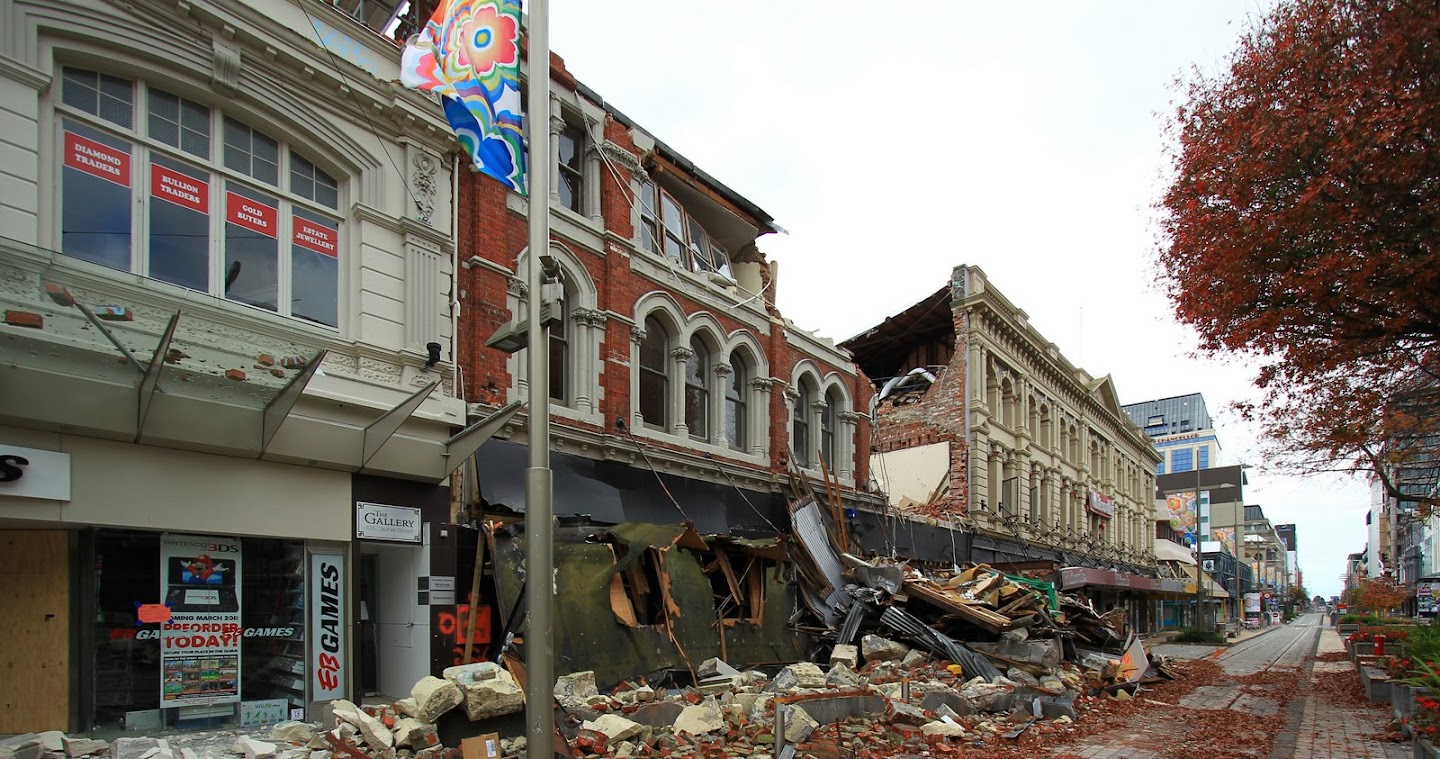
Despite massive need for flat-pack furniture following the earthquake, Christchurch didn't manage to get an Ikea.* And there's yet no Ikea anywhere in New Zealand.

Last month, Christchurch people got mad that a Wendy's wanted to serve beer.

Meanwhile, Winnipeg's Ikea serves beer and wine.

* Trading on the iPredict market on whether there would be a Christchurch Ikea went as high as 18%. But Simon Bridges said we can't have iPredict any more, so I suppose there can't be a contract on whether we'll ever get an Ikea. So we're as bad as Manitoba on the predictions-market front now.

Tuesday, 3 November 2015

Manitoba taprooms

Things are improving in Manitoba:
It may be late to the party, but craft breweries are on the verge of exploding in Winnipeg.
Once a smaller market with just two local craft breweries (Half Pints Brewing Co. and Fort Garry Brewing Co.), the city is set to quadruple that number by the end of next year when at least six breweries or brew pubs are scheduled to open.
From the opening of Nicole Barry's Peg Beer Co. brew pub this winter to Tim Hudek's One Great City Brewing brew pub opening in April, Manitoba will go from being the only province without a brew pub to hosting two.
Executives from Calgary-based Big Rock Brewery were here this week, scoping out Winnipeg as a possible location for one of their new urban brew pubs.
Local veterans of craft breweries are embracing the competition.
...
The province began trying to expand the local market for craft beer last year by introducing growlers, a refillable beer container that sells Fort Garry and Half Pints beer at participating Liquor Marts. It plans to expand the program.
In May, the province announced it would allow for taprooms at these breweries, with a maximum of about 50 patrons, to sample beer. The brewery only has to provide small snacks.
The decision in May to allow taprooms and tasting rooms helped convince Tyler Birch to get involved in craft brewing. He hopes to have his brewery, Barn Hammer Brewing, opened by late April.
"There weren't enough breweries in Winnipeg and Manitoba," Birch said, while on break at the Brewers Association meeting.
"Craft beer in Manitoba is definitely going to change. Everywhere else you go, there are so many breweries, and everyone drinks local beer. We don't have that here, and I think as people start to see what we're doing, that will all change," Birch said.
So far, only Half Pints has expressed interest in opening a taproom, but Ron Lemieux, the minister responsible for MLL, hopes these new breweries will pounce on it.
Winnipeg, about 700,000 people, in a province of a bit over million people, is about to expand to 8 breweries.

NZ, population 4.6 million, has about 80 brewers as members of the Brewers' Guild.

It's only recently (well, 2011) that the regulations smartened up a bit (but not entirely). I'm not sure what's up with the restrictions on taproom serving capacity.

HT: Mom

Previously:

Friday, 28 November 2014

Pub crawl

Manitoba's small town hotel bars seem to be going the way of Britain's local pubs. The Winnipeg Free Press's Bill Redekop tours a pile of the hotels I once attended in Southern Manitoba.
When an opportunity arose to buy the Notre Dame Hotel, he liked the idea of being his own boss and took the plunge.
Despite five banks turning down his request for a mortgage on the old hotel, which started out as a men-only beer parlour a century ago, Mondragon was energized. The beverage room is in the centre of town, and seemed to have decent traffic. It seats 50 but can hold 80. It also had a restaurant and beer vendor. The town has a population of about 600, with another 400 on its periphery.
His first year, he reinvested $30,000 into upgrades including a new musical sound system.
Mondragon threw street parties, costume parties, theme parties, formal gown parties where women wriggled into their old wedding gowns for a night, light'n' bright parties (neon spandex wear), pyjama parties, toga parties and brought in musical acts. The events were good but they should have supplemented his income, not been his life support.
He hired an expert chef and expanded the restaurant hours, even offering 6:30 a.m. breakfast. He lost money every month but one. He finally closed the restaurant, something that's still a sore spot with people in town. The beverage room now doesn't open until 12:30 p.m. and he's had to cut staff and increase his own hours. After four years, he has yet to take a paycheque.
"You burn out. If you're working for nothing, you're motivation goes fast," he said.
...
But is the rural beverage room worth saving?
Gary Desrosiers drives a school bus but not for kids.
Desrosiers has owned the Brunkild Bar and Grill on Highway 3, about half an hour southwest of Winnipeg, for 16 years. With all the changes to liquor laws -- from banning smoking to tougher drinking and driving laws -- he knows people are shying away from beverage rooms. After all, if you lose your driver's license, you can lose your ability to earn a living, especially in rural areas. And it's not as though people can call a taxi or take a bus to get home.
Well, they can at the Brunkild Bar and Grill. Years ago, Desrosiers bought a bus and began transporting people to and from his bar. His bus service picks up people from Winnipeg to Carman, and all points in between. He then drops them off again at the end of the night.
He's on his third bus. It holds 30 people but most times he carries from 15 to 20. The bus goes out once or twice a month to pick up some group or other. Sometimes it's University of Manitoba students from faculties like education or agriculture, such as when the aggies hold their "drink the town dry" events. He'll get a call from people who are bored at a house party, and bus the entire crew to his beverage room. Desrosiers only charges for fuel but that can run about $100 for his old gas guzzler built in 1979.
While transporting patrons, he's also picked up stranded motorists. He once picked up a family -- parents and three children, including an infant -- on a lonely stretch of highway after 2 a.m., in bone-chilling cold, and brought them back to his beverage room.
The bar as refuge? That's exactly what it is, said Desrosiers. Where do you want people drinking? he asks. He doesn't wait for an answer.
"The bar is the safest place. You have sober, experienced people to look after you. How many people are murdered in a bar versus murdered at a drinking party? I literally, under the law, have a duty of care."
...
Desrosiers acknowledged there isn't much sympathy among the general public for beverage room owners. But one of the effects of tightening government regulations on rural hotels is people have begun converting their garages into little private bars and having crowds over. The garages are insulated and furnished, and people can smoke and drink liquor at retail prices.
Tough business. Rural population decline, and rural ageing, doesn't help; that likely explains tough times in Mariapolis. I'm told Notre Dame, though, is in better shape than it was 20 years ago. The smoking regs may have done some of it. I wonder if anybody's there looked at the data on local pub custom and the change in the drink driving limit from .08 to .05. We always had a designated driver, but the increment from .08 to .05 could be chilling. It's pretty testable: if it's the drink driving limit, you'd expect a differential effect on bars serving lower population density catchments with the change because required driving distance to get to the pub would be longer.

Our farm was seven miles south of Notre Dame on PTH 244. I spent a bit of time at that hotel.

HT: Mom.

Friday, 16 May 2014

Mmmmm.... Nitrates

Loyal readers will recall that Manitoba's government set up rather a bit of a Catch-22 for the Cavers, farm entrepreneurs producing charcuterie. While their cured meats were safe and produced following Italian standards, they were not following Manitoba regulations. Because there were no Manitoba regulations. And so the government confiscated all their produce despite having just given them an award for agricultural innovation.

Here's the latest, from Manitoba agribusiness reporter Bill Redekop at the Winnipeg Free Press:
The case sent shock waves across rural Canada. The Cavers are trailblazers in on-farm food production and have mentored other farmers, speaking at agricultural seminars and workshops. Plus, they had just won the Great Manitoba Food Fight and $10,000 for their prosciutto, a cured meat aged and dried for up to a year,.
So when the province raided their farm, it was like Ben Johnson being caught with steroids. The Cavers' livelihood depends on their reputation as ethical food producers. Their business concept is small, transparent food production, versus factory farms and multinational corporations. The $600 fines hardly mattered -- their reputation did.
The Cavers had no intention of paying the fines. The court date was set for this October. The couple phoned the provincial government, trying to find out what evidence it had against them. They wondered if they were going to need a lawyer. That's when they learned the province had dropped charges against them three months earlier, without telling them. The province told the Free Press a technical error was discovered on the tickets issued to the Cavers, which made them invalid.
It may be testament to what people think of the government that the raid didn't hurt the Cavers' business. In fact, business shot up.
The Cavers continue selling meat, but not charcuterie.
The Cavers still aren't sure what they did wrong. Leading up to the raid, health inspectors regularly visited their meat-curing operation, they say.
The issue wasn't that they made unsafe food--the cured meat the province seized and destroyed had never been tested. It was that the Cavers hadn't documented each step as carefully as mass-produced foods, said Pam.
Examples she gave included the weight of the prosciutto prior to salting, the weight of the salt going into the prosciutto, the weight of the prosciutto before drying and the weight afterward. Instead, they only weighed the meat before and after the process. Nor did the Cavers know which pig each item came from.
Then in June, inspectors told the couple not to sell any cured meat. An inspector made a follow-up visit in July. Clint asked what they could do to make the charcuterie saleable and the inspector said he'd get back to them. Then came the raid in August. The Cavers insist they had complied with the province's order and not sold any of the meat since June.
The story's not yet over. The province is insisting that the Cavers add nitrates to their cured meats; the Cavers are rather sure they can produce safe products without it.

HT: Mom.

Thursday, 6 March 2014

Blogging Hutterites

Maybe we're closer to Arrow-Debreu worlds than I'd thought.

The Hutterites are an Anabaptist group that live communally, generally avoid personal adornment* (like the Amish), but that embrace technology when applied to work. Evergreen Colony, half a mile south of my parents' farm, owned large tracts of land and farmed them with the latest equipment. But the folks living there weren't allowed radios (though we'd hear stories of ones hidden in the equipment) and needed the Boss's permission to make a phone call (while some of the men would sneak over to our farm to use ours). The Manitoba colonies have diversified a fair bit, with many having now moved into light manufacturing.

I was rather surprised when Dad pointed me at the Hutterite blog. It's not updated all that frequently, but I was surprised it existed at all. Any Hutterite blog is self-recommending, so you don't need me to tell you to read it. A couple highlights:
Update: Lee Benham, in comments, points to his piece with Phil Keefer looking at voting within Hutterite colonies for the preacher.


* The dividing line between personal adornment and work-relevant technology can often be a bit blurry. Personal dress is always rather plain. But Hutterite grain trucks back home were festooned with more decorative lights than anybody else's.

Monday, 9 September 2013

Food Fight

Oh, Manitoba. Just when you start looking sane, you go back to your old wacky ways.

Recall that Manitoba is the province where you can't sell a potato without, well, hassles.*

Now, read this one and weep. Since I was a kid in Manitoba, the government made much fuss about agricultural diversification, wanting farmers to move to more processing and oddball thin-market crops.

The Cavers at Harborside Farms are a great example of how this can be done well. They raise Berkshire hogs outside of Pilot Mound, a small town a couple hours southwest of Winnipeg. They started curing hams following old Italian recipes. Bartley Kives reports:
In May, Manitoba Agriculture Food and Rural Initiatives awarded a $10,000 prize to Harborside Farms, after inviting owner Pamela and Clinton Cavers to compete in a contest called the Great Manitoba Food Fight in Brandon.
The cash prize for the Cavers' pastured-pork prosciutto was intended to help the couple further commercialize the cured meats they had been producing on their farm since 2008, using traditional Italian recipes.
In June, inspectors from a different branch of MAFRI ordered Harborside to stop selling all of its cured meats, known in culinary terms as charcuterie, which had appeared on the tables of higher-end Winnipeg restaurants such as Pizzeria Gusto and Bistro 71/4.
The Cavers, who also hoped to sell their product at De Luca's Specialty Foods, claim they complied with the order.
But on Wednesday, as University of Manitoba environment students were about to tour the Harborside grounds, a pair of inspectors drove up and seized the couple's entire inventory of charcuterie -- about 160 kilograms of the cured pork and beef products known as prosciutto, lonzino, capicollo, bresaola, salumi and soppressata.
The Cavers said they were each handed $600 fines.
"The fine was for selling food unfit for human consumption. This was the same food the agriculture minister ate in May," said Pamela Cavers, referring to MAFRI Minister Ron Kostyshyn, who tasted Harborside's prize-winning prosciutto at the contest in May.
So, was anything wrong with their cured meats? No. Absolutely nothing. But they didn't follow the approved process. Why? Because there wasn't one. They were following traditional processes, the food was safe, and they'd asked the government for advice on making sure they were also compliant with any process specs that the government might wish to impose.
The provincial inspectors took no issue with any aspect of the farm aside from the charcuterie operation, whose entire processes they deemed unsatisfactory, Pamela Cavers said. A June inspection yielded an order to build a separate drying room and acquire instruments to monitor pH levels and moisture, among other issues, she said.
The Cavers said they had been attempting to obtain specific guidelines for producing artisanal charcuterie, but could not receive direction from the provincial food development centre in Portage la Prairie.
"They said they had no idea what to compare it to," she said, adding officials had no experience with charcuterie. She said a call to the minister's office during the Wednesday raid yielded advice to call the chief veterinary officer. "They didn't even know what charcuterie was," she said.
Were the Cavers selling unfit food? No. An informed correspondent tells me that Manitoba Health has no adopted procedures as yet for dry cured meats. The Cavers tried proving that their product was safe, by various bacteria, moisture, and pH tests at the Portage Food Lab. But there's no standard that the government could point to showing whether it was good enough.

Because Manitoba Agriculture, Food and Rural Initiatives (MAFRI) does not have Manitoba Health standards against which they can judge things, they just took all of the Cavers' stuff. Even if the Cavers perfectly followed all of the Italian standards, they're still in violation of Manitoba law. Because they're not following Manitoba standards. Because nobody has written any Manitoba standards.

A rational province would, where no official provincial standard exists, simply adopt an existing proven standard from an outside trusted source and verify that a Manitoba producer's practices meet that standard. Alternatively, perhaps somebody in Manitoba should start trying to get approval to sell chocolate-coated cotton.

There's a petition up here wishing that the Manitoba government be sensible. I hope it's successful.

* See:

Monday, 29 April 2013

Liquor traps

Gordon Tullock warned us that once substantial rents accrue to some regulatory provision, it gets hard to change the regulation even if it is spectacularly inefficient. He illustrated the case with New York's taxicab medallion system: the restriction on the supply of cabs doesn't help the drivers but instead drives up the price of the asset in fixed supply, the medallion itself. Abolishing the medallions would bring prices down for dispersed consumers but would impose substantial capital losses on the medallion-holders.

There is a way out of transitional gains traps: tax the winners to pay off the losers. But it's awfully hard to implement. Opaque transfers are opaque for a reason: voters do not understand them and regularly oppose things that would make them better off. Tullock's biggest lesson then is that we should never ever get into transitional gains traps in the first place as they are just so very hard to escape.

Today's edition: liquor permits. Cities like restricting the number of liquor outlets, reckoning that they can thereby reduce the number of problems caused by drunks. If the restriction is binding, then the licence to sell alcohol becomes an asset for the owner. If the restriction is really binding, it can be a really valuable asset. Witness Flemington, New Jersey [ht @MarketUrbanism]:
Local officials who want a more lively town center and a development team seeking to restore a landmark hotel were hoping to put a new watering hole on Main Street. Then they ran smack into New Jersey's strict, Prohibition-era alcohol laws, which restrict the number of liquor licenses per town. Flemington had just three—two belonging to establishments in strip malls and one for a Veterans of Foreign Wars hall.
Having a decent bar, it turns out, is helpful to reviving small downtowns, development experts say. So, in February, the developers came up with a novel but expensive solution, buying the Italian restaurant that owned a license and eventually transferring it to the downtown hotel. The price: about $1 million for the permit alone.
...
The Union Hotel owners' arduous journey to opening a bar is emblematic of a conundrum facing small downtowns across New Jersey. In a state making efforts to reverse decades of sprawling suburban development, a shortage of liquor licenses has emerged as a hurdle to rejuvenating Main Streets, according to development consultants and planning groups.
...
The ramifications have been felt across the state. Local officials in Glassboro, N.J., a South Jersey borough of about 18,000 people, said their $300 million public-private downtown development plan has been set back because it only has seven liquor licenses, with one changing hands recently for $700,000, said Joe Brigandi, the borough administrator. It has made it difficult to attract a new downtown restaurant, he said.
Meanwhile, Manitoba's emergence from the liquor dark ages is hindered by the existing rent-holders. The Winnipeg Free Press's Bartley Kives* documents the insanity of the prior liquor regulations, with 12 different highly prescribed liquor licences that often require venues provide services of negative value to their customers. Live music requirements ban the use of DJs for some licencees, for example.  But Kives also sees the transitional gains trap:
And more politically, the province isn't prepared to undermine entrepreneurs who've invested heavily in restaurant-lounge concepts such as Earls, Moxies and the Keg, which have proven extremely successful in recent years.
"We're not going to step all over people who've invested in infrastructure," said Chomiak, referring to independently owned restaurants as well as the chains.
In Manitoba, Earls-style venues have stolen the club-going clientele away from hotel beverage rooms, suggested Jim Baker, president and CEO of the Manitoba Hotel Association.
Decades ago, hoteliers opposed liquor-regulation reform in fear of losing market share to stand-alone venues. Today, hoteliers are more concerned about the prospect of legalizing alcohol-delivery services -- which would harm beer vendors -- than they are with the idea of more small clubs serving alcohol in downtown Winnipeg.
Baker said he would also like to see the province ease up on regulations governing minors in beverage rooms, especially in rural areas where banquets and fundraisers would present a business opportunity if people under 18 were allowed on-site.
"There's a need to see how these people can use the larger rooms for other purposes," said Baker, who cautiously supports the idea of regulatory reform. "We want to be part of this discussion."
Hotel, restaurant and club owners are also united in their desire to see liquor inspectors ease up on the enforcement of minor infractions such as improper paperwork. That sort of cultural change is coming as part of the creation of a new regulatory agency, Chomiak said.
There's a great Masters thesis to be written applying the Peltzman model of regulation and deregulation to liquor law in Manitoba.

New Zealand has been a minor oasis of sanity relative to these kinds of cases. Australia, as I understand things, has sufficiently restrictive liquor permitting laws in some parts of the country that people buy hotels just to be able to run the permitted liquor outlet attached to the hotel. I worry that NZ's move to greater local control of licensing options will wind up letting local activists restrict the supply of new licences, to the hoozahs of existing permittees, and move us into the trap. Read New Jersey and Manitoba as cautionary tales.


* When I was in Manitoba, I remember Kives having had the entertainment beat (though I could have that wrong; it was a long time ago). Now, every time there's a great piece in the Winnipeg Free Press, it's from Kives (and here and here). I wonder how long it'll be 'till he's scooped up by one of the national papers.

Thursday, 18 April 2013

Exempting the elderly

New Zealand and Christchurch having been a bit depressing lately, other than last night's rather nice 77-44 vote in favour of allowing same sex marriages in addition to civil unions, it is sanity-enhancing to look a bit at lunacy elsewhere.

While New Zealand funds education from general taxation revenues and ensures that schools in needier areas receive enhanced funding, Manitoba, and much of North America, mainly funds its schools out of local property taxes. There are potentially good Tiebout reasons for doing this as some people prefer paying more in taxes for better schools, it also makes it harder for schools in poor areas to provide decent services.

From 2015, Manitoba seniors will be exempt from the education portion of the property tax bill. Says Finance Minister Stan Struthers, "These seniors who paid a lot of taxes over their working careers as they raised families, I think they deserve a break."

Let's leave to one side for now the obvious equity problem here that letting the relatively wealthy elderly off the hook for a bundle of services that they don't currently consume might well invite relatively poorer young people to request exemptions from the portion of their taxes that go to pay for government services never consumed by young people: the Canada Pension Plan, Medicare coverage for Altzheimers', government-funded old folks' homes, the Royal Canadian Air Farce... I'd be pretty surprised if net government funding didn't already strongly favour the wrinklies.

The bigger problem is the long-term fiscal outlook when the political incentive is to pull back from taxing the wealthy elderly. Now there are reasons why property taxes on the elderly can be politically unpalatable. Suppose that you've owned your house for 60 years, its value is bid up by a bunch of families coming in because of the local school, and you suddenly can't cover the property tax bill. This will be a problem for any land tax system, any capital gains tax system that taxes unrealised gains on the family home,* or systems supporting local education out of local levies on property values.** There are plenty of ways that the elderly homeowner could re-optimise: reverse mortgages could tap the equity, or the homeowner could sell to someone who values the local amenity and move somewhere else in town.

But if policy should be moving towards a tax base that can withstand a large proportion of taxable-income poor but asset-rich individuals with strong demand for government services, Manitoba's move isn't encouraging.

New Zealand at least has been making some moves in the right direction. We've been shifting the tax base from income to consumption. We don't tax capital gains, and for good reason. But whenever retirees cash out some of their portfolios to fund current consumption, they pay the 15% GST. I'd also expect that we'll be scheduling increases to the age of superannuation eligibility after the next election.

* Systems taxing only realised gains have other problems. And systems exempting the family home entirely have still other problems. Seamus has a rather lengthy series of posts on the topic, some of which are here indexed.

** Note also that we can also get big problems in rural school districts: townies are income rich but have less land wealth; farmers are land rich but will have incomes that fluctuate a lot year to year. If the school levy is a fixed proportion of the land value, the farmers bear a very large share of the school district's costs. I have no particular view as to what's fair here other than a generalised view that a progressive consumption tax would be rather better than all of this mess.

Tuesday, 22 January 2013

Banning craft beer

My old home province of Manitoba didn't quite make commercial brewing of craft beer illegal. But they might as well have. Bartley Kives delves into the morass of Manitoba liquor regulations. Keep in mind that many of these regulations are the kinds of things that New Zealand's neo-prohibitionists would support. Fortunately, things look set to ease up in Manitoba. A bit.

Here's Kives:
Right now, licence holders are not overly pleased. There are 12 different liquor-licence categories in the province, each with its own set of rules and annoyances.
For example, hotels may obtain a licence to sell alcohol in a "beverage room," but only if they also have a liquor licence for a "dining room," which must remain open when the beverage room is open. As well, hotels can only obtain a beverage-room licence if liquor authorities grant something called a hotel certificate, an official stamp of approval the Manitoba Hotel Association dislikes because it may apply to businesses that actually function as long-term rental-apartment blocks, as opposed to actual hotels where tourists and business travellers stay for a short period of time.
Restaurants, meanwhile, may also obtain a dining-room licence, but must ensure alcohol sales do not exceed 60 per cent of gross revenue. Restaurants may also obtain a "cocktail lounge" licence where customers do not have to purchase food, but the combined restaurant-lounge must still maintain the 40-60 food-to-alcohol ratio.
There's also a cabaret licence, which does not demand any food sales but does require licence holders to exhibit two hours of live entertainment every day. That entertainment must be visible from every room in the venue and must not involve recorded music.
As a result of these regulations, hotels that rent out space to pizza parlours in an effort to fulfil the dining-room requirement of their beverage-room licence have been hit with violations when the sole dining-room employee goes out to deliver a pizza.
Popular restaurants with lounges are forced to turn customers away simply to maintain food-to-alcohol ratios. And cabarets cannot satisfy the live-entertainment provisions of their licences by booking club DJs, many of whom are among the biggest draws in live music today. That's because of a literalistic interpretation of a cabaret-licence provision against recorded music, which was created to protect jobs for musicians in the age of jukeboxes.
It gets worse:
When cabaret owners offer to circulate a guitarist, accordion player or some other wandering minstrel around a level with no live stage, they are told those musicians must be miked up and broadcast, too.
"Even they say it's stupid," Kendrick said.
Hua, meanwhile, was forced to puzzle over which licence would best serve the Rec Room, his new Pembina Highway sports lounge, which will feature foosball, Ping-Pong and arcade games. "There's no licence for an entertainment hall that has Ping-Pong," he lamented.
And once you have a whole industry in place that has fixed investments based on a set of stupid regulations, it's harder to get rid of the regulations:
John Scoles, the proprietor of the Times Change(d) High & Lonesome Club, a Main Street roots-music venue, said he believes small venues will benefit the most from liquor-licensing reform.
"Small venues are the ones that struggle the most to meet licence requirements," said Scoles, who found the right formula for his own small venue in 2004 when he converted it into a private club from a restaurant and lounge.
"It never seemed success in this business was based on entrepreneurial ingenuity. It was based on what parameters you were forced to observe. Nobody could just have a great idea. They had to have a great idea that was shaped by something else."
But Manitoba isn't moving toward a free-for-all. For example, the new liquor-and-lotteries act will still require restaurants to maintain some form of food-to-alcohol sales ratio, Chomiak said.
There's a social benefit to serving meals with booze, he said. And more politically, the province isn't prepared to undermine entrepreneurs who've invested heavily in restaurant-lounge concepts such as Earls, Moxies and the Keg, which have proven extremely successful in recent years.
"We're not going to step all over people who've invested in infrastructure," said Chomiak, referring to independently owned restaurants as well as the chains.
Kives reports that there are zero brew pubs in Manitoba - population about 1.2 million.

Manitoba has a state monopoly on liquor sales: the Manitoba Liquor Control Commission. They keep prices fairly high. The province has a 0.05 drink driving limit.

And yet alcohol is a factor in over 40% of all traffic accident fatalities in Manitoba (2007 figures). In New Zealand, alcohol and drugs are implicated in about 30% of traffic accident fatalities. The total number of deaths will be higher, as we have roughly four times Manitoba's population and our roads are terrifying.

Note that percentages in the table below can add to more than one hundred as accidents can have multiple causes.


Table 26a from the same document shows about a ten percentage point drop in the fraction of accident fatalities involving alcohol from the late 1980s / early 90s to present. 

I hope that the local-level regulatory activity enabled under New Zealand's recent revisions to alcohol regulations do not wind up making parts of New Zealand look like my old home province.

Tuesday, 13 December 2011

Dignity of work

Most of the time, I'll count work as a bad rather than as a good. We shouldn't evaluate policies on whether they make or kill jobs, except where they are specifically labour-market policies. Green policy shouldn't be judged on its job-creation propensities but rather on whether it achieves environmental objectives most efficiently.

But I'll make a slight exception for sheltered workshops. Employers finding ways to provide employment to the mentally disabled provide a sense of self-worth that's more valuable than wages paid. Where wages reflect marginal revenue product, they'll often be very low. But that's not the point. The business, whether charitable or commercial, has to at least not make losses if it is to survive. Absent strong wage subsidies, whether from government or from civil society, paid wages will have to be low where marginal product is low.

And so changes to New Zealand minimum wage legislation extending minimum wage protection to those in sheltered workshops, and lobbied for by advocates for the disabled, did harm when they, in conjunction with policy shifts at IHC, led to the closure of sheltered workshops.

Meanwhile, in Manitoba, Bill Redekop reports on the success of Mountain Industries, a sheltered workshop in the village where I went to elementary school. Manitoba sheltered workshops are allowed to pay sub-minimum wages, though there's some pressure to eliminate those provisions. I don't know whether Mountain takes advantage of sub-minimum wage provisions or whether those provisions will be eliminated. But I do hope that Mountain remains able to provide valuable opportunities for their workers.

I have an incredibly hard time seeing what public purpose is served by requiring that severely disabled workers be paid the minimum wage; an alternative policy instead providing wage subsidies for those workers achieves any reasonable equity objective sought by minimum wages but spreads the burden equitably across the community.

Tuesday, 19 July 2011

An odd kind of insurance

Sometimes, it's hard to tell the difference between insurance and lotto.

Recall that the general point of insurance is to equalize utility across world-states. So you forgo some utility in the good state of the world by spending money on insurance so that you get some bonus utility in a bad state of the world. Yeah, yeah, this requires that the marginal utility of money not get out of whack across the two world-states; if you don't get many jollies from money in the bad state of the world, this doesn't work. But let's hold that constant for this case.

A Manitoba pool and hot-tub company took out a weather insurance policy such that if temperatures hit more than 34.5 degrees Celsius on 18 July, they'd get a big payout. They then told customers that if the temperature hit 34.5 degrees, they'd get a full refund on any pool, hot tub, or water heater they bought between 1 March and 4 July this year.
In March, the owners of North West Wholesale -- a pool and hot-tub company -- took an insurance policy on the weather. This means, if temperatures reach more than 34.5 C at the Richardson International Airport today, people who bought either a pool, hot tub or water heater from the company between March 1 and July 4 will be eligible for a full rebate.


People may have scoffed at the store owners back in March on the gamble they took, but some 80 customers may be laughing their way to the bank, as Environment Canada is predicting a 35 C high for this afternoon.
...
But chances may have been better for Tuesday's weather, as Environment Canada predicts temperatures could be much higher in Winnipeg and southern Manitoba.
The projected high is 37 C, which will most likely prompt the weather agency to issue a humidex advisory, said Environment Canada meteorologist Eric Dykes. 
(HT: Mom)

Today's temperature at the airport reached 33 degrees (link valid 18 July but probably just gives current day's temperatures thereafter), so the insurance event wasn't triggered.

But if I were sinking a pile of money in a pool, I'd want the refund if the weather turned out too cold to use the darn thing rather than in the state of the world in which I'm very happy with my purchase. And so it seems more like lotto than insurance for the customers.

Seriously... daytime highs of -20 in winter (night-time lows of -40); +33 in summer. Winnipeg's only really liveable for five weeks around May-June and another five weeks mid-September through mid-October. The other 42, unliveable. And then there are the mosquitoes. On the upside, I don't think they've ever had an earthquake. Floods, often. Tornadoes, rarely. But never an earthquake.

Thursday, 23 June 2011

Brew Winnipeg

Manitoba is finally set to loosen up its alcohol regulations. Back in Christchurch, a new Brew Pub is just opened despite all the earthquakes; Manitoba still has only two brewers - HalfPints (excellent) and Fort Garry (meh).

It looks like Neepawa will be getting an Estate brewer: they'll grow their own hops and barley. Didn't know that the Manitoba climate was really suited to hops, but will be really interested to see how this pans out on my next visit.
The owners of Luxalune Gastropub are taking the changes to provincial liquor laws and running with them -- all the way to Neepawa.

That's where Chris and Lawrence Warwaruk are planning to build Canada's first estate brewery -- The Farmery.

"It's no different than the estate wineries in Kelowna, B.C.," Chris Warwaruk said. "We're going to be growing the raw products, barley and hops, at the farm. We shouldn't have to buy hops from (growers in) Washington state that supply Miller, Busch and Coors."

Estate breweries are different from traditional breweries because the ingredients that go into the bottles are grown on the estate or farm.

Warwaruk said changes to Manitoba liquor laws, which passed last week, have opened the door for him and his brother to explore the estate brewery concept. The two biggest changes from the new legislation, which will take effect in November, enable restaurateurs to brew beer on-site by creating brew pubs and allow customers to take their own bottle of wine to participating restaurants.

The Warwaruks -- who grew up on a farm near Minnedosa -- plan to cut the ribbon on their brewery next spring. It will include a finished building and a plant. The hope is that it will attract beer-loving tourists from near and far for tours, too.

The adjoining fields used to be home to a U-pick strawberry farm but Lawrence Warwaruk has experimented with malt barley and hops this year and has plowed under some of his strawberries.
All they needed was that the government get out of the damned way. Congrats guys, and best of luck!

Monday, 23 May 2011

Regulatory earthquakes

In yesterday's post, I lamented the state of Manitoba's craft brewing scene compared to Christchurch. A town about two-thirds Winnipeg's size has more craft breweries making fantastic beer even after two really huge earthquakes than Winnipeg has after zero earthquakes.

Well, let's compare the regulations. The typical path for folks in Christchurch is starting out as a home beer brewer, then upgrading the kit a bit and selling at farmer's markets, then getting kegs into some of the bars in town that care about craft beer (Pomeroy's in particular), then getting into some of the New World supermarkets where the liquor manager cares about good beer (New World Parklands is great; South City isn't bad either). Regional Wines and Beer Store are great online shops that also help get craft beer to market. So long as the brewer is paying his alcohol excise tax, things are pretty easy. Cassels supplied the market using brew facilities in their garage 'till they found demand justified upgrading; they're finishing up a brew pub now in Woolston.

Here are the MLCC regs for Manitoba. Of particular note:
  • Can only distribute beer to licensees within a designated geographic area. MLCC must approve the geographic area in writing and any changes to the area must be agreed upon between the MLCC and the microbrewery.
    • No chance of testing the market at craft sales or farmer's markets to see if your beer is really as good as you think it is. You've got to start big.
  • Authorization by the Federal Government of Canada

  • Manufacturing process including labelling in compliance with Canadian Food and Drugs Act and Regulations as directed by CFIA or Health Canada

  • Approval from provincial and municipal health authorities

  • The manufacturer must sell to the MLCC and buy from the MLCC all product that is to be resold in Manitoba
    • Best I understand things, this means a BrewPub has to sell its product to MLCC before buying it back to sell to customers.
  • Exported (this includes to other provinces) product subject to conditions imposed by the federal government and the jurisdiction receiving the product.
  • Only one type of manufacturer (Brewery, microbrewery, or brewpub) can be licensed at a single location unless otherwise authorized
    • I think this rules out the increasingly common NZ startup brewery that brews its product in another brewer's facilities: Number 8 Wired, Yeastie Boys - they're out.
  • Maintain the same high standards for cleanliness and hygiene in their facility that all food production plants or restaurants must. Subject to inspection, ongoing testing at accredited labs.
    • This means stainless steel kit throughout and pretty much rules out using your garage as a startup venue. Brewers have to be high hygiene to avoid infection of the brew; the regs are going to be superfluous for beer quality but really increase production costs.
And, if the microbrewer wants to sell his product on-site, he needs a retail licence. The MLCC regulates selling prices. Here's what the brochure for prospective manufacturers has to say:
On the first business day of the week, manufacturers holding a retail licence must pay the MLCC for the amount of liquor they sold during the preceding week. They should:
  • Make a payment equal to the MLCC's markup on each litre sold....
I think, but am not sure, that the MLCC markup is in addition to excise - that it's compensation to MLCC for the sale lost by MLCC rather than excise payment; the excise would have been paid on the manufacturing side rather than the retail side.

I'm seeking clarification from MLCC on a couple of these. But if that's how things run, it's no particular puzzle why there's no craft beer scene in Manitoba.

Let's hope the prospective changes to MLCC regs will fix things. As things stands, regulations do more harm to craft brewing in Manitoba than two earthquakes did to craft brewing in Christchurch.

Sunday, 22 May 2011

Manitoba craft beer

Christchurch, with about 400,000 people, has a huge number of really great craft brewers. A short list, with apologies to anyone I've forgotten (it's not because I don't know your beer, it's because I've forgotten you're from Christchurch):
  • Three Boys, whose Oyster Stout is truly excellent; other highlights: IPA, Wheat. I never got a chance to taste Aftershock, the beer that was in the tank when the 7.1 hit. Ah well.
  • Twisted Hop. Their Nobokolov Imperial Porter is probably my current favourite NZ beer. Hopefully they'll be brewing again soon.
  • Casels & Sons. Medicinal particularly nice.
  • Harringtons. Probably produce the best value beers in the country than Wobbly Boot Porter and Clydesdale Stout, though some disagree. Beers that are great for drinking with dinner, but that you don't feel bad about using as base for lamb shanks.
If you expand to the South Island as a whole, with about a million people - roughly as many people as the province of Manitoba, you get to a whole ton more.

I'm in Winnipeg. It's (almost) a craft beer wasteland. Fort Garry is the main local brewer, but honestly, their Fort Garry Dark roughly matches a Speights Old Dark. Not a bad beer - the Old Dark is what I'll get at a Christchurch restaurant that doesn't have proper craft beer - but it doesn't really make the grade. Half-Pints is a recent addition that produces good craft beer - a nice IPA, a fun coffee stout, and a raspberry-tinged beer brewed in support of Winnipeg's Pride 2011 festival. Half-Pints is good. But how can it be that a town almost twice the size of Christchurch and that hasn't had two massive earthquakes has such a bland overall local beer scene?

Stay tuned for tomorrow's post, in which we'll see how Manitoba's alcohol regulations are more devastating to the Manitoba craft brewing scene than were two massive earthquakes for Christchurch's.

Sunday, 15 May 2011

Hiatus

Where we're leaving.
(full series here, HT: Peter Cresswell)

Where we're going.

We fly out to Winnipeg today; we'll spend a week there before driving down to DC via Pittsburgh. Looking forward to seeing family and friends again and popping in on coauthors along the road.

But we weren't banking on Manitoba being in flood. At least my folks' place near Starbuck doesn't yet seem affected.

Manitoba, Pittsburgh or DC folks interested in beers can find me on email or @EricCrampton.

I am really looking forward to having nights interrupted only by an angry one year old (Bryan: folks' mileage may vary on the whole Ferber thing) rather than that plus aftershocks.

We're back in Christchurch end June and trust our housesitter won't throw too many wild blogger bashes while we're away.

Blogging will be light from the road; I will be looking out for the budget though.

Monday, 19 April 2010

Ceasefire in the spud wars

After some very bad press for Peak of the Market, with the comments section on every story I saw vehemently against Peak's behaviour, Peak has backed down. Writes the Potato Coalition:
The agreement includes:
  • A complete 5 acre exemption for small potato producers
  • A complete 1 acre exemption for small root crop producers
  • Growers under these exemptions may sell year round to all Farmers Markets, small independent retail, road side stands and restaurants.
  • This is a complete exemption that will require no permits or regulatory procedures from Peak of the Market.
  • The parties will meet in consultation to discuss any future issues
Unfortunately, my prior links to the Potato Coalition's blog are now broken; they've taken down all of their old content.

I wonder if Peak was scared they'd lose their cartel position over this. Allowing a small competitive fringe avoids some bad press while ensuring that any of those less-than-5-acre growers can never grow into a real competitive threat without joining the cartel.

Update: Erin has more here.
A group of farmers, retailers, and other concerned parties got together about 3 weeks ago to fight the crippling regulations. We formed the Potato Coalition of Manitoba, and I was a part of the main organizing committee. I have just spent a VERY busy 3 weeks in meetings, working with farmers to hear their concerns, and writing up a proposal for Peak. We received immense public support, which we believe forced Peak's hand. We met with Peak of the Market on Friday at 1 pm, where after a 20 minute meeting, Peak agreed to repeal the current regulations, advise to Marketing council to enact new regulations that are much more open, and agreed to work with our group, me specifically, to re-write the regulations to be more inclusive.

I am beyond thrilled with the response that we received and am very much hoping that this decision on the part of Peak will usher in a new era of Marketing Boards working to support small farmers. I am thrilled that you the public who has less of a personal stake in this issue spent time writing to the minister and the powers that be as really this is what forced the hand of change.
And she points to a few looming issues:
The province of Manitoba in a misguided attempt make our food system "safer" may soon be disallowing farmers from keeping their potato seed. This will of course, reduce the number of varieties of potatoes available, and thus reduce agricultural biodiversity in the province.

The province of Manitoba is also attempting to shut down the elk farming business in Manitoba, once again in a misguided attempt to make our food system "safer"
Manitoba visitors to New Zealand, especially the farm folks where I grew up, would do well to see the paddocks of farmed deer here being raised....

Thursday, 1 April 2010

Manitoba potatoes - again! [updated 2]

Update: The comments section in this Winnipeg Free Press article is scathing.

Update 2: Links in the post below are now broken; see update here.
--

It looks like what was supposed to have been an easing of regulations to let small Manitoba potato growers sell product to small vendors (recall, the whole industry is a cartel run by three big potato farms with legislative mandate to squash anyone else) has turned instead to further cartelization of the industry.

And so my sister's having to start fighting again to be able to sell potatoes from her shoppe this summer. Check the Manitoba Potato Coalition blog.

The new legislation means that if a Manitoba grower produces as little as one acre of potatoes, they must apply to Peak of the Market for a permit. The new law states that they are permitted to sell only ‘freshly dug’ potatoes, and that these potatoes can only by sold ‘in bulk’ (in other words, not in pre-packaged bags) with specific conditions on who they can sell to. It states that any potatoes the grower has left after November 1 each year cannot be sold.

The Marketing Council and the Manitoba government have allowed Peak of the Market to concentrate the potato industry to a point where today there are only 13 registered growers with Peak of the Market – with three of their largest growers supplying more than 50% of the potatoes for Peak of the Market’s domestic quota market. When Manitobans purchase locally grown red table potatoes from a major retailer, they are purchasing potatoes through only these 13 growers because of Peak of the Market’s monopoly control.

Without a permit, a small potato producer in Manitoba is no longer allowed to sell their produce anywhere, including independent vegetable stands. Even with a permit, these producers will not be able to sell their potatoes to year-round vegetable stands, restaurant owners, or vegetable wholesalers. Under the new legislation, the only potatoes that can be supplied to these places have to come from Peak of the Market and their 13 growers.

Our hope is that Manitobans will join us in asking our provincial government to amend the legislation to be more fair for all Manitoba producers, allowing small potato producers to grow and sell up to five acres of potatoes each year without restrictions.

This post
breaks things down nicely:
Here’s what it will mean to YOU this summer.
ALL MANITOBANS:
  • With the new regulations introduced on March 31, 2010, you now have less choice when it comes to picking locally grown potatoes
  • When you buy Manitoba grown red potatoes from a major retailer, you are only supporting Peak of the Market’s 13 member potato growers because of their monopoly control within Manitoba
Small Potato Growers:
  • If you grow even as little as one acre of potatoes, you must apply to Peak of the Market for a permit
  • You are permitted to sell only ‘freshly dug’ potatoes
  • Your potatoes can only be sold in bulk (no pre-packaged bags)
  • Any potatoes unsold by November 1 every year ‘must be given to a food bank’
Farmers’ Markets and Seasonal Vegetable Stands:
  • Farmers wishing to sell potatoes must obtain a permit
  • Potatoes can no longer be sold at any market after November 1 of each year
  • Potatoes can now only be sold in ‘bulk’ (ie. no pre-packaged bags)
Year-Round Vegetable Stands:
  • Under these new regulations, small potato producers are no longer allowed to sell to you
Restaurant Owners:
  • If you wish to feature locally grown potatoes on your menu, they must now be purchased exclusively through Peak of the Market
Vegetable Wholesalers:
  • If you want to sell Manitoba grown potatoes, they must now come exclusively from Peak of the Market
Good luck in the good fight, Erin! Why the Manitoba government thinks it has any business stopping her from buying potatoes from her preferred farmers... Canadian agriculture has a lot of problems.

Friday, 29 January 2010

Manitoba potato monopoly...update [updated]

What do you expect when you set up a producer monopoly where the big players get to call the shots and the little guys have to play by their rules or have the government force them to destroy their crops?  Me, I don't expect good things for the little guys.  Turns out, I'm not wrong.  I'd noted last year the problems with the Manitoba potato monopoly (see here here and here).  The Manitoba Co-Operator (one of the main ag newspapers in Manitoba) is now onto the story.  Some excerpts:
They allege the provincially regulated marketing board has an unspoken, long-term strategy to squeeze out small growers and concentrate the $33-million table potato industry in the hands of a few large commercial operations.

“Nobody has ever said, eliminate small growers,” said an inside source who spoke on condition of anonymity. “But their actions show it. There’s a master plan here. The master plan is for five growers.”

That’s hard to prove or disprove because Peak operates behind a veil of secrecy.

...

While small, unregistered growers garner media attention, a less-known and much larger dispute occurs below the radar. It’s between Peak and its own commercial growers.

Producers are retiring their quota and leaving the industry, alleging discrimination against smaller operations and favouritism for large ones.

Dutka cited a case in recent years in which a large, southern Manitoba potato farm was caught illegally using herbicides to artificially enhance the col-our of red potatoes. Although the required $10,000 penalty was paid, Dutka says it was recorded on the marketing board’s records as a donation, not as a fine. The affair was hushed up and he never did learn what happened to the potatoes.

Dutka believes the penalty would have been different for a small grower. “He would have had to destroy his whole crop. He would have been tied to the wall.”

In other examples, Peak doubled the minimum quota for new growers from 3,000 bags to 6,000 several years ago. This pressured some smaller producers to either double their storage or drop out and grow under the former fouracre allowance.

Peak in 2007 increased a producer’s maximum allowable quota from 60,000 bags to 100,000 bags.

...

While small, unregistered growers garner media attention, a less-known and much larger dispute occurs below the radar. It’s between Peak and its own commercial growers.

Producers are retiring their quota and leaving the industry, alleging discrimination against smaller operations and favouritism for large ones.

Dutka cited a case in recent years in which a large, southern Manitoba potato farm was caught illegally using herbicides to artificially enhance the col-our of red potatoes. Although the required $10,000 penalty was paid, Dutka says it was recorded on the marketing board’s records as a donation, not as a fine. The affair was hushed up and he never did learn what happened to the potatoes.

Dutka believes the penalty would have been different for a small grower. “He would have had to destroy his whole crop. He would have been tied to the wall.”

In other examples, Peak doubled the minimum quota for new growers from 3,000 bags to 6,000 several years ago. This pressured some smaller producers to either double their storage or drop out and grow under the former fouracre allowance.

Peak in 2007 increased a producer’s maximum allowable quota from 60,000 bags to 100,000 bags.

...

“You just know you’re basically being disadvantaged every step of the way,” said one [small grower]. But few are willing to speak on the record for fear of being penalized.

“I know if I were to speak up and my name were made public, they’d be right on me,” said a grower who did not want his name used.

The climate of fear is real, said Erin Crampton, a Winnipeg green grocer. It’s confirmed that Peak recently hired a compliance officer to inspect shipments, decide who’s bypassing Peak and pass the information on to the board.

“There have been numerous occasions of strong-arming by Peak and inspectors coming in. There’s a lot of feeling that they’re a great big bully when it comes to the potato-marketing side of it. They’re scared that Peak will retaliate further,” said Crampton.
It is illegal to grow and sell a potato in Manitoba without getting permission. And it's your potential competition who'd have to give you that permission. And if you complain, there's no chance of getting permission. Ridiculous.

Update: See Laura Rance's column as well. She asks whether Peak is a marketing board or a private club. I think the word is "cartel".