Susan Edmonds canvasses the state of play around poverty, along with a few bits from me on the subject. It's a good piece.
Basically, policy is a pile of terrible trade-offs.
Cash assistance makes recipients better off. But providing it requires choosing among a few poisons.
Focusing assistance on those in most need through tight eligibility requirements makes sure that aid goes to those in most need - but at the cost of demeaning questions and testing and constantly justifying yourself to WINZ.
Targeting cash assistance to those in most need means clawing back cash benefits as someone is able to earn income, and that provides disincentives to work. And it provides incentive to feign eligibility. Worry less about the lying aspect and more about how it can split up families. And targeting also requires clawing back benefits as earned income increases, which provides disincentive to work.
Shifting instead to a guaranteed annual income gets rid of the demeaning questions, if you provide it at a level high enough to avoid having to layer on a welfare system on top. But providing that much assistance blows out the budget very quickly. Treasury's 2010 analysis reckoned that a GAI paying about the average amount received by someone on benefit would require a flat income tax of about 50% to cover the costs - and remember that that will be less than what's received by those currently worst off. So you'd still need to layer a welfare system on top of that.
Kevin Milligan's impossibility still holds. You can't pay a universal benefit high enough to not leave the worst off worse off without either having a very high phase-out rate (and consequent very high EMTRs), or blowing out the budget. And layering a welfare system on top of a GAI brings back all the problems above, albeit hopefully among a smaller cohort.
And you can't pretend that trade-off doesn't exist by appealing to other taxes that aren't currently in place. Why? Because if those taxes made sense, then they make sense regardless of whether you want to run a UBI. You'd then want to put them in on a revenue-neutral basis, replacing other taxes, first. If the new tax is really more efficient, then the deadweight costs of tax are a bit lower than before so the overall size of government can go up a bit in equilibrium. But whether that next extra lump of spending should go to a UBI or to other spending - you're back in the trade-offs world. You can't just magic up a new tax and pretend the best use for it is your pet project - some other proposal might be a better use of the funds.
Shifting from cash transfers to in-kind benefits for some kinds of in-kind benefits solves part of one of those problems. If there are benefits that are valuable to someone in need, but useless to others, then you don't have to worry about people lying to get access to that benefit. Cash benefits require monitoring systems and intrusive questions to avoid diffusing the benefits beyond where they're most needed. Some in-kind benefits are self-targeting. So things like literacy programmes for example - people who are literate won't try to get access to them, and you might have reason to expect that improving literacy might help reduce need.
Cash should always be the baseline against which other things are measured. If an in-kind benefit is less valuable to the recipient than cash is, that's a pretty big strike against it. But say that every dollar's worth of spending on an in-kind benefit is valued at $0.95 by the recipient, but providing a $1 cash transfer would require paying out and extra $0.10 in monitoring costs and in leakage to those who weren't really eligible - then some in-kind benefits can wind up being better overall.
So everything above is terrible trade-offs. The most promising option remains what they government's been trying under the investment approach - better evaluation of what programmes can cost-effectively move people from benefit and poverty into self-sufficiency, where possible, and otherwise seeing what's most cost-effective in reducing misery. But there are still piles of problems there too - like difficulty in writing outcome-based contracts for NGOs delivering services; defining outcomes; and, need for monitoring to ensure that reductions in the government's long-term fiscal liability is a good proxy for what the government is trying to achieve. But it still looks the most promising.
Monday, 9 October 2017


Saturday, 7 October 2017
The Battle of Athens
I hadn't heard of this one before. After the Second World War, a bunch of returning veterans used force of arms in Athens, Tennessee, to break a corrupt party machine that was controlling the elections and local government.
The local police were using predatory ticketing to fund the local party machine; it reads a lot like current U.S. asset forfeiture practice.
The local police were using predatory ticketing to fund the local party machine; it reads a lot like current U.S. asset forfeiture practice.
A state law enacted in 1941 reduced local political opposition to Crump's officials by reducing the number of voting precincts from 23 to 12 and reducing the number of justices of the peace from fourteen to seven (including four "Cantrell men").[5] The sheriff and his deputies worked under a fee system whereby they received money for every person they booked, incarcerated, and released; the more arrests, the more money they made.[5]Because of this fee system, there was extensive "fee grabbing" from tourists and travelers.[7] Buses passing through the county were often pulled over and the passengers were randomly ticketed for drunkenness, whether guilty or not.[5] Between 1936 and 1946, these fees amounted to almost $300,000.[7]The Battle centers around the jail where the Sheriff has retreated, with the ballot boxes, and a pile of hired-in armed men, to rig the vote counting.
...
During the war, two service men on leave were shot and killed by Cantrell thugs.[7] The servicemen of McMinn County heard of what was going on and were anxious to get home and do something about it. One veteran said he "thought a lot more about McMinn County than he did about the Japs. If democracy was good enough to put on the Germans and the Japs, it was good enough for McMinn County, too!"[7] The scene was ripe for a confrontation when McMinn County's GIs were demobilized. When they arrived home the deputies targeted the returning GIs, one reported "A lot of boys getting discharged [were] getting the mustering out pay. Well, deputies running around four or five at a time grapping up every GI they could find and trying to get that money off of them, they were fee grabbers, they wasn't on a salary back then."[10]
Read the whole thing, including the aftermath.Polls Closing
As the polls closed, and counting began (sans the three boxes taken to the jail), the GI-backed candidates had a 3 to 1 lead.[5][13][20] When the GIs heard the deputies had taken the ballot boxes to the jail, Bill White exclaimed, "Boy, they doing something. I'm glad they done that. Now all we got to do is whip on the jail."[19]The GIs recognized that they had broken the law, and that Cantrell would likely receive reinforcements in the morning, so the GIs felt the need to resolve the situation quickly.[21] The deputies knew little of military tactics, but the GIs knew them well. By taking up the second floor of a bank across the street from the jail, the GIs were able to reciprocate any shots from the jail with a barrage from above.[21]By 9:00 PM, Paul Cantrell, Pat Mansfield, George Woods (Speaker of the State House of Representatives and Secretary of the McMinn County Election Commission), and about 50 deputies were in the jail, allegedly rummaging through the ballot boxes. Wood and Mansfield constituted a majority of the election commission and could therefore certify and validate the count from within the jail.[21]The Battle Begins
Estimates of the number of veterans besieging the jail vary from several hundred[20] to as high as 2,000.[15] Bill White had at least 60 under his command. White split his group with Buck Landers taking up position at the bank overlooking the jail while White took the rest by the Post Office.[19]Just as the estimates of people involved vary widely, accounts of how the Battle of Athens began and its actual course disagree.Edgerton and Williams recall that when the men reached the jail, it was barricaded and manned by 55 deputies. The veterans demanded the ballot boxes but were refused. They then opened fire on the jail, initiating a battle that lasted several hours by some accounts,[15][20] considerably less by others.[22]As Lones Selber, author of the 1985 American Heritage magazine article wrote: "Opinion differs on exactly how the challenge was issued." White says he was the one to call it out: "Would you damn bastards bring those damn ballot boxes out here or we are going to set siege against the jail and blow it down!" Moments later the night exploded in automatic weapons fire punctuated by shotgun blasts. "I fired the first shot," White claimed, "then everybody started shooting from our side." A deputy ran for the jail. "I shot him; he wheeled and fell inside of the jail."[5]
Friday, 6 October 2017
Business school structure and performance
Please answer this short survey if you are familiar with academic economics departments. I had a previous version of this up earlier, but have fixed a couple of errors in it - apologies to the three people who answered the prior version. This one more accurately reflects what I need to know about. More context to come.
Create your survey with SurveyMonkey
Create your survey with SurveyMonkey
Thursday, 5 October 2017
Age of Freaking Wonders
There is no great stagnation.
- Google's new earbuds, paired with their Pixl phone, are the Babelfish: realtime translation on demand for conversation. Alas, no NZ release date yet scheduled. But still.
- The new graphics engine for simulated faces. Just look at what they can do now.
It advertises itself as compatible with all game engines and animation packages. Dunno how long it'll take for this kind of rendering to show up in real games and what you'll need to run it but... wow.
Wednesday, 4 October 2017
Flying blind
I guess unconscious bias is only a bad thing if it operates in the expected direction. This one's a couple months old now, but I'd missed it at the time:
A measure aimed at boosting female employment in the workforce may actually be making it worse, a major study has found.I suppose unconscious bias is one-way bad if the goal is diversity rather than just hiring the best applicant. The full report from Australia is here.
Leaders of the Australian public service will today be told to "hit pause" on blind recruitment trials, which many believed would increase the number of women in senior positions.
...
Professor Michael Hiscox, a Harvard academic who oversaw the trial, said he was shocked by the results and has urged caution.
"We anticipated this would have a positive impact on diversity — making it more likely that female candidates and those from ethnic minorities are selected for the shortlist," he said.
"We found the opposite, that de-identifying candidates reduced the likelihood of women being selected for the shortlist."
The trial found assigning a male name to a candidate made them 3.2 per cent less likely to get a job interview.
Adding a woman's name to a CV made the candidate 2.9 per cent more likely to get a foot in the door.
"We should hit pause and be very cautious about introducing this as a way of improving diversity, as it can have the opposite effect," Professor Hiscox said.
Meanwhile, over at the New Zealand Treasury, blinding the applications gave Treasury something that they thought worth celebrating. They're even getting an award for it.
To increase the diversity of its workforce, Treasury reformed its graduate recruitment process to reduce unconscious bias and expand the skills, experiences and qualifications it valued. Opening Our Eyes Through Blind Recruitment won the Improving Diversity and Inclusiveness in the Public Sector award.I expect that blinding on schools means the secondary school attended rather than the university attended. If it were blinding the attended university, that would not be good.
Through the introduction of blind applications, which redacts personal information such as name, gender, location and school attended, Treasury's graduate intake now has a majority from mixed ethnic backgrounds, a 50/50 gender representation and none have solely economics qualifications.
This seminar will provide further details about this important public sector recruitment initiative.
If serious economics graduates stop seeing Treasury as a place they might want to work, that could be a difficult problem to undo - and it would have substantial longer term implications.
I'd heard last year that Canterbury's economics grads had given up on Treasury as being any kind of place for serious economists to go for work. A student there had emailed me asking about options at Treasury, and I'd advised that the best route was to talk with students at Canty in Honours who'd done the Treasury internship over the prior summer - to get a feel for the place.
Turned out that the Canterbury students had stopped applying for that internship and none had gone the prior summer. It seemed like Treasury's recruitment team that went out to the universities overshot ... a lot... in emphasizing how open they were to non-econ grads; the econ students took the signal and went where they thought they were wanted.
I'd hoped that Treasury was working to change that impression.
I understand that RBNZ is seen is the place for serious economics students to go, where previously RBNZ and Treasury were always in a race for our best students. The ranking used to be RBNZ and Treasury had pick of the litter, putting out job offers even before students started their Honours or MCom year. Other departments waited until RBNZ/Treasury finished their recruitment, since nobody would accept an offer if either of those were still outstanding.
Double-degree students can be fantastic. Law & Economics is a great combination. There are seriously good math & economics double-degree students. And Economics has always paired well with Philosophy, either as a double or as a PPE degree. Heck, my undergrad was double-honours Economics & Political Studies.
But if Treasury were starting to have trouble in convincing serious econ grads that they were really interested in hiring economists, celebrating not hiring any single-major economists in the latest recruitment round isn't the most obvious play.
And I wonder whether this hiring outcome is because of their new blinded recruitment system, or because they've successfully convinced the serious econ majors that Treasury analysts get to play with the Hexagon of Happiness while RBNZ analysts get to do real economics.
Tuesday, 3 October 2017
Big data beats
This is amazing. Big data identification of all the musical genres and where they sit relative to each other. Here's the project description:
We live in an age of freaking wonders. Discover new realms of music you never knew you'd like, get a ton of surplus, and not a dime of the increased value of the Spotify subscription shows up in the GDP stats except if it gets more subscribers as consequence.
This is an ongoing attempt at an algorithmically-generated, readability-adjusted scatter-plot of the musical genre-space, based on data tracked and analyzed for 1536 genres by Spotify. The calibration is fuzzy, but in general down is more organic, up is more mechanical and electric; left is denser and more atmospheric, right is spikier and bouncier.Just hit the link to see what it means. It also has an associated Spotify playlist. Just look at how amazing this thing is, and how it's all free, and how you can listen to all of the music with a (ad-ridden) free Spotify account or for a cheap-as-chips monthly subscription.
Click anything to hear an example of what it sounds like.
Click the » on a genre to see a map of its artists.
Be calmly aware that this may periodically expand, contract or combust.
We live in an age of freaking wonders. Discover new realms of music you never knew you'd like, get a ton of surplus, and not a dime of the increased value of the Spotify subscription shows up in the GDP stats except if it gets more subscribers as consequence.
Monday, 2 October 2017
Foreign Investment - the random number generator strikes again
Every month, the Overseas Investment Office puts out its figures on foreign investment in New Zealand. This month, people seem to want to talk about those numbers - likely because Winston Peters is in coalition negotiations.
Anyway, here are the notes I put together for a couple of radio chats on it. They're not extensive notes, as I hadn't much time on this one.
Anyway, here are the notes I put together for a couple of radio chats on it. They're not extensive notes, as I hadn't much time on this one.
- Most of the world competes for foreign investment. Some of that competition is silly, like the subsidy war that Amazon might get among cities for its new hub. NZ mostly doesn’t play that game, sensibly, although its film tax credit regime isn’t far. But the OIA regime is the opposite: it drives foreign investment away.
- In 2012, 80 of 198 countries had attracted a higher stock of inbound FDI as %GDP than had New Zealand. Per capita, Australia had attracted 45% more inwards FDI than NZ by 2012.
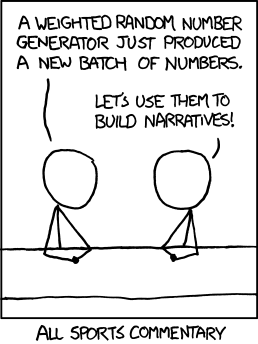
- Year on year changes in FDI flows will depend a lot on what’s going on in global markets and in the current exchange rate. January to August this year is a bit under a billion dollars more than last year. But it’s about a hundred million lower than January-August 2015. But Jan-August 2014 was much lower than last year. These things bounce around; it can be a bit silly to read too much into any particular year’s numbers. If we look back farther, the gross value of investment consideration Jan-August 2007 was 14 billion; it hasn’t been reported for 2017, but for 2016 it was just under 7 billion. You need more detailed work on what’s been going on in policy as well as exchange rates. And because NZ sees so little foreign investment as compared to other countries, it’s easy for a few big deals to push the numbers around disproportionately. The prior years' data is here.
- This year’s figures include Vero’s takeover of Tower Insurance. One of the big land transactions was 3600 hectares sold by Solid Energy to BT Mining. Mining’s about the only land sale where the buyer is digging up the ground and potentially sending it abroad – but solid energy would be doing that anyway. As for the rest, it isn't like foreign investors are digging up New Zealand farmland and sending it overseas. Foreign owners here are subject to all the same rules as domestic owners.
- NZ tops a lot of world rankings for ease of doing business. But we’re 32nd in the world, behind even Rwanda, on severity of restrictions on foreign ownership. Everybody talks about how protectionist Japan is; Japan’s less restrictive on foreign ownership than New Zealand on the rankings. Sweden is 7th least restrictive. Why are we celebrating scaring investment away when New Zealand firms can have trouble in access to capital? Foreign owners also can bring connections and expertise to the table that can be difficult to access domestically as well.
XKCD may be relevant here.
Subscribe to:
Posts (Atom)