Please answer this short survey if you are familiar with academic economics departments. I had a previous version of this up earlier, but have fixed a couple of errors in it - apologies to the three people who answered the prior version. This one more accurately reflects what I need to know about. More context to come.
Create your survey with SurveyMonkey
Friday, 6 October 2017


Thursday, 5 October 2017
Age of Freaking Wonders
There is no great stagnation.
- Google's new earbuds, paired with their Pixl phone, are the Babelfish: realtime translation on demand for conversation. Alas, no NZ release date yet scheduled. But still.
- The new graphics engine for simulated faces. Just look at what they can do now.
It advertises itself as compatible with all game engines and animation packages. Dunno how long it'll take for this kind of rendering to show up in real games and what you'll need to run it but... wow.
Wednesday, 4 October 2017
Flying blind
I guess unconscious bias is only a bad thing if it operates in the expected direction. This one's a couple months old now, but I'd missed it at the time:
A measure aimed at boosting female employment in the workforce may actually be making it worse, a major study has found.I suppose unconscious bias is one-way bad if the goal is diversity rather than just hiring the best applicant. The full report from Australia is here.
Leaders of the Australian public service will today be told to "hit pause" on blind recruitment trials, which many believed would increase the number of women in senior positions.
...
Professor Michael Hiscox, a Harvard academic who oversaw the trial, said he was shocked by the results and has urged caution.
"We anticipated this would have a positive impact on diversity — making it more likely that female candidates and those from ethnic minorities are selected for the shortlist," he said.
"We found the opposite, that de-identifying candidates reduced the likelihood of women being selected for the shortlist."
The trial found assigning a male name to a candidate made them 3.2 per cent less likely to get a job interview.
Adding a woman's name to a CV made the candidate 2.9 per cent more likely to get a foot in the door.
"We should hit pause and be very cautious about introducing this as a way of improving diversity, as it can have the opposite effect," Professor Hiscox said.
Meanwhile, over at the New Zealand Treasury, blinding the applications gave Treasury something that they thought worth celebrating. They're even getting an award for it.
To increase the diversity of its workforce, Treasury reformed its graduate recruitment process to reduce unconscious bias and expand the skills, experiences and qualifications it valued. Opening Our Eyes Through Blind Recruitment won the Improving Diversity and Inclusiveness in the Public Sector award.I expect that blinding on schools means the secondary school attended rather than the university attended. If it were blinding the attended university, that would not be good.
Through the introduction of blind applications, which redacts personal information such as name, gender, location and school attended, Treasury's graduate intake now has a majority from mixed ethnic backgrounds, a 50/50 gender representation and none have solely economics qualifications.
This seminar will provide further details about this important public sector recruitment initiative.
If serious economics graduates stop seeing Treasury as a place they might want to work, that could be a difficult problem to undo - and it would have substantial longer term implications.
I'd heard last year that Canterbury's economics grads had given up on Treasury as being any kind of place for serious economists to go for work. A student there had emailed me asking about options at Treasury, and I'd advised that the best route was to talk with students at Canty in Honours who'd done the Treasury internship over the prior summer - to get a feel for the place.
Turned out that the Canterbury students had stopped applying for that internship and none had gone the prior summer. It seemed like Treasury's recruitment team that went out to the universities overshot ... a lot... in emphasizing how open they were to non-econ grads; the econ students took the signal and went where they thought they were wanted.
I'd hoped that Treasury was working to change that impression.
I understand that RBNZ is seen is the place for serious economics students to go, where previously RBNZ and Treasury were always in a race for our best students. The ranking used to be RBNZ and Treasury had pick of the litter, putting out job offers even before students started their Honours or MCom year. Other departments waited until RBNZ/Treasury finished their recruitment, since nobody would accept an offer if either of those were still outstanding.
Double-degree students can be fantastic. Law & Economics is a great combination. There are seriously good math & economics double-degree students. And Economics has always paired well with Philosophy, either as a double or as a PPE degree. Heck, my undergrad was double-honours Economics & Political Studies.
But if Treasury were starting to have trouble in convincing serious econ grads that they were really interested in hiring economists, celebrating not hiring any single-major economists in the latest recruitment round isn't the most obvious play.
And I wonder whether this hiring outcome is because of their new blinded recruitment system, or because they've successfully convinced the serious econ majors that Treasury analysts get to play with the Hexagon of Happiness while RBNZ analysts get to do real economics.
Tuesday, 3 October 2017
Big data beats
This is amazing. Big data identification of all the musical genres and where they sit relative to each other. Here's the project description:
We live in an age of freaking wonders. Discover new realms of music you never knew you'd like, get a ton of surplus, and not a dime of the increased value of the Spotify subscription shows up in the GDP stats except if it gets more subscribers as consequence.
This is an ongoing attempt at an algorithmically-generated, readability-adjusted scatter-plot of the musical genre-space, based on data tracked and analyzed for 1536 genres by Spotify. The calibration is fuzzy, but in general down is more organic, up is more mechanical and electric; left is denser and more atmospheric, right is spikier and bouncier.Just hit the link to see what it means. It also has an associated Spotify playlist. Just look at how amazing this thing is, and how it's all free, and how you can listen to all of the music with a (ad-ridden) free Spotify account or for a cheap-as-chips monthly subscription.
Click anything to hear an example of what it sounds like.
Click the » on a genre to see a map of its artists.
Be calmly aware that this may periodically expand, contract or combust.
We live in an age of freaking wonders. Discover new realms of music you never knew you'd like, get a ton of surplus, and not a dime of the increased value of the Spotify subscription shows up in the GDP stats except if it gets more subscribers as consequence.
Monday, 2 October 2017
Foreign Investment - the random number generator strikes again
Every month, the Overseas Investment Office puts out its figures on foreign investment in New Zealand. This month, people seem to want to talk about those numbers - likely because Winston Peters is in coalition negotiations.
Anyway, here are the notes I put together for a couple of radio chats on it. They're not extensive notes, as I hadn't much time on this one.
Anyway, here are the notes I put together for a couple of radio chats on it. They're not extensive notes, as I hadn't much time on this one.
- Most of the world competes for foreign investment. Some of that competition is silly, like the subsidy war that Amazon might get among cities for its new hub. NZ mostly doesn’t play that game, sensibly, although its film tax credit regime isn’t far. But the OIA regime is the opposite: it drives foreign investment away.
- In 2012, 80 of 198 countries had attracted a higher stock of inbound FDI as %GDP than had New Zealand. Per capita, Australia had attracted 45% more inwards FDI than NZ by 2012.
- Year on year changes in FDI flows will depend a lot on what’s going on in global markets and in the current exchange rate. January to August this year is a bit under a billion dollars more than last year. But it’s about a hundred million lower than January-August 2015. But Jan-August 2014 was much lower than last year. These things bounce around; it can be a bit silly to read too much into any particular year’s numbers. If we look back farther, the gross value of investment consideration Jan-August 2007 was 14 billion; it hasn’t been reported for 2017, but for 2016 it was just under 7 billion. You need more detailed work on what’s been going on in policy as well as exchange rates. And because NZ sees so little foreign investment as compared to other countries, it’s easy for a few big deals to push the numbers around disproportionately. The prior years' data is here.
- This year’s figures include Vero’s takeover of Tower Insurance. One of the big land transactions was 3600 hectares sold by Solid Energy to BT Mining. Mining’s about the only land sale where the buyer is digging up the ground and potentially sending it abroad – but solid energy would be doing that anyway. As for the rest, it isn't like foreign investors are digging up New Zealand farmland and sending it overseas. Foreign owners here are subject to all the same rules as domestic owners.
- NZ tops a lot of world rankings for ease of doing business. But we’re 32nd in the world, behind even Rwanda, on severity of restrictions on foreign ownership. Everybody talks about how protectionist Japan is; Japan’s less restrictive on foreign ownership than New Zealand on the rankings. Sweden is 7th least restrictive. Why are we celebrating scaring investment away when New Zealand firms can have trouble in access to capital? Foreign owners also can bring connections and expertise to the table that can be difficult to access domestically as well.
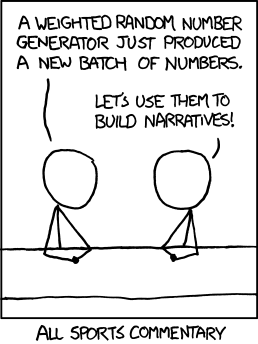
XKCD may be relevant here.
Friday, 29 September 2017
In praise of evaluation
The Ministry of Social Development has been evaluating the effectiveness of its employment assistance programmes.
Here's the key figure.

Here's the key figure.

Note that effectiveness is here defined by whether the programme improves participants' outcomes across income, employment, and independence from welfare. It does not look like it measures cost-effectiveness, but would be a first step toward that. They note that future editions will try for a Welfare Return on Investment measure, and a Social Return on Investment measure.
A big chunk of spending couldn't be evaluated because it's on the childcare assistance programme that's available by entitlement to anyone who asks, and has been for as long as they have reasonable data. And that programme is $183 million.
I wonder whether they might be able to get some mileage by exploiting shortages in childcare availability. After the ECE subsidies came in for more families in the mid-2000s, and the rule changes around qualified ECE staff, there were lots of stories about shortages of available childcare spaces. I know we had our application in for daycare at Canterbury University months and months ahead of Ira's being born. Anyway, if there is any data on where there were and were not shortages of childcare, then that might be exploited to evaluate the effectiveness of the childcare assistance programme. They could also consider the discontinuity at the income boundary for eligibility.
Kudos for the evaluation work! I hope that this kind of work continues, and look forward to the cost-effectiveness versions to come.
Thursday, 28 September 2017
Morning roundup
A few of the worthies as I close out the browser tabs before Chrome eats every last bit of my system's resources:
- Thomas Lumley's travel guide for Auckland visitors for a statistical computing conference may be useful beyond that conference's attendees.
- The Washington State Institute for Public Policy's evaluation of boot camps suggests that they're very effective. I had previously thought there was a typo in their tally: they had a negative cost listed for the things, which had me thinking they had a spreadsheet error. But it's correct - confirmed by email. Boot camps are cheaper than other juvenile detention facilities in Washington State, and so they're of negative cost relative to the counterfactual. And they also seem effective: 100% chance of providing net benefits.
- Vlad Tarko's take on apparent deregulatory trends: you can reconcile survey measures of declining regulatory burden with other data on increased staffing and budgets for regulatory agencies in a model in which competing regulators offer the regulated opportunities to select the one that sucks least. He says regulatory capitalism is a better term than neoliberalism for the current state of play.
- Where the state is weak, others can be strong. In Nigeria, churches are building what look like private cities. Attention Charter Cities fans.
- Great piece by Andrew Sullivan on tribalism in American democracy. I don't share his optimism about Trump yet being able to come around to solve all this, but the diagnosis in the first three quarters of the piece seems right.
And hopefully on closing Chrome, there will no longer be a long lag between moving the mouse and seeing the cursor move. It's really annoying.
Subscribe to:
Posts (Atom)