Showing posts with label Electricity. Show all posts

Friday, 24 July 2026

Let them build: electricity and datacentres edition

New Zealand's electricity companies know how to stick a pipe into the ground in the Taupo Volcanic Zone and generate electricity. They've been doing it for decades, and there is enormous untapped potential. 

America's hyperscalers are currently willing to pay a large premium for immediacy. They are sticking expensive off-grid generators beside datacentres that would have to wait years for a connection. 

If NZ could be the place where decisions on whether a power company is allowed to stick a pipe into the ground are made in weeks/months rather than years, and a similarly fast decision on whether a datacentre is allowed, tens to hundreds of billions of dollars could drop here in a very big hurry. 

My column at Newsroom this week suggested NZ should consider being that place. And that the window of opportunity will not be open forever. 

[As always, I didn't pick the headline]

Wednesday, 25 March 2026

The case for considering fuel surcharges

Last week over in Newsroom, I laid out the case against subsidising fuel use during a supply shortage. 

That case is sufficiently obvious that you wouldn't think it would need to be made. But the New Zealand Taxpayers Union really disgraced itself by urging those kinds of subsidies via reductions in petrol excise. Petrol excise already is inadequate to cover the cost of the roading network. Taxpayers already subsidise road use. The NZTU wanted even larger subsidies from taxpayers to road users when it is manifestly unclear that we will be getting more fuel shipments. 

The piece also made the case for just letting fuel prices rise rather than contemplating various kinds of rationing. Letting prices rise automatically culls the lowest-valued uses of fuel. Governments concerned about equity implications can transfer money to poorer people. This point ought to be obvious to any economist who's done intermediate micro and the welfare theorems. Always surprised to note which bank economists might have missed the lecture on the welfare theorems. 

And it then made a point that I don't think I'd seen others make. I think it's also obvious. Real option value matters. 

But I also worry about the Commerce Commission’s insistence that prices should only reflect current supply costs.

Consider an analogous problem faced by hydroelectric generators.

The ‘cost’ of running water through a hydroelectric dam in February is that the generator cannot run that bit of water through the dam again in July. Rain is always uncertain. Holding storage back, in case inflows are lower than expected, has value.

If fuel storage tanks might not be replenished because import routes are disrupted or exports are restricted, the ‘cost’ of fuel is not whatever notional price fuel companies contract with overseas suppliers. A litre used now might mean a litre that cannot be used in June. It is possible that everything resolves itself before then. But it is also possible that things turn considerably worse. The Strait of Hormuz is less predictable than hydro lake inflows.

The commission’s messaging risks confusing today’s sourcing cost with the value of fuel in storage. If replenishment is uncertain, the relevant cost of selling a litre today is not just what it cost to source, but the value of keeping it in reserve. That is like telling hydro generators to run the sluices in February despite the risk of a dry winter.

And that gets us to the case for fuel surcharges. 

I do not think it's any kind of knock-down case. I certainly don't have the background figures to be able to tell. And if the government is confident that its agreement with Singapore and alternative sources of supply are secure enough, then none of it's needed. But it can be worth thinking through in advance, just in case.

Suppose the storage tanks are at their normal levels. Prices have increased, mainly reflecting increased price of fuel being loaded onto transport ships. But each ship now carries some risk of being diverted before it reaches New Zealand. That risk means each litre in storage carries some real option value: there is some chance that using a litre from storage today means that there will not be a litre to use in May or June. 

All going well, fuel companies price this in. If the transports stop arriving, fuel in storage is far more valuable than the current price. Every fuel company ought to be weighing the price it can get for a litre of fuel today against the potential price that litre could get in future if kept in storage, weighted by the likelihood that future prices are higher. 

It'll be complicated, and there aren't great numbers to throw in as probabilities. But it's in-principle doable. Fuel companies should have strong incentive to get that right. If a litre of diesel is worth $20+ in June if transports stop arriving, then selling today for $3 would be a mistake if the risk of the bad scenario is high enough.

And in the first best, government is in constant communication with the fuel companies about the negotiations it's having with foreign suppliers, and fuel companies are always weighing that up alongside their own market intelligence (and odds at Polymarket etc). 

There is no case for surcharges in that first-best world. Everyone's already weighing up real option values and they're priced in.

Here are a few ways that can go wrong. 

  1. Suppose companies think that they will be punished by the government for increasing prices today to reflect real option value, ahead of the risk materialising. They are not crazy to think that, given the kind of messaging that our populist Commerce Commission provided. In that case, they will choose some price lower than would otherwise be optimal. Their optimisation would be 'what is the highest price we can charge, below the actual optimal price, without drawing ire from the government?' 
  2. Suppose companies think that they will be punished by the government for increasing prices to very high levels in future if transport stops. In that case, a company holding fuel back against that future risk (and potential future returns) isn't able to realise those future returns. The social value of holding fuel back for future use would be high, but the private return would be expropriated through government seizure of stored supplies or other forms of de facto expropriation. 
  3. Even if the government were sensible, consumers may not be. Suppose one fuel company runs real-option-value pricing and another does not. The one charging higher prices today will be damned today for charging higher prices. The one that does not, will not. The one that charges higher prices today will be further damned if the bad state of the world obtains and they charge very high prices in June. The one that runs out will not be blamed for running out. How could they be blamed for running out? The Straits are closed. It isn't their fault. The one that really deserves blame is the one that 'profiteers' in June. Running real option pricing when others aren't means taking a hit to revenues today in expectation of higher returns in future if the bad outcome obtains. But the brand damage could be far higher than can be recouped, because approximately nobody is willing to think in real option value terms. This underlying mechanism is what drives populist government responses too.
I do not know what fuel prices reflecting real option value should be. But $3/litre diesel feels low when thinking about those risks. 

And that gets to the case for surcharges. If companies fear backlash for using real option pricing, government could set a surcharge reflecting the difference between actual prices and prices that incorporate that real option value. 

I'm not convinced by that case. And I have little confidence that government could get to the right number on it, even with smart people making their best efforts. But it seems worth thinking about. 

At a minimum, the government really shouldn't be saying anything that could be read as discouraging fuel companies from increasing prices. 

And the Commerce Commission's public messaging ought to be more around real option pricing. Saying the words 'real option pricing' would be a mistake. But I think enough people understand the hydro lakes to get the point? The generators hold water back when the lakes are high, resulting in higher electricity prices at that time of year, if they worry that the lakes will otherwise be too low mid-winter. If they didn't do that, we'd risk winter blackouts. And that's worse than higher prices when the lakes are high. 

Addendum/Postscript 31 March: Storage is a constraint. Real option value of fuel held back now is consequently lower, unless it were cost-effective to pay an arriving tanker to just stay here. And I doubt that currently stacks up.

I am very glad that the government here has not discounted petrol excise or jumped to other populist stupidities that tempt the Australians. 

Friday, 26 January 2024

Demand bringing forth supply

Marlborough's lines company saw an opportunity to sell more electricity.

The EV hub – believed to be the largest currently operating nationwide – was installed by the distributor after the 658-square-metre parcel of industrial land came up for sale last March. 

Chief executive Tim Cosgrove last month told Energy News the narrow strip of land had been leased to Marlborough District Council for car parking and was of "little use for anything else”. When it came up for sale, the distributor saw it was ideal for EV charging.

“It’s located right in town, right off State Highway 1, next to a supermarket, a café, The Warehouse, an easy walk into town,” he says.   

“We get a lot of vehicles coming through with people coming on and off the ferries, going to Nelson, and those sorts of things.”

“It’s come together really well.”

The Park Terrace EV Charge Hub has three 150-kilowatt chargers with two sockets each, capable of charging six EVs simultaneously. Cosgrove says Tesla was invited to install its three 300 kW units “right alongside”.

Customers pay through their ChargeNet phone app, RFID fob or card.

Some holiday parks might find it worthwhile to pay for upgraded power supply and put in charging stations. 

Meanwhile, others are coming up with innovative supply strategies - but do read the whole piece for fun council consenting issues, including whether the charge station counts as a 'service station'. 

Saegers is now finalising the business model and working out the technology required.

A key point is not all 78 cars will be “charging at 250 kilowatts” at once, he notes.

“That’s never going to happen – it's totally impractical and we wouldn’t put that infrastructure in for that to happen.

“You might have four or five simultaneous fast charging activities.”

ROA will offer a flexible pricing structure – “similar to the way that the wholesale energy market works” with pricing depending on supply and demand.

Short stays using fast charging would pay more, while people parking there while they work could receive cheaper or even free power when there is abundant production.

“If that facility existed now, I might plug my car in, but I don’t necessarily want to pay for a charge. But if there's any spare power, I’ll take it," he says.

“It’s about creating flexibility. There’s no need to charge a car and potentially crash the grid, when you don’t need it fully charged, and it might be sitting out there for four hours.”

Friday, 17 November 2023

Volcano powered

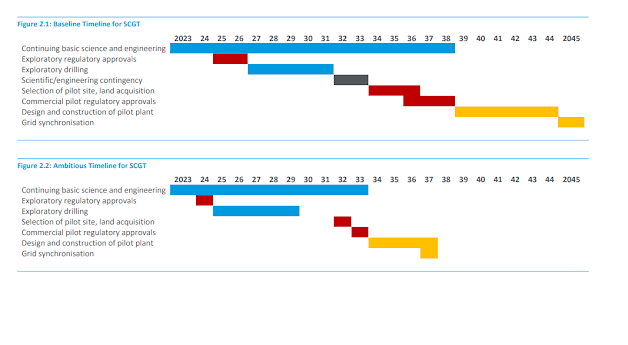
I love that GNS is looking at supercritical geothermal generation.

They've commissioned Castalia to look at timelines and economic feasibility. It's looking good, from 2037, if we can get fast-track consenting - and if there aren't other substantial hiccups. 


NZ will need a whole lot more generation as carbon prices rise and folks shift away from carbon-intensive energy sources.

Great thing about geothermal is that it just runs. It doesn't care if the wind blows or the sun shines.

Waste heat can be used for other processes - like milk powder drying, or making wood pellets.

As reminder, here's Eli Dourado's piece from a couple years ago on the big-picture on this stuff.


Friday, 6 October 2023

Morning roundup

The morning's clearing of the tabs...

  • Price theory is the core of everything that's good in economics. Albrecht and Hendrickson explain the basics. Price theory emphasises exchange and emergent outcomes. Public choice studies politics as exchange. It's fun to think about what would happen if an incoming government required Ministry Chief Economists to pass a test based on workouts in the old Alchian & Allen textbook.  
  • Like the idea of government paying a bonus to people for having kids? Robin Hanson has a neat way of doing that. But I doubt that proponents of baby bonuses will like it. 
  • This came out a while back but I'd missed it. Surprisingly enough, hydrogen deposits seem to form underground in spots where olivine is prevalent in the presence of heat and water. NZ has a lot of olivine, and heat, and wet. I wonder if anyone's gone looking for hydrogen - geological deposits hadn't previously been thought possible. If we have some, stick a pipe in it to power a boiler and generator above the deposit, and you'd have electricity that generates water rather than CO2. Seems a longshot, but would be pretty sweet.
  • Chris Trotter is nostalgic for a joyous left. Excellent piece. 
  • This kind of thing pushes electricity toward a global law-of-one-price, doesn't it?
  • Henry Thompson on the Industrial Organisation of the Mafia, forthcoming in the JLE.  
    This paper uses economic reasoning to analyze the organization of one of the most successful criminal groups in modern U.S. history: La Cosa Nostra (LCN). Drawing on recently declassified FBI reports and a hand-collected dataset, I argue that the costs of violent disputes are key for an economic understanding of LCN’s core institutions. Violent disputes were costly for LCN as they consumed resources to produce and were destructive. However, violent disputes were especially costly to LCN because of its need to keep a low profile. As a member did not bear the full costs of a profile-raising police investigation, each had a perverse incentive to resolve a dispute with violence. Hierarchical firms and a sophisticated court system were LCN’s solution. They gave bosses the authority and incentive to limit violent disputes and to use violence judiciously. LCN’s longevity and success are, in part, a testament to the institutions’ efficacy.


Monday, 18 September 2023

Afternoon roundup

The closing of a few tabs. 

  • Tim Harford's cautionary tale about the Sydney Opera House and how megaprojects bring heartbreak is a must-listen. One bottom line: if you're not real clear at the outset just what problem you're trying to solve, you're going to be causing problems. 
  • My weekend column in the Stuff papers compares the current draft Government Policy Statement on Transport to the old 1998 proposed reforms - Better Transport Better Roads. The column also echoes a lot of what turned up in my submission on the draft GPS - which I don't think is yet on our website.
  • Central Banking covers The Initiative's proposals around RBNZ: split prudential regulation off into its own separate institution, focus the monetary authority on inflation-alone, and not go ahead with deposit insurance. With comments from former RBNZ Chair Arthur Grimes and Mike Reddell. 
  • Labour promises rebates for rooftop solar. Weird thing to promise when there's a lot of grid-scale solar going in without subsidies. The balance between grid-scale and rooftop shouldn't depend on subsidies to the latter. 
  • Great piece in Quilette on the 2003 BMJ controversy over passive smoking and mortality. I remember having pointed at this literature when the Helen Clark Labour Government was banning smoking in pubs; I'd figured it should be for the venue owner to decide, especially where the risks from second-hand smoke really seemed nebulous. Not a popular view it turned out. The trendy 'let's get more government grants' people had banked their wins on second-hand smoke and were trying to argue that third-hand smoke (residue on surfaces, basically) was its own new terrible thing that needed a lot of grants. Ah well. 
  • Kainga Ora is doing some really neat work in getting construction cost and build times down. The kind of thing that you'd normally expect the private sector to have led ages ago. But when councils allow very little building, who'd have the scale to front that fixed cost in process systems? Nobody would have invented automotive assembly lines if the global market for cars was a thousand a year...

Monday, 21 August 2023

Evening roundup

Another closing of the tabs:

Monday, 24 July 2023

Morning roundup

The morning's closing of the browser tabs:

Friday, 28 April 2023

Onslow cost

It was obvious from the start that Lake Onslow was a bad idea. 

Energy News reports on the latest:

A recent Infrastructure Commission technical paper concluded that the proposed Lake Onslow pumped hydro scheme can’t provide New Zealand with a cost advantage until 2037.

It also found that any advantage it does provide won’t be long-lasting “unless the cost to build it is substantially below $10 billion”.

That was before Energy and Resources Minister Megan Woods announced via a Cabinet paper that the P50 cost estimate – a mid-range probability – for Onslow would be $15.9 billion.

She concedes that neither Onslow nor the New Zealand Battery Project’s alternative portfolio option meet standard value-for-money criteria.

“Both have large capital costs early in their lives, with benefits realised over a long horizon,” she writes in a recent Cabinet paper.

“However, it is clear that the options could make a significant contribution to addressing New Zealand’s dry-year problem and providing a secure and decarbonised electricity system.”

I wish iPredict were still here so we could bet on whether this thing goes ahead. It clearly shouldn't. But government's spending a few hundred million on the darned feasibility study and governments have a hard time dealing with sunk cost issues.  

Wednesday, 19 April 2023

Afternoon roundup

The worthies, on the closing of the browser tabs

Wednesday, 29 March 2023

Afternoon roundup

The clearing of the browser tabs...

Monday, 13 February 2023

Afternoon roundup

The worthies from the tabs:

Tuesday, 10 January 2023

Afternoon roundup

Easing back into the office after a summer break and already the tabs have multiplied.

Today's worthies:

Thursday, 17 November 2022

Afternoon roundup

The worthies, as I try to stop Chrome from crashing and crashing and crashing...

Tuesday, 11 October 2022

Afternoon roundup

The afternoon's worthies:

Wednesday, 20 April 2022

Morning roundup

The morning's worthies. 

R0 on tabs is high. 

Tuesday, 30 November 2021

Afternoon roundup

The closing of the browser tabs brings some worthies:

  • The shift to Zoom, and away from face-to-face, is costly. Fund managers losing access to the kind of information you can get through local contact reduces fund returns. "We show that soft information originates mainly from physical human interactions, primarily in cafes, restaurants, bars, and fitness centers; and the virtual world based on Zoom/Skype/Team fails to substitute physical interactions fully, thus cannot provide sufficient soft information." Now think about NZ firms seeking capital internationally, and the long-term effects of border systems that prioritise Ministerial pet projects over business travel. 
  • The blackouts back in August? It was a Transpower screwup. Here's what we'd said at the time.
  • Wellington ICU's co-director pleads that ICU nurses be added to the immigration skill shortages list.
  • Avoiding Tarras while on any South Island holidays might be advisable. If they haven't enough vaccinated people to staff a cafe...
  • Another Commerce Commission market study is coming: building materials. Like supermarkets, any lack of competition here is mainly due to crazy regulatory barriers to entry. For supermarkets: zoning and the Overseas Investment Act and consenting processes and uncertainties around liquor permits make it hard to be a new at-scale entrant. For building materials supply: good luck getting a house signed off by council if you've built it with imported materials. Ideally ComCom will recommend fixing the regulatory barriers to entry and easing councils out of joint-and-several liability for buildings they consent. But they could instead recommend breaking up each of the existing suppliers into little pieces and forcing separation between them and retailers. The latter would be stupid. The starting question really should be: if I get a container ship in Vancouver, fill it up with all the pieces needed to build a house there (flipping the 110 volt electrics to 220), would I be able to use it to build a house? If not, why not?


Wednesday, 27 October 2021

Afternoon roundup

The closing of the browser tabs brings the following worthies:

Friday, 27 August 2021

Afternoon roundup

It's been a busy week of lockdown. On Monday, we released my report looking at cap-and-trade solutions for freshwater quality. Yesterday, Matt and I sent in our submission on the Commerce Commission's inquiry into supermarket competition. 

Don't think the computer's shut down this week. The browser tabs....