Showing posts with label earthquake. Show all posts

Friday, 20 October 2023

There Is No Alternative - Wellington Council edition

It looks like Wellington Council officials are providing councilors with an offer they're not supposed to refuse.

Earlier this week, Council heard a presentation from officials on options around the Town Hall. 

As presented, there seemed no reasonable alternative to spending another $70 million to $147 million to finish strengthening works. 


Stopping works and closing the building off would only save $60 million relative to finishing. Demolishing it would cost $20m less than finishing it. And delaying would just escalate costs. 

If you look at it that way, why wouldn't you finish the thing? Sunk costs are sunk, and the choice before Council is whether to spend a small bit more to finish the project rather than aim for demolition. 

And especially when officials put a lot of time pressure on the thing, wanting a decision by next Wednesday.

But there are a few oddities in there. 

Closing up the building would have a year's worth of work finishing the basement to prevent flooding, completing critical structural works, reinstating heritage fabric and the like. Safety and other works like that are $33.42 million. 

Demolition would add $39.35m on top of close-up costs: Environment Court applications, demolition planning and works, professional fees and contingencies. 

But why would you complete critical structural works or finish the basement if you were going to bowl the thing? If they netted those costs out somewhere, it sure isn't mentioned. The only reason to finish the basement rather than fill it is if you were planning to sell the site for someone else to build on, and you'd only do that if the value added by finishing were more than the cost right?

Delisting the building from the District Plan (heritage buildings are protected because they're there listed) would open up a lot of options. 

But officials caution that if a delisting process started now, it could be in the courts until December 2027. And Council could easily lose. There is insanity in the rules around this stuff, but the rules are the rules. 

Officials noted that a Local Bill might allow faster delisting - but wind up warning against that too. 

It's pretty easy to imagine what an enabling Local Bill would look like. 

It would enable council to delist buildings by simple majority vote, without right of appeal. A delisted building would be deemed to have no special value, heritage, cultural or otherwise, when considering building or demolition consents.

With an enabling local bill in place, council could weigh up different options. 

A local bill enabling delisting could do a lot of derisking. If it turns out that preserving one bit that nobody would ever notice would add $20 million to the cost, they could just save the $20 million. They could weigh things up on a case by case basis without worrying about being sued. 

The council document notes that council carries the majority of the geotech and heritage risks. The geotech side is largely now understood, but paragraph 24 still has "heritage restoration costs and requirements" as one of the remaining risks council faces. At para 26 they note that heritage risk replaces ground risk when restoration work starts. 

But officials also suggest the local bill path is impracticable:
Pathway 3: Local Bill

95. Aside from a successful plan change, the only other path to demolition is to seek to
pass a Local Bill specifically for this purpose. This would then override the District Plan
and general RMA provisions.

96. A Council decision to demolish the building under an enabling Act could still be subject to judicial review challenging the lawfulness of demolition. Any Bill would need to be drafted in such a way as to leave no room for ambiguity in interpretation on this point.
As with the other pathways discussed, the Council would need to consider the significant precedent effects in pursuing this option, including that, in practice, a Local Bill is an option available to the Council but, unlike a resource consent, not necessarily one that could be pursued by other building owners.

97. Pursuing a Local Bill would be subject to similarly high levels of uncertainty as a resource consent and/or plan change process. The local MP would be required to manage the Bill through Parliament and Council would be required to draft the Bill and meet all associated legal costs. The Bill would need support from a majority of MPs to be passed and it may take several years from introduction of the Bill before it is passed into law. It would also be subject to public debate through that process. As an example, the Girl Guides Association (New Zealand Branch) Incorporation Bill is a private bill that was introduced in February 2021, and has still not had its second reading two-and-a-half years later.

This still feels like There Is No Alternative framing. 

Local Bills are fast. Rotorua's local bill was at Select Committee within two weeks of being introduced; it was there shot down. The Girl Guides bill is a private bill.

If an incoming government has had a gutsful of Wellington spending piles of money on things that aren't the water pipes, it may well be inclined to ensure speedy treatment of the Bill, so it gets through the Committee stages reasonably quickly. 

Worst for an incoming government would be Wellington Council being able to credibly say, 

"Look, we tried our best not to have to spend another hundred million dollars on this damned building, and likely another half billion yet to come on Opera House and Fowler Centre. And who knows what down the track. 

But we are entirely tied up by central government legislation. 

Priority buildings in Wellington have to have works or demolition completed within 7.5 years of being notified. 

Our officials tell us that if we started today to try to delist the Town Hall, we might have a decision out of Environment Court by December 2026 and up to another year for High Court appeal. That's four years of legal process. 

And the clock is already ticking on Fowler and Town Hall. If we started normal legal processes this year to delist the buildings and untie our hands, we'd have less than four years* to actually do the works on them afterwards.

We asked a red-tape-hating government to let us make the choices that were right for our community, and they forced us to waste hundreds of millions of dollars instead."

* If those are priority buildings as well; it's 15 years all-up if they are not. I have no clue which buildings get a priority label. If it's based on risk to others, Opera House seems riskier than Fowler. 

It would seem more surprising if central government knocked this back rather than supporting it, really. 

A few bottom lines then:
  • Wellington Council likes to pretend that it has no choice but to spend an extra hundred million or so on this building, and who knows how much more on buildings yet to come. But there is a potential choice. Wellington Council could support a Local Bill that would enable council to delist buildings and proceed on more rational basis. 
  • Regardless of whether they think an incoming government would support a local bill, Wellington Council should put one up. If central government says no, Wellington Council could more plausibly ask for help in dealing with the cost consequences of loopy central government regulations. 
  • Central government is in a caretaker mode now, but when it starts up again, it should say yes to a local bill while starting to think about entirely redoing how heritage amenities are supported. The current regulatory framework is utterly unfit for purpose. It imposes massive cost on owners of buildings but little financial support. It just doesn't work. Flipping the system to ditch the regulatory restrictions while providing payments to the owners of buildings for continued provision of heritage amenities would allow greater real support for a smaller number of valuable buildings worth supporting.

Thursday, 22 April 2021

In praise of parametric insurance

It's not quite the kind of parametric insurance offering I've been after, but it's getting closer to it. Bounce Insurance now provides a quasi-parametric earthquake insurance product. 

Individuals can get $10k or $20k coverage; businesses get up to $50k. 

If ground force acceleration in your neighbourhood exceeds the trigger value, then you get paid out. You have to attest to that you've incurred losses at least as large in value as the amount you've insured against; there's potential for spot audit later to confirm. But they pay out within days.

I wrote about it in this week's column for the Stuff newspapers.

Parametric products are much simpler. They are common in North America for crop insurance. Rather than forcing anyone to try to estimate the cost of a heavy frost for an orchard, the insurance simply pays out if temperatures drop below the trigger levels. And larger payments for harder frosts are possible as well.

These kinds of products are exceptionally well suited to earthquake risk. A major earthquake on the Alpine Fault is overdue. And, every year, there is about one chance in 120 that Wellington will get to enjoy an earthquake as large as the 2011 Christchurch quake. In that kind of scenario, it is hard to say exactly what losses any of us might experience – but they will be substantial.

If you own a downtown business, will your loss come from the building’s failure? From a neighbouring building’s failure? From council cordons around downtown that could easily last for a year? From depopulation? From blocked transport routes?

Your homeowners’ insurance could see your house rebuilt, after a lengthy process, or a cash settlement, which may be rather less than you had hoped for if there is argument about the extent of the damage.

If your job shifts out of town because your employer is leaving, you may be trying to sell a broken house along with its insurance claim, in a hurry, at the same time as many others are trying to do the same. If your home is your biggest asset, the loss will be substantial and is both uninsured and uninsurable.

A parametric insurance product does not care about the nature of the loss or about measuring its extent. If the insured event happens, payment comes quickly. Unfortunately, those wanting parametric earthquake insurance have had no options at all, until this year.

I've wanted a contract that pays a very large sum if a Mercalli VIII event happens. There are reasonable odds that Wellington doesn't recover from that kind of event. The Bounce product is an improvement, but still isn't quite what I'm after. It triggers on ground force acceleration of 20 cm/s, which they describe as matching strong to severe earthquake on the Mercalli rankings (VI or VII). 

I'm really after catastrophic coverage: a large payout for a very severe event. I'm not worried about my existing insurance coverage for Mercalli VI events. I am worried about what happens if downtown is cordoned off for a year and the city can never come back from it. So rather than $20k coverage against major and more minor earthquakes, I'd be interested in something more like $1m coverage against "death of the city" events.

I'd also worry a bit about the loss attestation provisions. It seems a way of squaring a near-parametric product with NZ insurance regulations that don't really want insurance products that look like event derivatives or financial instruments. But it could come back to bite if someone wants to argue the toss about the extent of loss after the event. 

I guess I fundamentally don't get why nobody's doing something like the following:

  • Define a set of catastrophe bonds for major quake markets. Wellington. Tokyo. San Francisco. Seattle. Vancouver. Taipei. Los Angeles. Tehran. Manila. Lima. Tianjin. Jakarta. Christchurch / Alpine Fault. Each bond would pay a margin over a global index's return, in exchange for the risk that the bondholder would be partially wiped out if the trigger event happens. Investors could have their funds split across the earthquake markets proportionately to demand in each of those markets for the insurance products. 
  • Sell insurance to people wanting parametric coverage in each of those markets. They'd have to pay investors their margin over the index fund's return for the risk transfer; that's what their premiums would be. 
  • Money from investors would just go into the index fund, ready to be liquidated to cover insured people's claims if needed. If, say, 20% of the insured value were in LA and the LA quake triggered, then that proportion of the fund would be liquidated to pay out the insured people, and investors would take that hit to the fund's value. 
  • Presumably premiums in any market could bid up if the accumulation in that market started getting high. 
I suspect a combination of thin demand and regulatory issues lead to missing markets. 

Wellington's median house price is now over a million dollars; there have to be tons of people for whom a house in an earthquake zone is their biggest asset, and they face massive uninsured and currently-uninsurable risk. But I doubt many have gazed long into the "Wellington gets an earthquake at least as big as Christchurch 2011" abyss and what it could mean. 

I understand there to be potential regulatory issues in these kinds of contracts; they're presumably the reason why Bounce has had to require that claimants certify that they incurred losses at least equal to the amount paid out. And while that's easy on small-scale stuff, it might start being a worry if you were trying to get a million dollars' coverage. Could you really prove, to an insurance standard, that you'd suffered a million dollars in loss because of the event - when nobody knows whether the city will be dead or whether it will bounce back? But the alternative might be considered to be a financial derivative rather than insurance, and then a whole different complicated bucket of regulation applies. 

Wednesday, 19 June 2019

Google keeps making our lives better

Navigating post-earthquake Christchurch was tough. Every day brought a new set of road closures to route around. And they weren't always easy to predict in advance. If enough roads were closed on the south side of town, I'd want to take the longer northern loop to get from New Brighton to the University - but I wouldn't know that until I hit the closures.

So I'd then asked some friends at Google whether this couldn't be automated (and posted on the basic idea here). Traffic flow data already held could be used to infer road closures. If everyone who'd been recommended to follow Dyer's Road down to Ferry Road took a turn on Linwood instead, and nobody was on that small stretch of Dyer's Road, it would be a safe guess that it was closed. Why not flag it as likely closed, route around it, then update when it noticed traffic flowing again?

It wound up being more complicated than I'd have thought, and SCIRT was doing its best anyway to try to get road closure data up in real time in format that could be read automatically. But it still wasn't great.

CityLab reports that it's coming: Google is adding a disaster-navigation tool to Google Maps. Crowdsourced user responses will provide suspected closures in addition to the confirmed road closures.

I hope Wellington does not get its expected earthquake any time soon. If it does, this will make life a little bit more manageable. There will be so many unpredictable road closures due to slips. If you're home and have little gas in the tank, it will be hard to tell whether you can even get to the petrol station. This will help.

If the New Zealand government had put out an RFP for this kind of functionality, it doubt anyone would be offering to provide it for cheap. Instead, Google's giving it to us for free.

I hope that, come the quake, Bernard Hickey remains true to his principles and boycotts this excellent free service.

It's so nuts that New Zealand's looking to move out of step with the OECD on international tax and impose punitive rates on Google. Imagine if Google ever shrugged.

Tuesday, 14 May 2019

Morning roundup

This morning's worthies on the closing of the browser tabs:

Wednesday, 16 January 2019

Afternoon roundup

This afternoon's worthies on closing out the accumulated browser tabs:

Thursday, 8 March 2018

Dirty pool

Thanks to Newshub, we now know that the government-owned insurer Southern Response had private investigators snooping around after earthquake insurance claimants.

There are potential non-horrible explanations for some of this kind of thing. I was surprised that there weren't violent incidents involving severely aggrieved insurance claimants who had been treated very badly by EQC. If an insurer had received threats, it would have not been remiss in passing those along to police - and hiring some additional help wouldn't seem amiss.

And if an insurer thought that a claimant were doing something dodgy with respect to a claim, it's good to try to knock out insurance fraud.

But this smells more like attempts to silence critics by a state-owned entity.

RNZ adds more detail.

I'll look forward to seeing what the State Services Commissioner finds out.

Thursday, 22 February 2018

Earthquake anniversaries

Seventh anniversary of the Christchurch earthquakes.

GNS figures there's about a 1/120 annual risk of something of similar size hitting Wellington: 0.833%.

Recovery here will be much harder than in Christchurch. There are few local options for firms to relocate to while downtown is torn down and possibly rebuilt. There are few transit routes in and out. The airport could easily be out of service. The Port is only now just talking about getting floating wharf facilities that could be more quickly serviceable after an earthquake. And while there are lots of ways of getting from anywhere in Christchurch to the Hospital, or at least close enough to Hagley Park to be walked over, lots of Wellington suburbs will be cut off from the hospital. Wellington has reticulated gas. The fire service will have a very difficult time accessing some suburbs. The immediate calamity will be worse, and recovery from it will also be harder.

Post-earthquake recovery policy in Christchurch was its own separate disaster. The morass of agencies and regulations contributed to what I've called a confusopoly: nobody knew what they were allowed to do because they needed to get permissions from too many outfits, none of which really knew what they were doing.

In Christchurch, that meant business fled from downtown to the suburbs.

In Wellington, it could easily mean the death of the city.

I'm not speaking hyperbolically here. There is reasonable risk that, after a Mercalli VIII event, Wellington will cease to exist as a city.

Here's the path to failure. It doesn't have to play out this way, and I sure hope it doesn't. But it's more likely than I'd like.

Government replays Christchurch, with a poor governance setup for a recovery agency. Everybody knows Christchurch didn't work well; nobody's prepared for anything else so they go with the current off-the-shelf option, which is a do-over.

Nobody has put sensors into key buildings before the earthquake that would let us know how far beyond design spec key parts of the buildings moved, so engineering assessments will take a long time. Downtown gets cordoned off for months while they figure out which buildings are too risky. The Lambton/Featherston core is under cordon for at least half a year, maybe more than a year, during engineering assessments. Safe buildings cannot be reoccupied because everyone's worried about the other ones that could fall on the safe ones and so it's army barricades again.

Little priority is put on regime certainty: government announces a review of building standards following the earthquake, and no buildings over two stories are allowed pending that review. So even those places that could be safe to build on aren't built on. Essential government functions will have to leave quickly to be able to get on with things, and there won't be enough available safe commercial space here to move people into.

The business core will relocate, possibly to Auckland, possibly elsewhere. The tech core and Weta don't need to be here - they could relocate anywhere. There's a coordination problem in figuring out where the tech sector would go, but a Schelling point might just be to follow wherever Xero goes.

A lot of the core public service will be gone, perhaps with a promise to return when facilities are restored. Civil servants will follow government to wherever it goes.

The University will collapse as students flee even more quickly than they did in Christchurch: recall that the area around the University of Canterbury was relatively undamaged.

After an initial property jump for relatively undamaged homes, there will be a long and terrible decline as people come to realise that the city is finished. Many homeowners will cash-settle rather than repair, and will flee to try to rebuild their lives elsewhere.

And the city will be left with a terrible mess: a rather smaller population of those with the fewest exit options, a big pile of cash-settled unrepaired broken houses, little tax base, and few prospects.

Christchurch makes sense as a city: it's a regional service centre for a broad agricultural periphery with a good university and an important port. If Christchurch didn't exist, you'd have to invent it. So even though government made a complete hash of the downtown recovery, it was going to come back because there was a reason for it to come back.

It's harder to see that for Wellington, even if you can't beat it on a good day.

All of that means that government simply cannot afford to screw up a Wellington post-quake scenario the way it screwed up Christchurch. It may be the difference between the life and death of the city. Restoring regime certainty will be critical.

I hope that the current government puts some priority on it. We're still playing Russian Roulette. The revolver's barrel has 120 chambers, one of them has a bullet in it, and we pull the trigger every year. We have the chance to build a Kevlar helmet to blunt the bullet's effect if we get an unlucky draw. Kevlar ain't perfect, but it helps reduce the risk.

A bit of early planning could be rather helpful. Bryce and I put together a few options for forward planning that would make recovery easier.

If government wishes to return to Wellington, it will have to move incredibly quickly to demolish its own broken buildings and start building new. No multiyear processes for figuring out the optimal design of some new government precinct, just start building. That on its own would do a lot to avoid a death-spiral.

I also expect that we need a liability regime around dangerous buildings impeding downtown access. If the risk imposed by one office tower means that adjacent office towers cannot be occupied, the owners of the adjacent towers should be due compensation from the risky tower. That compensation should fully reflect the costs they face after some minimally-reasonable period after the earthquake. At the margin, this would mean more buildings are demolished rather than held for extensive rehabilitation periods during which they continue to impose risk on neighbours. Getting this regime right would mean a much shorter cordon period. 

As postscript, I worry a lot about uninsurable risk. The odds each year are small, but if it happens, there are losses against which it is currently impossible to insure. Homeowner insurance and income protection insurance don't cut it. There are no Case-Schiller indices that could let you buy options that would act as insurance. There isn't any obvious stock portfolio that would track. 

And there are no retail-level parametric insurance products that take even the simple form "Pays $x if a Mercalli VIII event hits Wellington in 2018; pays $0 otherwise." The fair price of that contract is 0.833% of the contract's price; I'm more than happy to pay a reasonable margin over it to lay off that risk. But contracting costs are too large for anyone to offer this contract to just me, and too few people would be willing to pay say $8300 per year for a contract offering $500,000 in case of earthquake. Not that I've been offered a quote - that's just a doubling of the fair price to reflect a cost of risk transfer. Absent any substantial demonstration of people-other-than-me being interested in buying it, it's worth nobody's time to even offer a quote.

Even Paddy Power declined to quote me a price for a bet on it; bets are the same thing as insurance.

I'm not worried enough to flip to being a renter rather than a home-owner, but I do wish we were closer to Arrow-Debreu worlds. Hopefully, blockchain parametric insurance options will get us there.

Seven years. Read our report. It has nice pictures of my kids in it, playing around the rubble. I'm glad we left Christchurch but wish I could worry less about it here.

Thursday, 25 January 2018

Recipe for Disaster

I didn't enjoy the Christchurch earthquakes. But at least as bad as the earthquakes were the depressing policy failures that followed. Policy moves stoked regime uncertainty and stymied recovery.

When I started in at the Initiative, I'd asked Oliver if we'd be able to take on earthquake policy as part of the deal. Wellington's earthquake-prone, and I wanted us to at least try to help make it less likely I'd have to live through another Christchurch-style policy mess if Wellington got its quake.

Jason Krupp started the work for us before he moved on to the Minister of Finance's office last year; Bryce Wilkinson and I finished things up. The report came out today. 


The biggest upshot: government needs to plan ahead for the next earthquake to avoid causing the kind of regime uncertainty that stymied recovery in Christchurch. 

If you set the legislative and governance framework now for a recovery agency, it won't have to be creating itself while dealing with earthquake recovery. 

If Councils look through their long-term plans now for things they'd want to have in place after a natural disaster, they won't have to put downtown recovery on hold for two years while figuring out zoning changes that have far less to do with geophysical changes than they do with just general urban planning - like Christchurch's precincts. And at the same time, if they identify bits in the city plan that would be really important to change after an earthquake, like Christchurch's absurd rule against secondary kitchens, those changes can be made automatically after a disaster rather than relying on frazzled Council staff to make the fixes. 

If government evaluates the trialed (and look-to-be-excellent) Kaikoura changes to EQC and formalises them for the next one, everybody will know who has which jobs after the next one, and EQC won't have to again try scaling up to run insurance assessments better handled by private insurers.

I'm an optimist. The current Labour-led government should have little need to defend the bad parts of the prior government's response to the earthquakes. And Labour MPs represent the parts of town that were hit hardest by policy failures around insurance. 

As I wrote in the NBR ($), this is one of those really important but not urgent policies that's too easily left on the backburner. It shouldn't be left there. 
Update: bit of fun. I liked Charlie Gates's attempt to cross Christchurch's downtown without hitting empty derelict sites. 

Sunday, 18 June 2017

Farewell Molly Malone

Courtney Place pub Molly Malone's was damaged in last year's earthquake. The building is old, but not heritage-listed. So it fortunately can be demolished, as the owners wish.

"In this case, the building has been identified by the council as earthquake prone … [and] the applicant contends that the building 'is a clear and present danger to the public'."

In addition, the owners planned to fill the space in the interim, and eventually rebuild, meaning any effects on the streetscape would be temporary, Hayes said.

However, the council's senior heritage advisor Vanessa Tanner opposed the demolition.

She said that while the build was not heritage listed, it had significance in terms of the build and social context.

Heritage New Zealand also weighed in, saying the loss of the Molly Malones building was regrettable due to both the heritage qualities of the building and its place in more recent social history.

[Council Senior consents planner Lisa] Hayes said there were no rules preventing its demolition as it was not a heritage building.

"While I acknowledged the advice of Ms Tanner that there will be an adverse heritage effect associated with this loss, this will be a public effect and needs to be balanced with the risk to public safety if the unsafe building is to be retained," Hayes said.

Friday, 25 November 2016

Spring cleaning

Wellington's quake-prone heritage-listed buildings remain scary. My column in this week's NBR ($) suggests prioritising the risky heritage buildings, pulling the heritage listings from the scariest ones, and putting public money into the ones where the heritage amenity is really worth it. 

Or, Council could just buy the buildings from their owners, fix them itself, and sell them afterwards - though they would almost certainly take a pretty big loss in doing so. The loss is the same loss they're currently imposing on private owners via the heritage listings, but putting it on the public account never feels quite as nice for the regulators.

A snippet:
The most recent data say Wellington has 641 registered earthquake-prone buildings. Of those, 20 are Category 1 places listed by the Historic Places Trust and 44 more have Category 2 status. Another 62 are listed by Wellington Council but not by the trust.

These listings are their own kind of basement clutter.

Looking through our basement, I often had a hard time remembering why we had gotten some of that stuff in the first place. Looking through the heritage listings has a similar feel: buildings added to the list with little background documentation on how they ever got there.

It seems amazing that the Gordon Wilson Flats were ever heritage listed, despite their apparently rare status as a state housing high-rise built by a National rather than a Labour government. While I can throw out the ugly wedding present in the garage given by a long-deceased relative, it’s harder to get rid of heritage-listings on dangerous buildings. Appeals processes are still under way for the Gordon Wilson flats.

Those delays can be deadly. In Christchurch, the owner of a heritage-listed building on Colombo St wanted to demolish it after the September earthquakes. The council blocked demolition pending the right processes being undertaken.

February’s earthquake did not bother with consenting processes and killed 12 people in a bus outside the building without seeking the leave of any council official. The council staff who delayed demolition faced no liability for their choices.
I covered similar themes in last week's Insights newsletter, focusing on the Human Rights Commission's report on property rights in post-quake Christchurch.

Monday, 7 November 2016

Property Rights are Human Rights


I couldn't agree more enthusiastically.

The report is about what the government did to people in Christchurch's Red Zone.

The land around the Avon River was a mess after the quakes. The government decided that the simplest thing to do would be to declare the whole area unsuitable for residential use and buy out all the owners, with offers that were difficult to refuse. For some, the offers were welcome. We have friends who were very happy to be able to say goodbye to a wrecked house and move to Rolleston. For others, not so much.

NZHRC's report tells the stories of those who did not want to give up their homes. It's compelling reading. And they make exactly the right point about property rights.

Supporting property rights in New Zealand has been something of an uphill battle. The left largely opposes it, seeing enshrining those rights in the Charter as a way of thwarting social justice aims. Canterbury showed us what happens when the government can have its way with property, unconstrained by any kind of Charter concerns. NZHRC writes:
The Commission acknowledges the good intent and the benefit to thousands of people of the Government offers. We hope, though, that this report will give us all cause to consider whether property rights are adequately protected in our law.

...The focus is on a selection of property owners who exercised their right to decide what was best for them. Human rights principles of dignity, non-discrimination, empowerment, participation in decision making and access to information are not only vital in civil emergencies: they are relevant to everyone, everywhere, all the time.

These property owners, most of whom were insured, stood up for rights that have their origins 800 years ago in the Magna Carta, and which were later clarified in the Universal Declaration of Human Rights. A Canterbury property owner told the Commission, “I wondered what all this had to do with human rights. Now I realise that most New Zealanders own their own home so that no one can tell them what to do in it. Now everyone is telling me what to do with my own home.” This comment succinctly sums up the issue of property rights which the earthquakes have brought to the fore.
Who gets stomped on by government? Is it politically powerful and relatively rich voters in Gerry Brownlee's district in Ilam? Or is it mostly poorer people whose houses were on worse land and who could be ignored because they didn't count? When you leave this stuff to the discretion of the government of the day, don't expect happy nice things to happen. Expect the politically and financially expeditious.
In the case of the Canterbury earthquakes, the Executive took actions that were not explicitly provided for in the Canterbury Earthquake Recovery Act 2011. The experiences of the group of people whose properties were red zoned and who did not accept the Government’s offer can be seen as illustrating why the Executive should limit itself to the powers given to it by Parliament.
I really like the report's six key messages, summarised in the foreword and copied here:
First, human rights need to be front and centre in disaster recovery, prevention and preparedness. The Guiding Principles of the Sendai Framework adopted by the United Nations (including New Zealand) in 2015 place human rights at the centre of disaster risk reduction.

Second, the right to property is fragile in New Zealand. Property rights need to be better enshrined in the New Zealand Bill of Rights Act by Parliament.

Third, post-disaster it is particularly important for the Crown to exercise its powers carefully and in accordance with the relevant legislation.

Fourth, the communication needs of people affected by disasters are not confined to the immediate postdisaster period. Affected people need information to make decisions, need to participate in decisions that affect them, and need co-ordinated service delivery. They also want to be treated with respect.

Fifth, community engagement matters. The way in which government and non-government agencies pursue initiatives will determine how successful these are. The requirement to act swiftly must be weighed against the need to actively engage community in the design and implementation of solutions. A ‘nothing about us without us’ approach requires time, resources, and public and political will, but is essential to ensure that people are not passive recipients of disaster recovery response and risk reduction, but are actively involved in shaping it.

Finally, there is no one-size-fits-all for disasters: flexibility to consider individual circumstances needs to be incorporated into the design of disaster planning, policies and services. Recognising flexibility as an intrinsic goal in disaster preparedness results in better outcomes for people and organisations.
A slight quibble on the last one only. There is no one-size-fits-all, but there can be sets of policies that automatically come into play in that kind of emergency.

The Report notes a right to adequate housing. Tons of Council policies impede housing development. Maybe they're justifiable during normal times (I generally think not, but they're debatable); that debate ends in emergency. It is absolutely atrocious that Christchurch Council maintained its rules against secondary flats in the middle of a post-quake housing crisis when people on the east side of town were living in sheds, garages and tents. Those kinds of policies should have an automatic sunset after an event like an earthquake. Similarly for rules around setbacks, yard size, and parking minimums. Fortunately, Wellington has less baked-in stupidity than Christchurch did.

Similarly, there should be an automatic mechanism for identifying new contractual uncertainties revealed by the precise nature of a natural disaster, and getting test cases through the courts.

When people are in the middle of getting insurance settled, government should not change standards around earthquake strength. As soon as they do that, insurance rebuilds turn into fights about apportioning what's a betterment and what's a rebuild. The time for doing that is a few years after an earthquake event, after engineers have properly figured out what new things were revealed by the earthquake - or well before any earthquake event so that it can be worked into existing insurance contracts. Not in the immediate rebuild aftermath.

HRC Chief Commissioner David Rutherford's piece in The Press was excellent. I also enjoyed Michael Wright's piece highlighting Ralph Bungard's travails in the Avoca Valley.

Friday, 4 November 2016

Disaster recovery is local

Vero de Rugy has a great summary of Virgil Storr's work for the Mercatus Centre on hurricane recovery in New Orleans. There are a lot of lessons there that New Zealand might have found useful in 2010 and in the aftermath of 2011. 
Take a recent investigation by PBS' "Frontline" and NPR into flood insurance and aid distribution in the aftermath of Superstorm Sandy. They found that disaster victims' flood insurance claims were systematically underpaid, while the insurance companies selected by the feds to handle these claims were busy finding ways to increase their profits and limit payouts. Meanwhile, aid programs were slow to distribute funds while punishing homeowners with mountains of red tape and unqualified contractors, which ultimately prevented them from returning to their homes and communities.

Brad Gair, a disaster recovery manager in New York, said during the "Frontline" episode: "Did we put a bunch of money out? Yes. Is everybody mad? Yes. Did people get what they needed to get back into a home? No." These horrifying stories were unfortunately a repeat of previous governmental responses to disasters — for example, after Hurricane Katrina and Hurricane Andrew.
You might have thought that having a government-provided insurance company would solve that problem. That stops working though where the government backstops claims in excess of reinsurance coverage and cares about keeping the budget in order. I'm not sure it would be unfair to characterise EQC as having seen its main job as helping to keep costs down rather than honoring its insurance contracts. At least I've seen an EQC spokesperson rather proudly lauding successes in keeping costs down.
In a recent book titled "Community Revival in the Wake of Disaster," three of my colleagues at the Mercatus Center — Virgil Henry Storr, Stefanie Haeffele-Balch and Laura E. Grube — explain in detail why we shouldn't be surprised that governmental responses to disasters lead to high administrative overhead costs and little relief to those who need it the most. They also show how entrepreneurs, "conceived broadly as individuals who recognize and act on opportunities to promote social change," end up filling this critical role.

They reveal how in general, these entrepreneurs promote community recovery by providing necessary goods and services and restoring and replacing disrupted social networks. The entrepreneurs also provide signals to indicate that a community is rebounding. These signals are essential to incentivize people and businesses to stay in the community or, in the event they deserted it during or after the hurricane, come back.
Just as importantly, they argue that creating space for entrepreneurs to act after disasters is essential for promoting recovery and fostering resilient communities. They tell many uplifting stories of communities that didn't wait for the various government agencies to rescue them and instead took matters into their own hands, finding ways to obtain funding, clean up and rebuild — which resulted in getting people back into their homes faster.
The same thing happened in Christchurch. Lots of fantastic community initiatives for helping. The government tried to stop the student volunteer army from helping. Gap Filler was great, and did receive some government funding as well. But, overall, locking downtown up for years while the planners planned didn't make it easy.

Vero concludes:
Storr and his co-authors link the success of these local entrepreneurs to people's knowledge of one another's needs, which allows them to find creative ways to overcome adversity. As opposed to the top-down approach of a distant government bureaucracy, the best knowledge is local knowledge. Those who have lived and worked in these communities know them best and are paramount to revival.

When it comes to the recovery after Hurricane Matthew, policymakers should remember that when social networks are broken by disasters, local knowledge is particularly powerful and holds an even bigger advantage over bureaucrats than usual, no matter how well-intentioned the public officials are. In fact, bureaucratic red tape will only cause more people more pain.
Hard to disagree with the broad thrust, but there are important things government can do to help. Quickly funding some test cases through the courts for declaratory judgements where the event reveals previously unknown uncertainties in contracts - that can provide a substantial benefit.

Wednesday, 26 October 2016

SimCity, South Frame

Christchurch's game of SimCity continues. Has it been 6 years already?

Part of the Grand Plan for downtown had the Crown buying up blocks of land running along the south side of the old downtown. The area along the north side of Moorhouse Avenue had a pile of car dealerships, among other businesses. The Master Planners thought it would be nicer as a park with walking access, and with potential to be turned into apartment buildings or townhouses someday down the track. The wishes of the owners of that land were rather secondary to the Master Planners' visions.

You can do funny things when you're a Master Planner. Like designating a strip through the middle of someone's business as the necessary walking path, deciding the rest of the property is no less usable because of the taken strip, and trying to pay compensation for the taking just for the strip down the middle. SimCity is a fun game - for the planners at least.

Here's the Christchurch Press on the South Frame:
Private negotiations between the Crown and central city businesses appear to be holding up plans to acquire the last plots of land sought for Christchurch's south frame anchor project.

The Crown says it has just 4000 square metres of land left to acquire, after spending the last four years spending $25 million buying up 25,000sqm for the shrinking anchor project.

The project, containing laneways and public spaces, was designed to frame the core of the city, along with the east frame and north frames and Avon River precinct.
...

Otakaro Limited has confirmed designations covering much of the south frame land remained relaxed, with south frame designation fully, or partially, lifted on 54 per cent of properties initially in the plan.

But Colliers International's Christchurch managing director, Hamish Doig, did not understand why the Crown was continuing to pursue land for the project,  labelling the south frame a "folly".

An Otakaro spokesman said talks with a "range of landowners" were ongoing, but refused to comment further or provide further details because of the "commercial nature" of the discussions.

"The south frame will be delivered in stages as land is acquired for the laneways and public spaces.

"In many cases only a portion of a parcel of land will be required for the south frame public realm," he said.
So negotiations continue, with the threat of eminent domain in the background. But why? More from Hamish Doig:
Doig said he was not surprised negotiations had taken four years, but he was surprised the Crown was continuing to acquire land for the south frame.

"What surprises me [is] that they're continuing to pursue it.

"I think the whole idea of laneways through the southern frame and through the Health Precinct is an absolutely flawed concept," Doig said.

The project would have some merit if there was "connectivity" between the blocks earmarked for development.

"So you've got this swathe of lanes through the middle of the blocks . . . Colombo St, Durham St, Montreal St and you have to walk up to the lights to to actually go across at a controlled intersection.

"One thing I do know is that basically we humans are lazy, we're going to take the course of least resistance, so why wouldn't we walk down the footpath rather than walk through a lane?

"It just seems an absolutely flawed way to commute . . . I just don't understand it," Doig said.
It isn't that hard to understand.

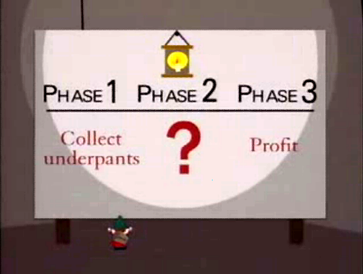
Somebody in government thought that downtown Christchurch was too spread out before the earthquakes, that car dealerships never belonged downtown in the first place, and that restricting the space available for a downtown would force it to be denser. Designating the frames would take land out of circulation and prop up prices downtown, which by the magic of underpants gnomes would encourage people to rebuild downtown. And the parkland frame could later be put to residential use to encourage more people to live downtown. Lovely.

But nothing quite worked out as planned. And so the parks became laneways and nobody could quite admit that a dumb sunk cost should be abandoned. Maybe abandoning it would encourage those property owners put out by the designations and the consequent legal costs to seek compensation for the very real harms done them; maybe it's just too hard to admit you're wrong.

SimCity isn't quite as bad as Wargames, but still....

Meanwhile, Barnaby Bennett points to this additional problem:
It's all still held in some back archive, but if you thought you'd saved useful links for later research, well, if you didn't cache the page in Evernote, you're probably out of luck.

In Seinfeld, when George realised that every instinct he'd ever had was wrong and that he just needed to do the opposite, he needed to remember what his usual pattern was. Doing the opposite doesn't work if you can't remember what normal is.

Come Wellington's eventual earthquake, just doing the opposite of CERA and CCDU wouldn't be far from wrong - but that requires remembering what the government did to Christchurch. Breaking the links doesn't help with that.

Saturday, 27 August 2016

The Town of the Future

When we moved to Christchurch, we'd always chuckle a little when driving south down the state highway. Rolleston, the first town south of Christchurch, advertised itself as the town of the the future.

They were prophetic. And Selwyn Council there helps show the advantages of not amalgamating every darned place. After the earthquake, Christchurch Council seemed unable to get its act together to zone more land for housing, or even to let people put a wall up in an existing dwelling as a secondary unit.

Fortunately, Selwyn was there and ready to grow - and hadn't been merged into some supercouncil that would have been hobbled by Christchurch. John McCrone's piece in the Christchurch Press is typically excellent:
At the offices of Selwyn District Council, Deputy Mayor Sarah Walters says Rolleston's pace of growth is indeed confounding all expectations.
It is hard for outsiders too appreciate just how fast the town is whizzing along, Walters says. "Which makes it a great success story on one level, but an interesting dynamic, an interesting challenge, on other levels," she adds, mixing a groan with the smile.
Walters says to get a grip on the numbers, Rolleston's population was scratching to get to 3000 just 15 years ago. The opening of a New World supermarket in 2002 was the first sign of something possibly starting to happen.

"Rolleston was beginning to develop a little bit. But the council at the time thought Rolleston was only going to get to about 4500 people. So to build a supermarket at that time was a big sign of commitment."

However, then came the Canterbury earthquakes and a flood of house-construction. Walters says under emergency government powers, greenfield land intended to be developed over many decades was released onto the market all at once.

By 2013, the population of Rolleston had breezed past 9000. Today it stands at 14,000. Predictions it will hit 19,000 within 10 years are beginning to look like an underestimate.

Walters says the mix of arrivals is cosmopolitan. "We seem to have a lot of English especially." And rather than being all quake refugees, it is more often the case that people have sold a home in Christchurch, allowing them to make the step further out.

But above all the demographic is youthful, says Walters. It is largely young families that are coming. And this is making Rolleston a 1960s baby boom story all over again. 
You see people pushing prams everywhere.Council figures show that a quarter of Rolleston is aged under 15, compared to a Canterbury average of 16 per cent. And just 8 per cent are over 65 – half the usual number.

So Walters says six years ago, Rolleston had a single primary school. Now that one is bursting at the seams, having become the largest in the South Island. And the ministry has had to build three new primaries, with a fifth, Lemonwood, about to open after Christmas.

And also opening after Christmas is a first secondary school, Rolleston College. With 250 Year 9 pupils as an initial intake, it will be the fastest growing secondary school seen anywhere for a long time.

Tuesday, 3 May 2016

In search of Arrow-Debreu worlds

I remain a bit puzzled as to why I have been utterly unable to convince any insurer to provide me a quote for earthquake insurance for Wellington.

I've mooted the product before; I've stripped it down here to what I think is its simplest form.
In short, I want insurance against a large Wellington earthquake. If the risk is on the order of 1/10 for a large one sometime over the next century, that’s about 1/1000 annual risk. I’d like to purchase a contract that provides a large lump-sum payment if a sufficiently large earthquake hits Wellington. I’m sure there’s a way of specifying a set of legal conditions that would effectively say “If something at least as substantial as the 2011 Christchurch event happens in Wellington, this contract pays out.”

As first cut, I’d suggest basing it on the Modified Mercalli reading for downtown Wellington, with a trigger at MM 9 or higher. The 1855 earthquake was MM10, but nothing else higher than 9 has been recorded in Wellington since colonisation. The Christchurch February quake was MM 9. We would need to check that MM ratings applicable to downtown Wellington are reported for larger events farther from downtown.

I’ll explain why I want this contract, and in doing so potentially explain the size of the potential market.

I was in Christchurch for the 2011 event. That event resulted in substantial uninsurable losses not just from the event, but from the post-earthquake experience. Businesses who had continuation insurance found themselves out of luck when Council barred their entry to their premises: acts of Council are not covered. Homeowners who thought they were insured to a rebuild-as-new standard found themselves instead with revised standards for reinstatement methods that left them substantially worse than prior to the event.* And the process, involving large-scale coordination failures between EQC and private insurers, let things drag out for years. I never want to go through that again, and I suspect that many who experienced Canterbury would appreciate a different kind of contract.

A large lump-sum pay-out that comes if the insured event happens requires no lengthy claims adjudication process: the MM9 quake either happened or it did not. No assessors need argue about whether anything on the house were pre-existing damage. There’s no interface between EQC and anyone else arguing about whether something is over or under-cap.

Instead, I hike out of town with my family as best I can, start my life over somewhere else in the world with the resources to do so comfortably, and have a real estate agent pack out our house and sell it as-is, with all earthquake claims transferring to the new owner to deal with.

There has been sufficient press around the problems in Canterbury post-quake insurance that many owners in the Wellington area would be aware of the problem. Simply announcing the existence of the new insurance product would undoubtedly lead to press coverage that would help to attract new customers.

Moreover, I expect that this is something you could and should take worldwide. California and the rest of the Pacific Northwest, Japan, and other places offer a bundle of offsetting uncorrelated risks that could build a pool for purchasing reinsurance against claims. If you look at the Pacific Northwest, many homes are uninsured because earthquake insurance for natural disaster is too costly, but it’s too costly at least in part because insurers face costly assessment and dispute processes after an insured event, where homeowners will be tempted to pass off pre-existing damage as being due to the event. Insurers then face very uncertain overall liability. With my proposed product, the pay-out is known with certainty: if the event does not happen, claims are zero; if it does happen, the pay-out is the total sum. It is then more like life insurance than like any standard homeowner insurance.

Please let me know if this is a product you think could be developed, or if there’s something obvious I’m missing explaining why this cannot easily be offered.
The only explanation that makes any sense to me thus far is that contracting costs are non-trivial and fixed, that the potential number of customers for such a product is smaller than I would anticipate, and so it is worth nobody's while to develop the contract and set up the reinsurance. The alternative is that insurers are leaving dollars on sidewalks because they're too conservative; in a world with insurance against your celebrity endorser's disgrace, that doesn't seem immediately plausible.

If the actuarially fair price for a $1m payout for a 1/1000 annual event is $1000, I'm happy to pay the standard insurance multiple over the actuarially fair rate for the contract.

* Since then, the High Court has - five years after the earthquake - issued a declaratory judgement that repair to an "as new when new" standard specified in insurance contracts actually means that the repair has to be to that standard, updated to meet current building code. EQC had been instead rebuilding to an alternative standard that MBIE came up with, in which notched bearers, jack and packed piles, and floors up to 5 cm out of level counted as good enough. And those with the patience to go through the whole rebuild process again can now presumably go back to EQC for a do-over. This Press editorial is also good.

Monday, 14 March 2016

Insurance markets in n-1 things

Tyler at Marginal Revolution points to interesting new insurance contracts where companies can insure against their celebrity spokesperson's potential disgrace.

Premiums run from 0.25% of the sum insured, to just under 1% of the sum insured. Presumably companies and insurers have to come up with ways of ensuring that sponsors don't start shifting to riskier celebrities, or start shirking on monitoring their celebrities' conduct.

Wellington has one chance in ten of a major earthquake over the next 100 years. The same link explains how continuing to be in Wellington after such an event would be far less pleasant than the post-quake Christchurch experience.

I would like to purchase an insurance contract paying me $1 million if there is a major Wellington earthquake.

If we assume that the one-in-ten chance is distributed evenly over that next hundred years, there is a 1/1000 risk per year.

An actuarially fair price for the insurance contract would then be $1000 per year. There is no moral hazard involved; I cannot cause earthquakes. It's effectively a life insurance contract paying out if Wellington gets a big earthquake, where we can define 'big' appropriately ex ante.

I would be happy to pay multiples over $1000 per year for that contract. I won't say how much over, but it's enough over that you'd think somebody would be willing to make a deal.

Missing markets continue to be missing.

Friday, 25 September 2015

Quirky EQC self-insurance

Hi Eric,

Part 1 – on the NDF and sovereign risk management
I wonder whether you’ve framed your analysis on sovereign catastrophe risk management in the wrong light. Let's start with a bastardized-but-useful adaption of your summary:
"Suppose that your wife tells you that you could save a lot on house insurance if you just paid her the premiums every month and she'd pay you if the house burned down. Seems like a good idea - keep the money in the family. She invests the premiums you pay her in getting the kitchen redone.....

[insert my bit]....

But before you tell her to put away new the kitchen plans and to think carefully about her risk-management shortcomings, you realize that it’s you who have forgotten something important: your wife is extremely wealthy - she owns 100 houses! Each house has its own, reasonably independent, risk (most of the houses are in different neighborhoods).
Now you could put the premiums towards offsetting the specific risk on your current house, which may now seem expensive (do you really need insurance given your enlarged portfolio)? Or you could put the premiums into an account to cover losses and risks across your wife's (and your) whole portfolio, which may sensible and efficient. Or, if the kitchen is going to save you a bunch of money in the long run, and your wife's housing portfolio has been performing well, maybe you should just spend it. [finish my bit]"
My point is that we need to take a “helicopter perspective” when thinking about government risk. The government’s comprehensive balance sheet is exposed to a plethora of risks and possible shocks: potential government losses from biohazard shocks (foot and mouth), bailouts of non-bank deposit taking instructions (South Canterbury Finance), bailouts of banking institutions (hopefully not!), leaky buildings, solid energy - and the list goes on. We should factor in all of these risks when managing and financing any individual specific risk.

It would be silly to have a large build-up of assets in a bio-hazard risk fund while at the same time the government has to finance costs from bailing out South Canterbury Finance. It would be equally silly to have the NDF busting at the seams while at the same time that the government is heading to international markets to finance huge costs stemming from a serious foot and mouth epidemic. The idea is that an NDF-type fund invested in real, non-NZ government assets will ignore diversification across the government's portfolio, unnecessarily ring-fencing risks.

What you really want is a pool of assets on hand to cover the potential losses from all shocks/risks across the government’s entire portfolio. And luckily, the government has one of these - its call the fiscal anchor (net debt, or whatever you want). Would you care if the government did not have NDF if, when it came to funding the EQC’s earthquake liabilities, net debt was at 10% of GDP? (maybe you’d want some liquid cash to finance immediate expenditures and avoid f/x crisis. But taking the Canterbury earthquakes as one data point, the exchange rate and Govt debt YTM dynamics weren’t that bad post February 2011).

So when we talk about sovereign risk management we need to keep in mind that the level of net debt is probably what matters most at the end of the day. The NDF and other asset accumulating instruments are, at best, a good political instrument that encourage people to compensate government for the risk it assumes (think of the NDF as a vehicle used by the government to convince people that the EQC levy it collects doesn’t go directly to the government coffers and government expenditure). At worst, NDF type instruments constrain governments’ ability to efficiently manage risk.

We should be asking government to explain and justify whether its net debt target builds in an adequate and appropriate buffer for the risks to which it is exposed, and not whether the NDF’s asset allocation is appropriate. My personal view is that the NDF actually matters diddly-squat, even if it holds tons of real assets. This is because the government can always increase its debt in line with NDF asset growth, nullifying it the net impact of the asset accumulation, while still at the same time still achieving the net debt targets it actually cares about. The NDF holding non-tradable NZ government assets is a cleaner and more efficient way to achieve this global optimal debt level.

Now there could be a good political economy justification for the existence of a real–asset NDF. If the MoF is worried that she/he is not going to be able to constrain her/his colleagues’ expenditures in the future, then the NDF – actually quite like the NZSF - could be a good way to put the money into a safety deposit box, politically and maybe even legally out of reach of prying hands. But let’s be clear, this is not the usual financial risk management argument for having a real asset NDF.

So in summary, what’s my point? It is this: you can have an NDF, and you might actually want one for political economy purposes. But don’t kid yourself that you should have one based on vanilla principles of efficient risk management.
There are a few caveats and alternative strategies that would justly refute what I’ve said so - asset-liability matching is a good example. But I’m lazy ad will leave these for another day.
Part 2 – on the EQC

I wonder whether our views of Govt earthquake risk management may also stem from differences in our views of the EQC.

The EQC is not a private entity where the residential risk it assumes through its Act is ring-fenced, insulating the government from losses. In other countries EQC equivalents do follow a more private model. In such countries your arguments re holding appropriate real assets would have some fair bite.

But the EQC act clearly places the Minister of Finance (or maybe now the EQC Minister? - can't remember) with ultimate power concerning the EQC's finances. From purchasing reinsurance and deciding on the strategic asset allocation of the NDF to pricing the EQC's levy premium, the MoF “wears the pants” relative to the EQC's board and CEO. And because the government is guaranteeing the whole thing at the end of the day, this is exactly the way you'd want it.

The heuristic I use to think about the EQC is that it is really just an acknowledgement that in the wake of a disaster the government would not be able to turn down a bailout of badly damaged and uninsured residential property (and that without the EQC buffer, for a number of commercial and behavioral reasons, levels of domestic catastrophe insurance penetration would likely be much lower). Instead of simply dealing with this problem after the fact – and its likely to be a much bigger problem after the fact - the EQC lets the government collect some money and compensate itself in advance.

Part 3 - some thoughts on the government’s procurement of reinsurance

If you assume the government is the final funder of the EQC, all but the most tail-risk target reinsurance will be relatively expensive. From a value-for-money perspective NZ citizens should be wary of huge reinsurance premiums.
Reinsurance layers/tranches are generally priced based on the expected value of losses (with adjustment for risk preferences and tail risk, operating costs, market conditions, returns/costs of capital, etc). As a result, lower layers with low excesses will be highly priced, and higher layers with large excesses will be priced relatively lower. (The price metric used is the “rate-on-line”, the premium costs as a per cent of the total risk transferred).

Should the government pay high rates-on-line for relatively to get coverage at a low excess level? I think this would be silly: the government has a deep and diversified portfolio; it has buffers and financing flexibility. Paying NZD 100million+ per year to cover the EQC risk (or other earthquake risks) at a low excesses (less than a good few NZD billion) is crazy.

The government can also likely finance losses at low excesses at a far lower rates than reinsurers, especially over the long run. Self-insurance would seem to me to be the first option government should examine in its risk management, especially given its risk profile, likely risk preferences, funding costs, revenue stream variability, etc. Governments can take a long-term time horizon that reinsurance business models simply cannot match; I imagine that Government financing costs across the entire yield curve will be lower than even the gargantuan reinsurers.

If the government can buy reinsurance attaching at a level high up the EQC loss distribution, it might make sense as a “tail-risk” management strategy. But, eeeekkk, I’d need to see some pretty good CBA to justify it. You’d need a strong argument as to why we’re not better putting the financing into building a bigger buffer in the net debt anchor.

It’s hard to be scientific around what appropriate reinsurance purchases might look like without doing the modelling or analysis. But I’d say - very unscientifically, and given NZ’s current debt levels - a reinsurance program attaching at over NZD 6-7 billion and going up from there might be worth considering. At least in a huge earthquake this might make a difference to our financial position. But how many years of forgone accumulated premiums, and consistent and building self-insurance, is this risk transfer worth? We’d need some modelling that I’m not sure has been done.

I do accept, however, that reinsurers may have some cost advantage compared to government; for one example, they can achieve cross-country diversification that governments cannot achieve. But I’m just not sure that these advantages outweigh the government’s self-insurance capacity and inherent diversification. It’s an empirical question for someone smarter than me to answer.
I agree with much of this as far as it goes, but think of the incentives then created.

Every homeowner taking out house insurance is forced to take on EQC insurance as well. In small events, all's well - the government's self insurance for the excess prior to reinsurance kicking in covers things without imposing noticeable burden on public finances. And the same holds if it is reinsurance all the way up.

Large events like the Canterbury quake, or a future Wellington one, strain government finances appreciably. There is no actual NDF on which to draw, as it all comes out of government borrowing. Under Tom's proposal, there might not be reinsurance on which to draw either; in the Canterbury quake, the government was on the hook for anything above the reinsurance draw.

EQC behaved, after the February earthquake, as though its purpose were to minimise costs to the Crown rather than to make good on its contracted commitments to policy holders. It is difficult otherwise to make sense of the numerous claims where EQC believed the house was well under-cap but the private insurers called it a complete rebuild.

And as good as the proposal from the Crown has been to increase the EQC cap to reduce the coordination failures between private insurers and EQC, that also makes it less likely that you'll be able to trigger assessment from your private insurer where you might get a fair shake.

Monday, 14 September 2015

Seismic Assessment

Hugh Paveltich emails:
The “seismic assessment” fiasco is just more of the same … political and bureaucratic failure on a massive scale.

This writer is still going through this experience, that started back in early 2012, when a 20 years of age 5 unit standard retail development require a seismic assessment by a corporate tenant.

The initial high quality assessment rating was 56%. It was expected the full assessment would rate higher.

Regrettably the initial skilled assessor was so swamped with work, this writer allowed a corporate tenant to proceed with a follow-up full assessment by an Auckland based engineer, who came back with a result of 0 – 5%.

Following repeated requests by this writer, the local authority and other engineers, the full report with calculations has yet to be provided.

That’s when all hell broke loose.

The corporate tenants panicked (with many losing their jobs subsequently … a story that has yet to be told) … exiting the premises immediately … at substantial and unnecessary costs to themselves and others. The owner only learned of this the day they were exiting.

There was clearly a massive mess to sort out.

This was followed by desktop assessments of 28%; 32% and 67% by the 3rd, 4th and 5th firms of engineers. Generally, older engineers did not perform well.

Remarkably, a 2 level structure nearby, developed at the same time and assessed  by the 6th engineering firm, came out with an NBS rating of 99%.

The inconsistencies did not however stop at the ratings. The proposed solutions were all over the place as well.
I wonder how processes that yield such divergent assessments can produce a percent-of-NBS measure forming the basis for regulatory mandates. Update: See also Rodney Hide's column in this weekend's NBR ($).

Meanwhile, EQC troubles continue. Great that 3D is continuing to air this kind of stuff, despite apparent fatigue with it elsewhere in the country.

Friday, 4 September 2015

A welcome win for Ann

Usually, harrowing individual cases make for terrible law. In this case, it's been rather the opposite.

Ann Brower was the only survivor on the bus crushed by falling unreinforced masonry on Colombo Street in the February 2011 earthquake.

Unreinforced masonry facades are the clearest case where government regulation to save lives very likely passes cost-benefit assessment. Passers-by, or those in buses on the street, are bound by no contractual nexus with the building's owner. Falling bricks are a rather clear externality. There are a few ways of solving it. Regulatory standards can do the job, but risk over-protecting in areas with few passers-by and under-protecting in busy places. A liability standard could be preferable, as a per-casualty penalty should induce appropriate risk mitigation where coupled with requirements either to insure against the loss or to post a bond against it.

Ann's win has the government targeting those facades first. 
In the very first sentence of his press statement on changes to proposed legislation, Building and Housing Minister Nick Smith singles out the contribution of Christchurch earthquake survivor and Lincoln University lecturer Ann Brower.
Ms Brower was the sole survivor of the bus crushed by a collapsing façade in Colombo Street in the February 2011 earthquake.
“We need to heed every possible lesson from the February 22 earthquake in Christchurch in rewriting the building laws to minimise future fatalities,” Mr Smith says.
“Falling parts of unreinforced masonry like parapets and facades killed 35 people that tragic day, including every passenger on the Red Bus except Ann Brower,” he says.
“I pay tribute to her fastidious advocacy and professional research that has persuaded us to change the law and prioritise these buildings for upgrade.”
Ms Brower’s pleas that the government act to prevent such building features killing others in the next major quake were supported by many organisations who made submissions on the Building (Earthquake-prone Buildings) Amendment Bill. (See report attached)
Ms Brower’s supporters ranged from New Zealand Society of Earthquake Engineers (NZSEE) to GNS Science.
The latter had said many people were likely to die unnecessarily in the next major earthquake because the bill was pursuing the wrong objectives.
Like Ms Brower, GNS director Kelvin Berryman told NBR he felt the government was ignoring his organisation’s advice.
Mr Smith now estimates about 2000 buildings nationwide will be affected by the new category covering building parts which could fall into public space during an earthquake.
Such features in high risk areas will now have to be upgraded within seven-and-a-half years instead of 15 years and in medium risk areas they will need to be fixed within 12-and-a-half years rather than 25 years.
Next, though, councils will have to think carefully about how the facade reinforcement requirements intersect with councils' rules around heritage buildings. We may be simultaneously mandating and prohibiting some rather important work.